

Indonesia began reducing natural gas exports to Singapore by 31 million standard cubic feet per day, about 9% of total gas exports, starting 24 October, to increase domestic electricity generation amid tensions from a cross-border toxic haze crisis. Prime Minister Lawrence Wong stressed that all parties must honor sales contracts and that Singapore will fully protect its rights and interests.
Indonesia’s upstream oil and gas regulator (SKK Migas) revealed that since 24 October, Indonesia has redirected 31 million standard cubic feet per day of natural gas exports to Singapore—15 million from the Natuna fields and 16 million from Sumatra island—to power plants in Batam, Bintan, and other areas on Sumatra island.
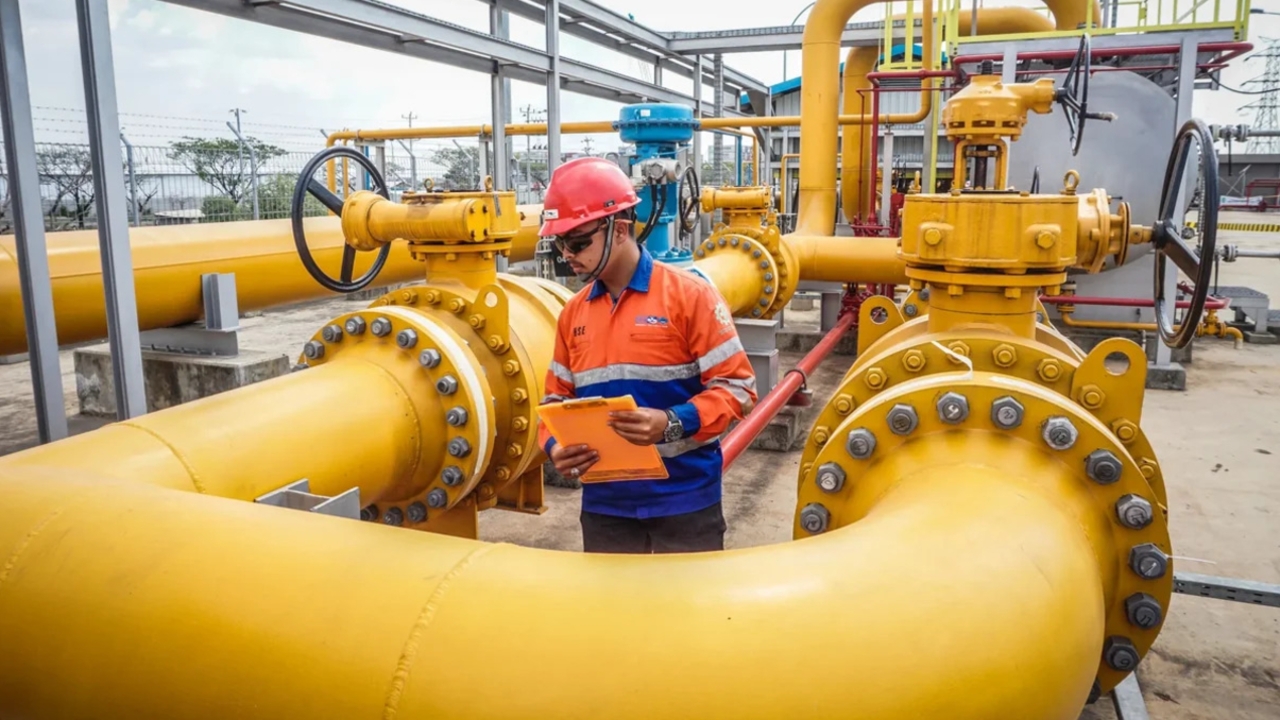
Most of the natural gas Indonesia exports to Singapore is transported via pipelines. This export reduction represents about 9% of total gas exports. Natural gas accounts for approximately 95% of Singapore’s electricity generation.
SKK Migas stated the gas reallocation aims to maintain security and continuity of domestic gas supply for power generation, citing Indonesia’s Oil and Gas Law, Section 8, Paragraph 1, which grants authority to prioritize domestic natural gas use. The agency will monitor the situation daily. It did not clarify whether this export cut relates to prior warnings from Indonesian ministers.
Singapore’s Energy Market Authority (EMA) said the reduction amounts to less than 2% of Singapore’s total daily gas demand, which exceeds 1,000 billion British thermal units per day (bbtud). Gas importers were informed of a total reduction of 17 bbtud over 18 days.
EMA added that Singapore has contingency plans for reduced gas deliveries, and Singapore GasCo is ready to import additional liquefied natural gas (LNG) as needed.
Currently, natural gas supplies about 95% of Singapore’s electricity. The country imports gas via pipelines from Indonesia and Malaysia, plus LNG shipped from global suppliers. In 2025, pipeline gas is expected to constitute 43% of total gas imports, with LNG accounting for 57%.
Prime Minister Lawrence Wong said on 25 October during the People’s Action Party (PAP) general meeting that Singapore expects all parties with commercial gas contracts to fulfill their obligations. He emphasized that Singapore’s gas importers will take necessary measures to safeguard contractual rights and interests.
Wong said Singapore has been preparing for energy risks by investing in LNG receiving terminals to allow imports from multiple countries instead of relying solely on pipelines. However, Singapore must seek clean energy sources capable of providing stable 24/7 power, including exploring nuclear energy feasibility.
He acknowledged that nuclear energy raises safety concerns in a small, densely populated country like Singapore but stressed that safety must come first. Difficult or controversial options should not be dismissed outright. Singapore will start International Atomic Energy Agency (IAEA) evaluations in 2027 to assess readiness before deciding on nuclear energy adoption.
This development follows statements from Indonesia’s Coordinating Minister for Downstream Industry Development and Energy Transition, who also serves as Minister of Energy and Mineral Resources, on Thursday. He said the government might suspend energy exports to countries that do not respect Indonesia and will evaluate the situation without hesitation but did not name specific countries.
A day earlier, the minister mentioned the possibility of not renewing gas export contracts with neighboring countries, citing the need to prioritize domestic energy demand. This stance came after President Prabowo Subianto urged Indonesia to protect its natural resources and prioritize national benefits.
Indonesia’s official Antara news agency reported that about 30% of natural gas produced is exported, while 70% is used domestically.
Beyond energy issues, Indonesian officials’ remarks come amid Singapore’s tighter scrutiny of companies potentially involved in Indonesian wildfires, which cause cross-border haze pollution.
Singapore announced plans to form an expert panel to investigate companies possibly causing or contributing to haze. The National Environment Agency sent notices to 20 companies—10 in Singapore and 10 in Indonesia—under the Transboundary Haze Pollution Act.
Wong said cross-border issues such as online scams and haze cannot be solved by Singapore alone but require cooperation with other countries. He affirmed the government will use available powers to protect citizens, enhance preparedness, and collaborate with partner nations to address root causes.
Overall, Wong stated that despite increasing global challenges and uncertainties, Singapore remains a trusted partner and attractive destination for business and investors. The government will continue fostering international cooperation alongside preparing for future economic and energy risks.
He reiterated that the People’s Action Party government must not take public trust for granted but prove it by listening and addressing issues like cost of living, quality job creation, and supporting workers affected by economic changes. The goal is not only economic growth but also improving citizens’ quality of life.
. CNA