

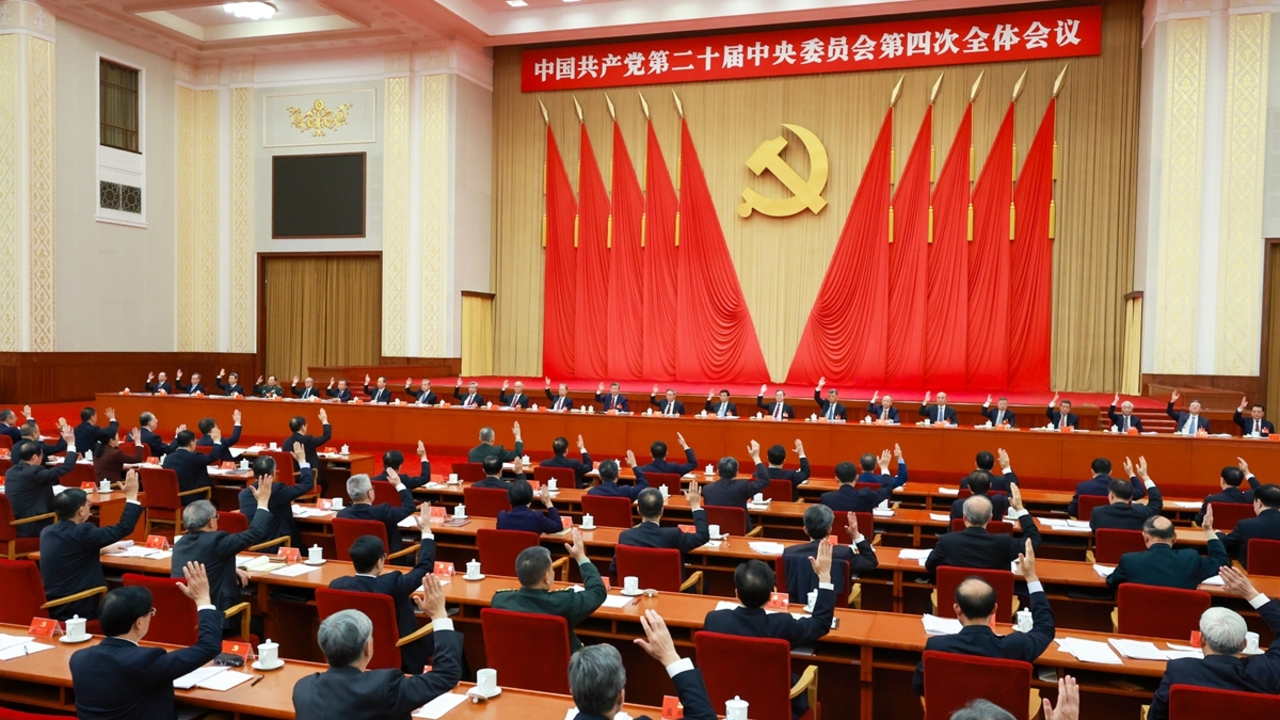
The 5th plenary session of the Central Committee of the Communist Party of China officially opened in Beijing, lasting four days from 26 to 29 October. This meeting is closely watched worldwide as a key platform for President Xi Jinping to implement strict anti-corruption policies and enforce party ideology to consolidate absolute power and lay the groundwork for the new leadership lineup in 2027.
The Communist Party of China began its 5th plenary session of the 20th Central Committee in Beijing today (26 Oct). The meeting will last four days until Thursday, 29 Oct, with about 300 central committee members attending to consider major directions shaping the party’s future governance.
Xi Jinping, General Secretary of the Communist Party of China’s Central Committee, reported on the Political Department's work and explained a draft resolution on key issues to enhance strict and continuous party oversight. According to the official Xinhua News Agency, the draft covers a summary of accomplishments and experiences in party governance in the new era, assessment of challenges in strengthening the party, and strategic plans for upcoming work phases.
Chinese state media indicated the meeting aims to establish concrete measures for effective and strict party oversight, focusing on closing regulatory loopholes, strengthening supervisory systems, and ensuring Central Committee policies achieve real results rather than mere statements or declarations.
The plenary session is a closed meeting of the party’s Central Committee, generally held several times during each five-year term of the committee. Its outcomes typically reflect the leadership’s priorities and governance direction. This is the fifth such meeting since the current Central Committee began work in 2022.
This session is especially important as it occurs ahead of the next Communist Party Congress in 2027, which will set key party policies and appoint a new Central Committee. Although officially the Central Committee selects top party leaders, the true decision-making process within the senior leadership remains confidential.
Analysts see this meeting as possibly the final major platform before leadership reshuffles in 2027. Xi Jinping is expected to continue as China’s leader for a fourth term after the removal of presidential term limits.
A central issue is the ongoing anti-corruption campaign, a core policy under Xi Jinping for years. This drive has led to the removal and investigation of hundreds of senior officials, including high-ranking military officers and former close allies of the Chinese leader.
Xinhua stated that the anti-corruption campaign is part of a systematic and continuous party governance effort aimed at making officials unwilling, unable, and disinterested in corruption. It affirmed that building a system grounded in moral principles and the rule of law will increase transparency in foreign cooperation and provide greater predictability for global investors and policymakers.
However, some critics argue that purging senior officials and military officers may undermine military stability and operational readiness. The Chinese authorities assert that these actions are necessary to restore and strengthen the armed forces.
Besides corruption allegations, some officials face accusations related to personal conduct or "moral corruption." Some experts believe such charges may be used to target those perceived as disloyal to Xi Jinping, since failure to follow party lines can be interpreted as moral breaches under party standards.
The Asia Society Policy Institute reported that among 44 military officers appointed to the Central Committee in 2022, only two remain without removal or disciplinary action based on their data. Meanwhile, the Central Military Commission, the top body overseeing China’s military originally with seven members, now has only two: Xi Jinping and one other officer.
This meeting may provide Xi Jinping an opportunity to appoint new military officers to the Central Military Commission, filling vacancies left by previous purges.
Although the meeting is held behind closed doors with no official disclosure of its venue, the final decisions and detailed documents are expected to be published afterward. These will be key indicators of the party’s governance direction, internal discipline enforcement, and preparation for the 2027 leadership transition.