

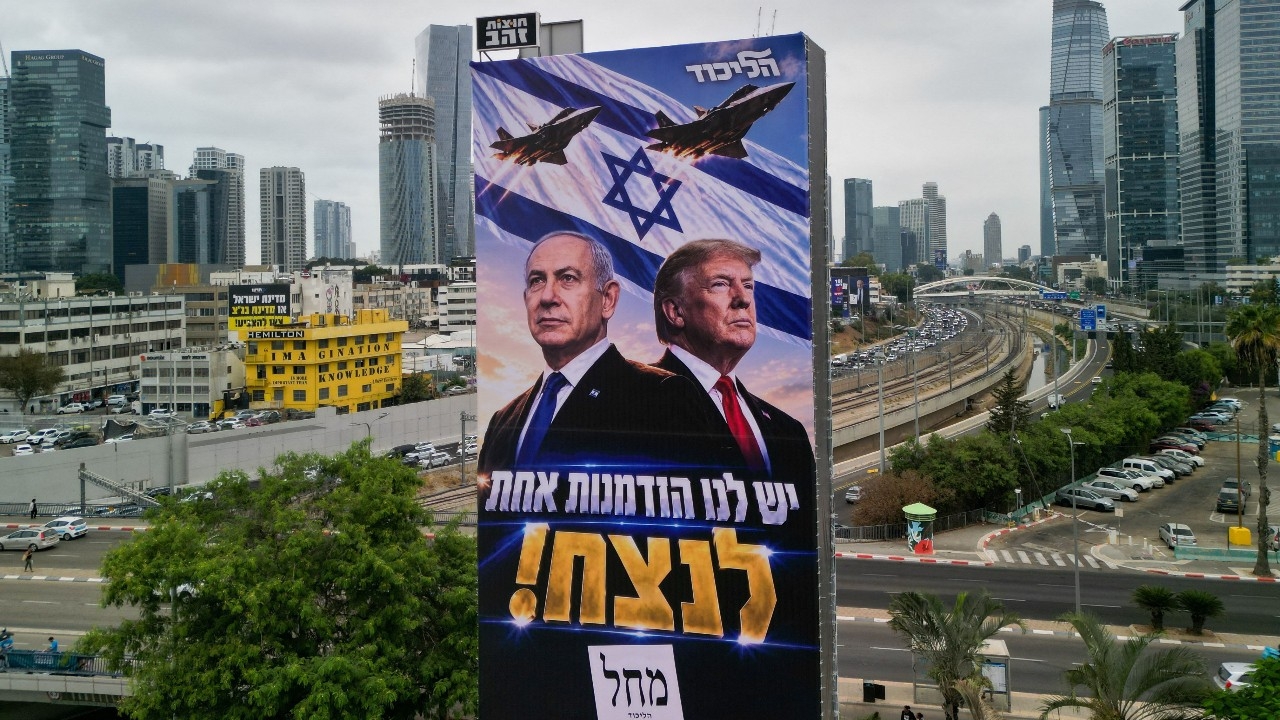
Attention focuses on the political future of Benjamin Netanyahu, Israel's longest-serving prime minister, in the October 27 election, following criticism over the Gaza and Iran wars as well as growing international isolation.
On Tuesday, 27 October 2026, Israelis will vote in a general election that could mark a crucial turning point for Benjamin Netanyahu, Israel's longest-serving prime minister with approximately 19 years in office, amid evaluations of his government's performance after the major Hamas attacks on 7 October 2023, the wars in Gaza and Iran, and increasingly strained international relations.
Nonetheless, Netanyahu remains a resilient political figure amid deep-rooted nationalism in Israeli society and a fragmented multi-party system, which may still allow him to form a government even if the election results do not deliver a decisive victory.
Pre-election polls indicate Netanyahu's Likud party and right-wing allies are in a tight race with a rival bloc led by Gadi Eizenkot, Israel's former chief of staff, who holds hardline security positions and garners support from both right-wing and centrist factions.
Netanyahu campaigns by emphasizing his wartime leadership and his relationship with U.S. President Donald Trump, who backed him and cooperated with Israel in the conflict against Iran.
Last Sunday, Netanyahu stated that Trump is ready to act again to eliminate the threat from Iran once and for all, but this will only happen if Netanyahu remains in power.
Eizenkot accused Netanyahu of running a campaign filled with fearmongering, lies, and intimidation, expressing confidence that Trump will work with whichever leader the people elect.
Analysts suggest Netanyahu may need to rely on far-right allies Itamar Ben-Gvir and Bezalel Smotrich to secure enough votes to form a government; both face sanctions from some Western countries accused of inciting violence against Palestinians, while Ben-Gvir's Jewish Power party has gained support in some polls.
Neither Netanyahu nor Eizenkot currently has a clear path to power if no side secures a majority in Israel's 120-seat parliament; Netanyahu might remain as caretaker prime minister until new elections next year. Voting takes place from 07:00 to 22:00 local time.
Election amid questions over accountability for 7 October attacks
This election follows one of Israel's most turbulent periods since its founding in 1948, marked by the Hamas attacks on 7 October 2023 as a turning point, Israel's military operation in Gaza, and internal divisions over the right-wing government's policies under Netanyahu.
For many Netanyahu opponents, a key election issue is investigating accountability for the security failures during the 7 October attacks, the deadliest day in Israel's history.
Mali Hajaj, an education ministry official and supporter of Eizenkot, said establishing a national inquiry committee is crucial as a means for the country to heal from the traumatic events.
Meanwhile, Lisa Tortor hopes Netanyahu will be ousted and a new government will repair the damage he has caused to Jews worldwide, Israel itself, and the country's image.
However, Noaf Gabay, 18, a Likud supporter, stated Netanyahu is not responsible for the attacks and affirmed he is the right leader for Israel and has managed the war as well as possible.
Wartime record and international pressure
Following the 7 October 2023 attacks by Hamas-led militants that killed about 1,200 people and took 251 hostages, Israel launched a heavy assault on Gaza, severely damaging most of the area; Gaza's health authorities report Israeli strikes caused approximately 74,000 deaths.
Israel also heavily attacked the Iran-backed Hezbollah in Lebanon, retaliated against Iran, and in 2025 conducted a 12-day air campaign on Iranian nuclear sites, cooperating with the U.S. in the current conflict against Iran.
Eizenkot stated that the next Israeli government must prevent Iran from acquiring nuclear weapons capabilities, whether through military action or reaching an agreement such as a U.S.-backed diplomatic solution.
Government formation game could be decisive
Although Eizenkot is Netanyahu's main challenger, he does not support the two-state solution, which has long been the foundation for Israeli-Palestinian peace talks; nearly all Israeli parties with predominantly Jewish support oppose this approach.
However, Eizenkot criticizes violence by Jewish settlers against Palestinians in the Israeli-occupied West Bank, which has increased since 2023 and affected Israel's relations with Western countries. He also opposes forming a coalition with Ben-Gvir and Smotrich, Netanyahu's far-right allies.
In former Likud strongholds, some voters disappointed with Netanyahu have begun door-to-door campaigns urging support for alternatives, while Netanyahu faces ongoing corruption allegations in court, which he denies.
Another factor possibly influencing government formation is Arab Israeli voter turnout; as Israeli citizens of Palestinian descent, higher participation could shift parliamentary balances in Eizenkot's favor.
Though Eizenkot rejects coalition with Arab parties citing incompatible values, analysts believe these parties might support a minority government led by him to help remove Netanyahu from power.
Amotz Asa-El, an Israeli political analyst at the Shalom Hartman Institute, assessed the election is likely to be close, with one side possibly gaining a slim majority, and no party expected to win by a landslide.
Source:channelnewsasia
Click to read related newsInternational news