

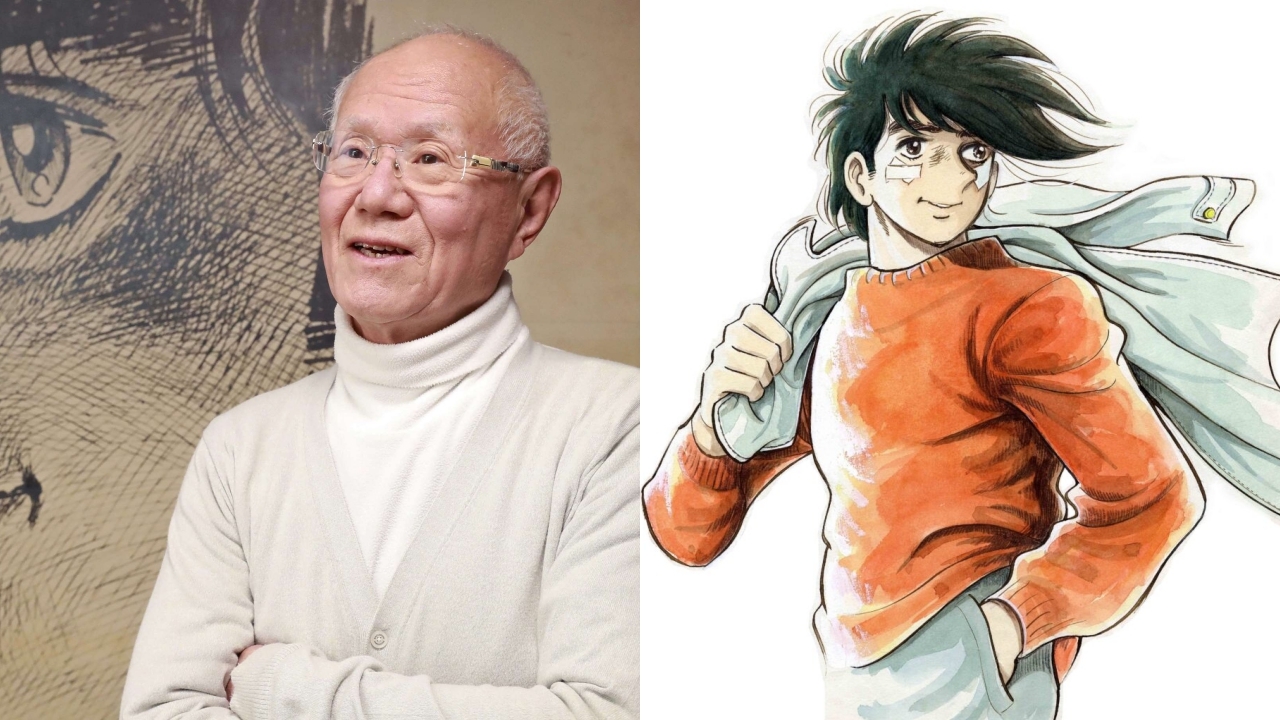
Tetsuya Chiba, a legendary Japanese manga artist known for creating the manga "Ashita no Joe" or "Tomorrow's Joe," has died at the age of 87 after a career spanning more than seven decades. His works not only portrayed the struggles and growth of athletes but also reflected the poverty, despair, and hope experienced by the Japanese people after World War II.
Tetsuya Chiba, a renowned Japanese manga artist widely recognized for his work "Ashita no Joe" or "Tomorrow's Joe," passed away on 22 October at a hospital in Tokyo at the age of 87. The Japanese Cartoonists Association and his publishing company announced the news today (27 October).
Chiba had a career in the manga industry lasting about 70 years. His works often depicted the physical and mental growth of young athletes in various sports, ranging from boxing and golf to kendo, the traditional Japanese martial art using wooden swords. At the same time, his stories reflected the lives of ordinary people in postwar Japan, including their poverty, despair, happiness, and hopes for a better life.
His work that established him as a key figure in manga was "Ashita no Joe," which began serialization in the Weekly Shonen Magazine issue dated 1 January 1968. The story was written by Asao Takamori, with Chiba as the illustrator. It follows the life of an orphaned boy who starts learning boxing while in a juvenile detention center, then enters the professional boxing world and faces significant rivals.
This manga was continuously published from the late 1960s through the 1970s and became a cultural phenomenon in Japan. It gained immense popularity, leading to adaptations into an animated series, films, video games, television commercials, and stage plays.
The strong bond fans had with this story was evident when manga enthusiasts organized a mock funeral for Joe's major rival character after his death in the storyline. Many longtime fans still recall and can recite dialogues from the manga.
After beginning his career in 1956 by creating comics for girls, Chiba shifted to producing works aimed at boys, especially sports manga, which became his signature. Since the 1970s, he created several other works set in school and sports environments, such as "Ore wa Teppei" or "I am Teppei."
Beyond his creative work, Chiba played a significant role in developing the Japanese manga industry. He served as president of the Japanese Cartoonists Association for six years starting in 2012 and also taught at the university level. In 2022, he was among the first manga artists inducted into the Japan Art Academy, recognized for his contributions to sports manga.
In 2024, Chiba became the first manga artist to receive the Order of Culture, a prestigious Japanese honor awarded to individuals with outstanding achievements in the arts, sciences, and culture. At the time, he expressed pride that the award helped gain recognition for manga artists and elevated manga as a respected art form in society.
Kodansha Publishing established the "Tetsuya Chiba Award" to support new manga artists, awarding it continuously for 46 years. The publisher stated that many new manga creators have used Chiba's guidance as a foundation for their careers, with many still active in the industry today, emphasizing that his contributions to manga are irreplaceable.
Shogakukan Publishing said Chiba played a vital role in shaping Japanese manga culture and produced many masterpieces that have captured the hearts of readers across generations.
Chiba also used media opportunities to express his commitment to promoting peace and opposing war. He recounted memories from his childhood when his family lived in Manchuria, now part of northeastern China, during the period of Japanese occupation, before returning to Japan after Japan's surrender in World War II.
In 1995, Chiba and several other manga artists jointly published a book compiling personal experiences about their return to Japan from Manchuria, sharing memories from this significant historical period.
Chiba was one of Japan's major manga artists alongside Takao Saito, creator of "Golgo 13," and Leiji Matsumoto, creator of "Galaxy Express 999." His works are credited with helping manga evolve beyond youth entertainment into a contemporary culture influencing multiple generations.
/sourceThe Mainichi/ AFP