

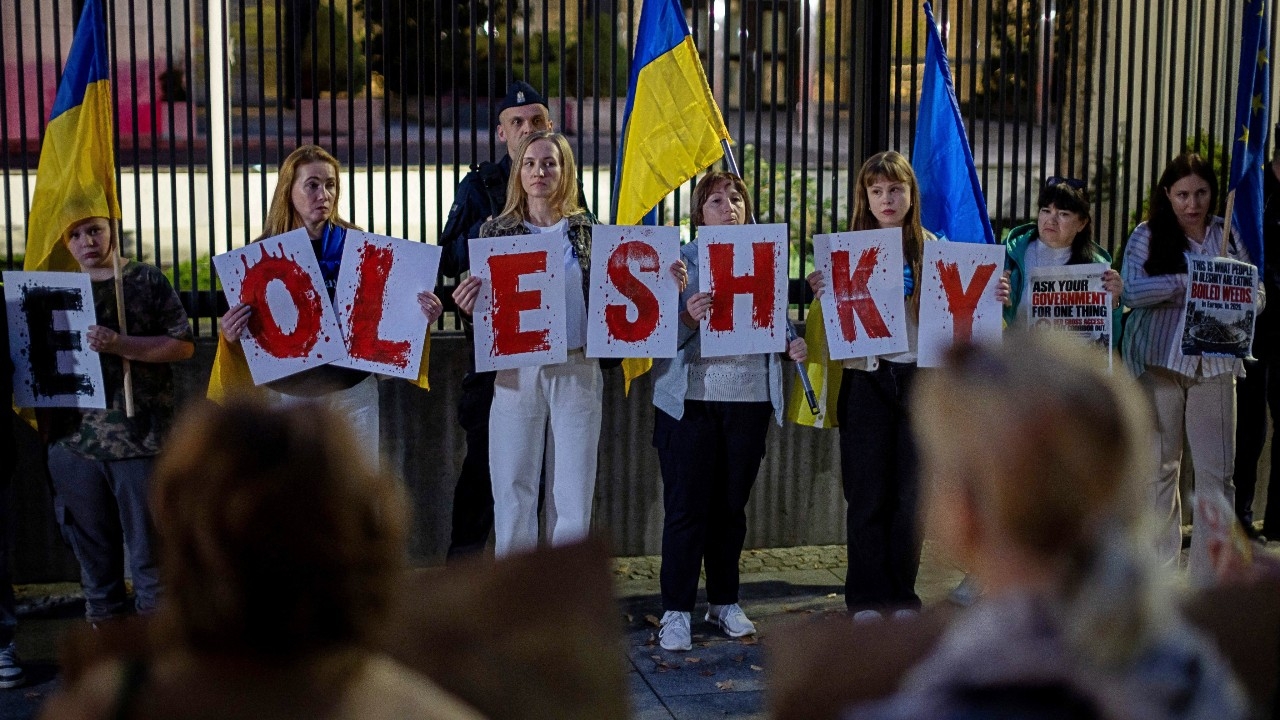
A temporary ceasefire between Russia and Ukraine in Oleshky, a Russian-occupied city in southern Ukraine, has taken effect after U.S. First Lady Melania Trump announced last week she was the agreement’s coordinator. The ceasefire aims to allow humanitarian aid delivery and speed the evacuation of residents trapped amid severe food shortages.
The ceasefire agreement between Russia and Ukraine in Oleshky, Kherson region, southern Ukraine, under Russian occupation, took effect at 03:00 local time today (27 Oct). Its goal is to open the way for humanitarian aid and evacuate civilians from the combat zone.
Russia’s Ministry of Defense stated via Telegram that Russian forces halted fire along the Kherson front line from 04:00 Moscow time to prepare for humanitarian operations, announcing a ceasefire in the area.
Dmytro Lubinets, Ukraine’s Parliamentary Commissioner for Human Rights, confirmed that Ukraine is adhering to the agreement, stating on social media that Ukraine is fulfilling its commitments and both sides are following the negotiated terms. However, AFP reported it was not immediately verifiable whether fighting had decreased.
U.S. First Lady Melania Trump announced last week that she helped coordinate the ceasefire agreement, explaining that civilian officials from both Russia and Ukraine would jointly visit residents at home to assess aid needs and support evacuations for those wishing to leave the city. Travel would be coordinated to destinations chosen by individuals, which could be either Russia or Ukraine.
Oleshky is located on the southern bank of the Dnieper River, the frontline dividing Kherson region. Russian forces occupied the city early in their full-scale invasion of Ukraine in February 2022. Since then, the city has endured heavy fighting and damage, while residents who remain face shortages of food, medicine, and essential supplies.
Before the war, Oleshky had about 24,000 residents, but current population estimates vary. Some Ukrainian sources estimate around 6,000 people remain in the city and nearby areas, including about 200 children. Other assessments cited by AFP from Ukrainian and U.S. sources suggest only around 2,000 residents remain, including up to 50 children.
Former residents in contact with families still in the city told AFP that some people are starving with almost no way out. Some resort to catching pigeons for food or rely on backyard garden crops. A woman named Olga, who remains in contact with two families there, said they barely have any flour left to bake bread.
The city also suffered severe damage from the 2023 collapse of the Kakhovka dam on the Dnieper River, causing massive flooding in surrounding areas. Drone footage released by the Ukrainian military shows abandoned apartment buildings, many bearing burn marks or battle damage, while other videos show Ukrainian officials using drones to deliver medicine and food to residents still trapped.
Ukraine accuses Russia of blocking residents from leaving the city, which Russia denies. Russian Human Rights Commissioner Yana Lantratova said Monday that most people wanting to leave have already done so voluntarily.
Details on how long the ceasefire will last, who will monitor compliance, and specifics about aid convoys and evacuation procedures have not been disclosed. Russia does not regularly allow foreign media access to occupied areas, making on-the-ground verification difficult.
Meanwhile, Russian attacks continue elsewhere in Ukraine. The Ukrainian Air Force issued warnings about missiles heading toward Kyiv on Tuesday morning. Kyiv Mayor Vitali Klitschko reported damage to the Southern Bridge, a key city crossing, as well as infrastructure in the metro system.
The ceasefire in Oleshky comes as the Russia-Ukraine war enters its fifth year, with reports that trilateral peace talks involving the U.S., Russia, and Ukraine are scheduled to resume in November after months of suspension.
Since Russia’s full-scale invasion of Ukraine in February 2022, thousands of soldiers and civilians have died, and millions have been displaced. This conflict is Europe’s deadliest since World War II. Russia currently controls about one-fifth of Ukraine, including Crimea, which it annexed in 2014, most of the eastern Donetsk and Luhansk regions, and large parts of Zaporizhzhia and Kherson in the south.