

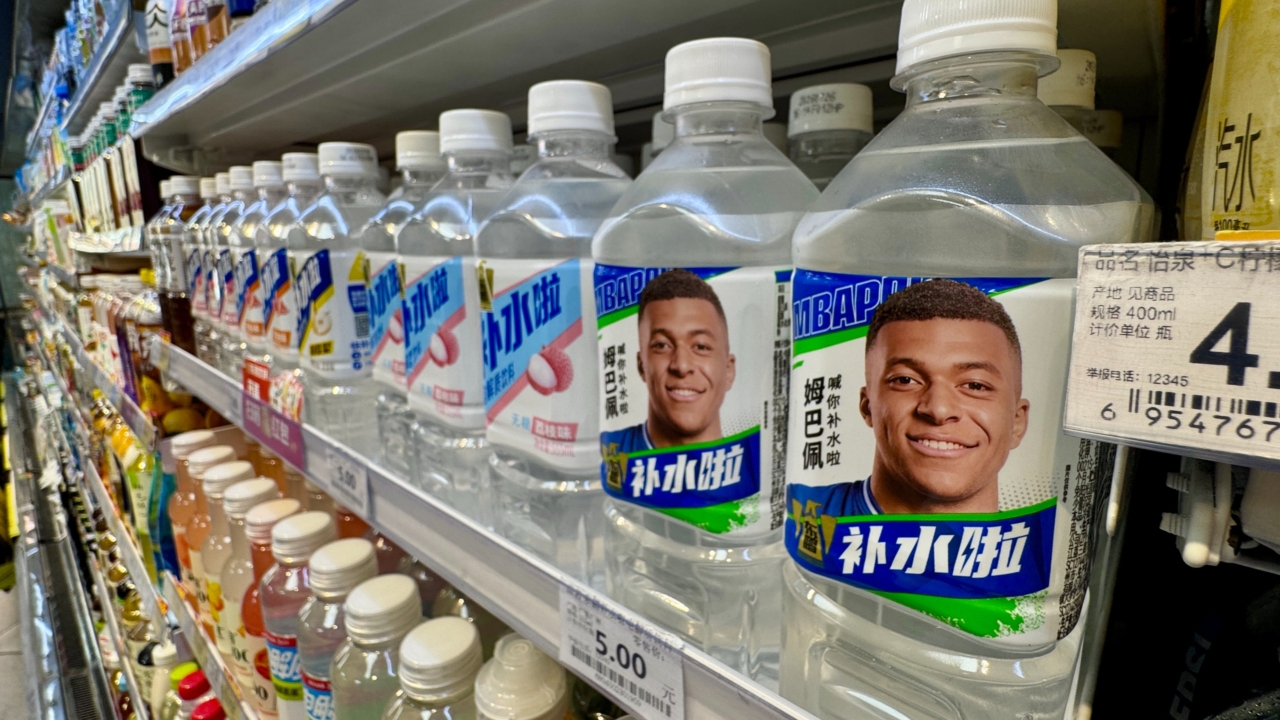
Kylian Mbappé, forward for Real Madrid and captain of the French national football team, has had business partnerships with leading Chinese companies terminated after a video clip allegedly showing him making a joke about Mao Zedong, former Chinese leader, circulated online, sparking intense criticism. China's Ministry of Foreign Affairs stated that actions offending the feelings of the Chinese people would be opposed.
Kylian Mbappé, the French football superstar and Real Madrid forward, lost business collaborations with major Chinese companies following social media backlash over a video clip allegedly depicting him mocking Mao Zedong, the founding leader of the People's Republic of China.
Companies announcing the termination include Dongpeng, a major beverage producer, and Mengniu, one of China's largest dairy product manufacturers. Both stated they do not accept any words or behavior that offend the feelings of the Chinese people and declared the cessation of cooperation effective immediately.
Discontent arose after an online clip showed Mbappé referring to an internet meme he liked, describing it as an image that superimposed his face onto that of a “Chinese dictator,” saying the image made him laugh and that he often shared it with friends.
Although Mbappé did not mention Mao Zedong by name in the clip, internet users believe the reference was to a meme overlaying the footballer's face on Mao Zedong's image. Screenshots from the clip quickly spread across Chinese social media, while the original video is no longer available on the French talk show The Bridge’s YouTube channel.
However, AFP reported that the authenticity of the clip could not be immediately verified, and to date, neither Mbappé nor The Bridge show have issued official comments on the matter.
China’s Ministry of Foreign Affairs commented on the issue, with spokesperson Lin Jian stating that authorities are aware of the reports and emphasizing that words or actions hurting the feelings of the Chinese people will be opposed by all sectors of Chinese society.
Dongpeng issued a statement firmly opposing and refusing any behavior that offends the feelings of the Chinese people, confirming the immediate termination of cooperation with Mbappé. Previously, AI-generated advertisements featuring Mbappé drinking the company’s sports drink appeared in China during this year's World Cup.
Mengniu similarly stated strong opposition to any words or acts that harm the feelings of the Chinese people and announced the end of its collaboration with the 27-year-old footballer.
Although neither company explicitly mentioned the video clip in their statements, references to the feelings of the Chinese people were widely interpreted as connected to the ongoing criticism. Some internet users questioned what exactly Mbappé said or did that was considered offensive.
The issue became a major topic on Weibo, China’s social media platform, where posts about Dongpeng ending ties with Mbappé trended among popular topics. Some users demanded the removal of Mbappé’s image from beverage packaging, while others deemed the alleged remarks inappropriate and unacceptable.
Earlier, Dongqiudi, one of China’s major online football media outlets, posted a statement Monday night calling the alleged remarks inappropriate and offensive to China and the Chinese people, including Chinese football fans.
Mao Zedong is a significant figure in Chinese history, having led the founding of the People’s Republic of China in 1949 and governed through decades marked by dramatic change and conflict, notably the Great Leap Forward policy which aimed to rapidly industrialize but caused a massive famine killing tens of millions, and the Cultural Revolution which purged those seen as threats to the Communist regime, including intellectuals, artists, landowners, and political rivals.
Although China shifted policies and opened its economy to the world after Mao’s death in 1976, the Chinese Communist Party continues to revere him as a national icon. Mocking Mao remains a sensitive issue in Chinese society and can quickly provoke backlash.
Mbappé is highly popular in China, with a large social media following. He is nicknamed “Guī Guī,” meaning “turtle,” derived from a meme linking him to the Teenage Mutant Ninja Turtles character. In football circles, he has also been ironically dubbed “dictator” due to his influential role in decisions regarding his club and national teams.
In a September interview with French football media, Mbappé addressed memes comparing him to military dictators, acknowledging some were humorous but stating that comparisons to individuals responsible for killing or causing suffering to millions were not funny, given their significant historical damage, and he did not consider himself similar to such figures.
The recent controversy arises amid news about Mbappé missing out on the Ballon d'Or to Harry Kane, highlighting the risks global athletes face when perceived as touching on sensitive political or Chinese identity issues.
Previously, several global athletes faced backlash in China for comments related to Taiwan, Tibet, and Hong Kong. For example, former NBA player Dwight Howard referred to Taiwan as a country in a video featuring Lai Ching-te, then Vice President and current President of Taiwan, triggering criticism on Chinese social media.
Another case occurred in 2019 when Daryl Morey, general manager of the Houston Rockets, posted support for Hong Kong protests, leading China to suspend its sponsorship agreement with the NBA and remove broadcasts of the basketball league from Chinese television for about a year.