

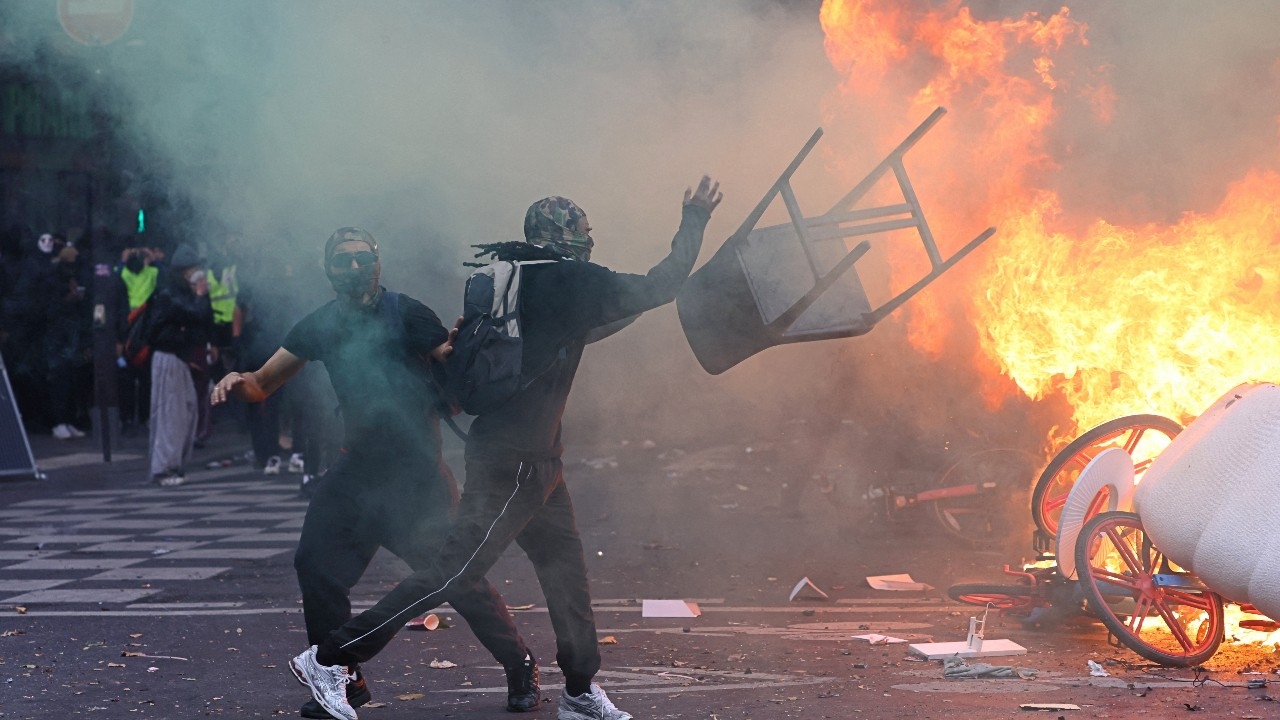
The French Senate has passed a new civil liability bill enforcing a "joint responsibility" system that requires protesters involved in violent demonstrations to collectively pay damages up to 10,000 euros each, roughly 376,000 baht. Meanwhile, left-wing opposition and human rights groups warn this could affect freedom of assembly and worsen hardships for low-income households.
The French Senate voted 229 to 105 to approve the new bill titled "Casseurs-payeurs" (Rioters Must Pay), proposed by right-wing and centrist allies holding the parliamentary majority. The law aims to strengthen civil penalties against protesters whose demonstrations escalate into violence.
Key provisions include a joint civil liability system allowing the government and victims to seek compensation of up to 10,000 euros (about 376,000 baht) per person from protesters found to have "knowingly participated" in groups organized to commit violence or who "refuse to disperse" after police warnings issued twice, even if there is no direct evidence they caused property damage or theft.
The bill exempts individuals with legitimate reasons to be present, such as independent human rights observers and volunteer medical personnel. Additionally, it grants authorities power to seize social welfare payments—including child benefits, housing subsidies, and subsistence income—to cover damage compensation.
It also increases criminal penalties, imposing up to 3 years imprisonment for inciting armed protests, 1 year for organizing unauthorized demonstrations, and 6 months plus fines of 7,500 euros for participating in illegal protests. Furthermore, it authorizes the removal and blocking of social media content inciting violence within 24 hours.
Laurent Nuñez, France's Minister of the Interior, defended the bill as a matter of "moral responsibility," stating that those causing damage must pay for repairs rather than burden the majority of taxpayers. He emphasized the law targets only those with malicious intent and protesters who refuse to leave violent demonstrations, not peaceful citizens or lawful protesters.
However, the bill has drawn heavy criticism from left-wing parties, labor unions, and human rights organizations such as Amnesty International. The opposition argues the law is a "blanket punishment" that disregards circumstances on the ground, like protesters unable to hear police warnings or trapped in crowds, preventing dispersal. They also warn that seizing welfare funds exacerbates hardships for low-income families amid the cost-of-living crisis and sets dangerous precedents threatening freedom of assembly and speech.
This legislation follows riots triggered by Paris Saint-Germain's UEFA Champions League victory celebrations in May, alongside unrest and looting during large protests on 17 October. Next, the bill will be submitted to the French National Assembly for consideration and voting.