

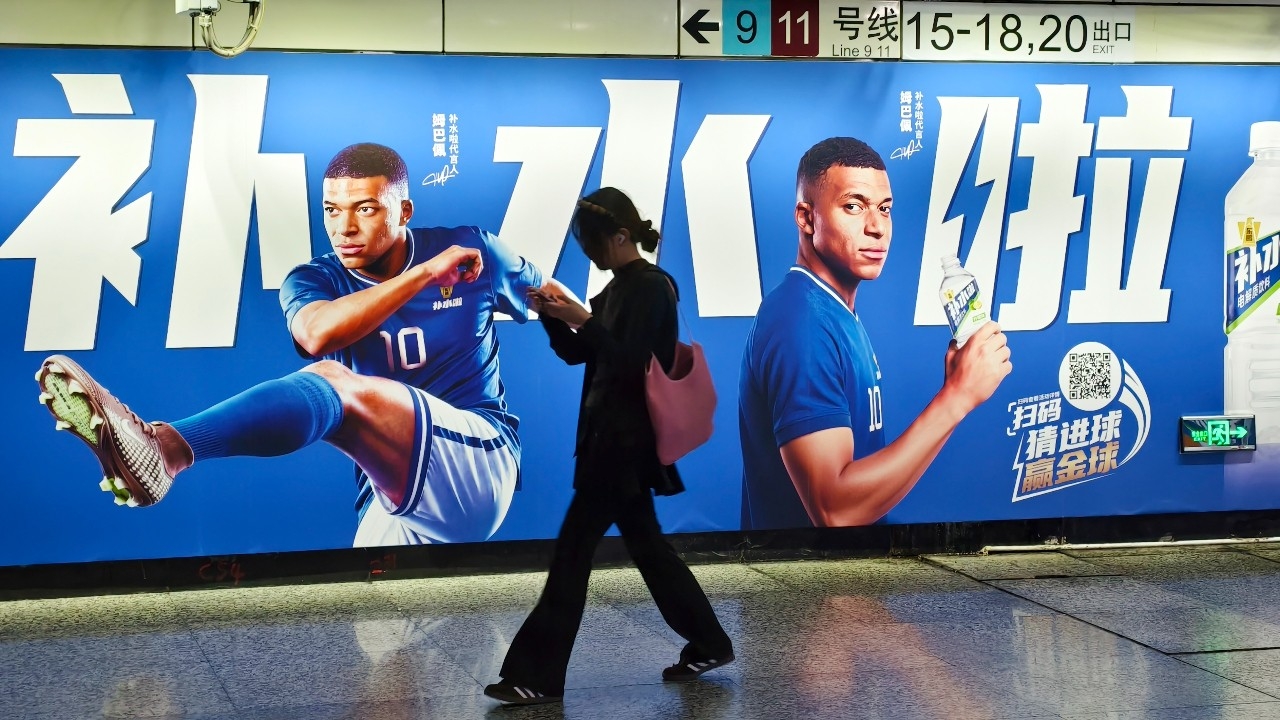
Kylian Mbappé, forward for Real Madrid, issued an apology in French, Chinese, and English after a video clip of him mocking Mao Zedong, the former Chinese leader, circulated online. This sparked criticism in China and led several major brands to end partnerships with him, while Chinese TV stations suspended live La Liga broadcasts and called for Mbappé and Real Madrid to take responsibility.
Kylian Mbappé, forward for the French national team and Real Madrid club, issued an apology after his remarks about a meme mocking Mao Zedong, former Chinese leader, became a widely debated issue in China, prompting several major companies to announce the termination of their collaborations.
Mbappé stated in a statement released in French, Chinese, and English that his comments lacked judgment, and he now understands that they caused pain to many people in China as well as the global Chinese community. He apologized to everyone affected by his words.
The issue arose after a clip from the French football talk show The Bridge was shared online. Mbappé referred to what he considered the funniest meme involving himself — an image where his face was edited onto that of a person he believed to be a Chinese dictator. The clip then showed a meme overlaying his face onto an image resembling Mao Zedong.
However, AFP reported it has not been able to independently verify the authenticity or origin of the clip. The original video does not appear on the show’s YouTube channel, and it is unclear when the interview was first published. In the shared clip, Mbappé did not directly mention Mao Zedong by name.
The meme is linked to a joke calling Mbappé a "dictator" due to his great influence in football, but this caused displeasure in China, where Mao Zedong is still revered as a founding figure of the People’s Republic of China, despite the violent events and policies during his rule that historians associate with millions of deaths.
La Liga, Spain’s top football league, issued a statement expressing regret over the dissatisfaction among Chinese football fans, emphasizing that Mbappé’s remarks were personal opinions and did not represent the league’s position.
Nonetheless, Chinese media reported that China Media Group (CMG), which oversees CCTV, decided to suspend live broadcasts of La Liga matches starting October 26, before Mbappé and La Liga issued their apologies.
CMG also demanded that Real Madrid issue an apology, stating that this was a crucial condition before further discussions could take place. Additionally, Chinese state media reported that CCTV’s news app would no longer distribute content related to Mbappé.
The Chinese Ministry of Foreign Affairs acknowledged being informed about the incident and warned that words and actions offending the feelings of the Chinese people would be opposed by various sectors of Chinese society.
The backlash also impacted Mbappé’s business partnerships. Popular in China with a large social media following, Mbappé saw Dongpeng, a major Chinese beverage producer, announce the termination of its collaboration with him, stating strong opposition to any behavior that offends the feelings of the people or the nation. Dongpeng had previously used AI-generated images of Mbappé in its sports drink advertisements during this year’s World Cup.
Similarly, Mengniu, China’s largest dairy producer, and Milkground, a cheese manufacturer, also ended their relationships with the footballer, though their statements did not directly reference the video clip.
On Weibo, China’s popular social media platform, the topic "Dongpeng ends cooperation with Mbappé" ranked among the most popular with around 430 million views. Hashtags related to other brands ceasing partnerships with Mbappé also attracted significant attention.
Some social media users viewed Mbappé’s remarks as a serious crossing of a line and called for his image to be removed from product packaging. Chinese football media outlet Dongqiudi described the comments as inappropriate and offensive to Chinese sentiments.
Other users called for boycotts of both Mbappé and Real Madrid, while some questioned the exact content of the clip, as shared screenshots and videos blurred the meme images and the segment where Mbappé mentioned a “Chinese dictator.”
Mao Zedong founded the People’s Republic of China in 1949 and led the country through decades of significant change and conflict, notably the Great Leap Forward policy aimed at rapid industrial and agricultural development, which instead caused a massive famine resulting in millions of deaths according to historians.
Later, the Cultural Revolution from 1966 led to purges of those seen as threats to communism, including intellectuals, landowners, artists, and even party members, causing widespread violence and loss.
Mao died in 1976. Afterward, China entered a new era, gradually opening its economy to the world. However, the Communist Party continues to honor Mao as a key national figure, and his historical legacy remains politically sensitive.
Therefore, mocking Mao Zedong is not seen merely as a joke about a historical figure but can be interpreted as an affront to the Communist Party and the official historical narrative upheld by the authorities.
Previously, in a September interview with French football magazine L'Équipe, 27-year-old Mbappé acknowledged memes depicting him as a dictatorial leader. He admitted some were humorous but noted another side was less funny due to the harm such figures caused historically.
Mbappé said being compared to individuals responsible for killing or causing suffering to millions is not something he believes he has done. He suggested these memes might reflect a lack of political and humanitarian awareness by their creators or distributors.
Mbappé’s fame and influence make him one of the most followed footballers globally and a sought-after figure for international brands. This recent episode highlights the risks global athletes face when their words or actions touch on politically and historically sensitive issues in key markets like China.