

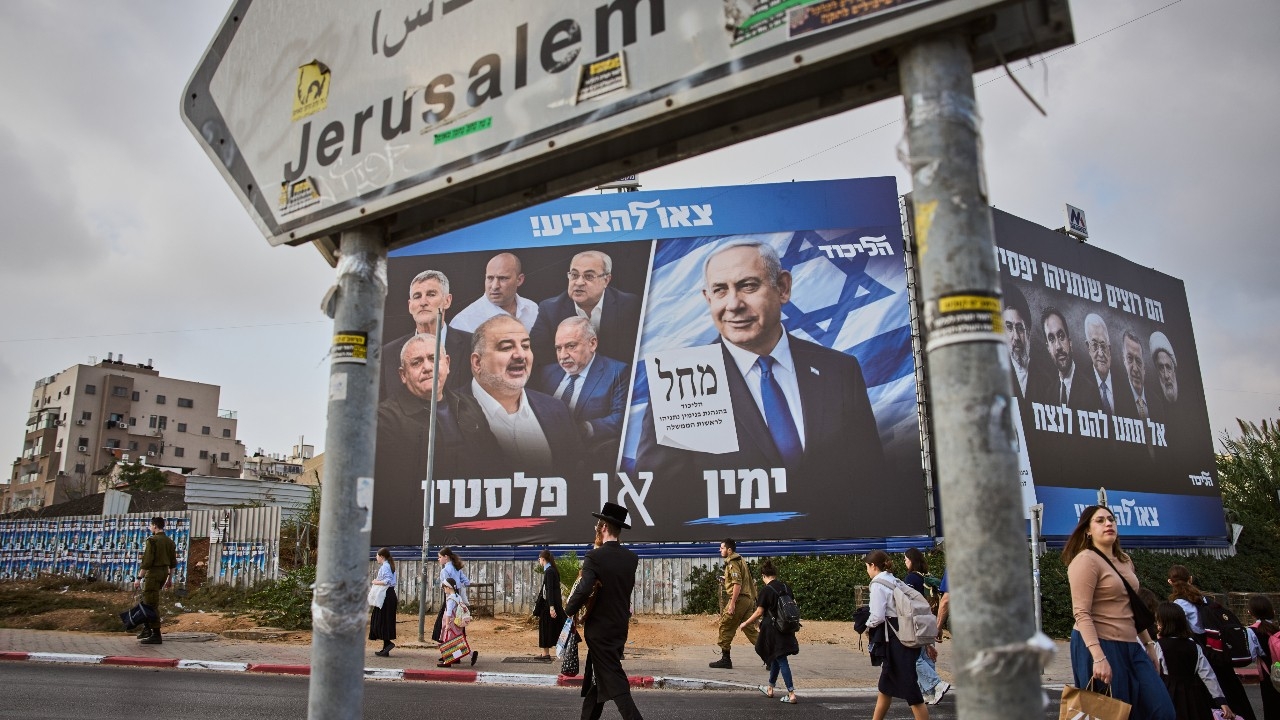
Unofficial Israeli election results, with 76.8% of votes counted, show the political bloc supporting Prime Minister Benjamin Netanyahu leading the opposition, yet neither side has secured a parliamentary majority. Meanwhile, Arab political parties appear to have increased their seats to 19, setting the stage for government formation to depend on negotiations between parties, potentially extending over several weeks.
Progress on 28 Oct shows that the political bloc backing Prime Minister Benjamin Netanyahu leads the opposition, but no side has yet won enough seats to form a majority government.
Data from Israel's Central Elections Committee at 10:58 a.m. local time, with 76.8% of precincts reporting, indicates Netanyahu's bloc holds 54 seats, the opposition led by Gadi Eizenkot has 47 seats, and Arab parties together have 19 seats.
These figures are partial and may change as counting continues; ballots in double envelopes, including those from soldiers, will be counted later.
Some parties have yet to reach the 3.25% electoral threshold to enter parliament, including the Reservists Party at 2.6%, People of Israel at 1.7%, and Charedi Public at 0.2%.
Israel's parliament, the Knesset, has 120 seats. Parties or blocs must gather at least 61 seats to form a majority government.
Partial results suggest Arab parties are likely to increase their seats to 19, boosted by high turnout among Arab voters. Key parties include the Joint List and Ra’am.
If Eizenkot's opposition bloc reaches a coalition agreement with Arab parties, it could achieve a majority. However, most opposition leaders have expressed reluctance to form a government with Arab parties, citing differences in values and political positions.
Yar Golan, leader of the Democratic Party within the opposition bloc, called for forming a government inclusive of Arab parties, stating on X that Israel should not accept a division of votes between Jews and Arabs as promoted by Netanyahu, but should seize this opportunity to build a government representing all citizens.
Before the election, Golan was the only opposition leader openly willing to work with the Joint List and Ra’am parties, while Eizenkot and other opposition leaders stated they would not form a government including Arab Knesset members.
Arab parties might support the opposition on certain votes without formally joining the government, potentially enabling a minority government to continue governing.
Earlier exit polls showed both sides nearly tied, each projected to win about 51 seats. Partial counts have since placed Netanyahu's bloc in the lead but still short of the 61-seat threshold.
Netanyahu, 77, who has served multiple terms as Israel's prime minister over nearly two decades, told supporters in Jerusalem early Wednesday he aims to form a strong right-wing government and called for a Jewish and Zionist majority, though he did not claim outright victory.
Eizenkot, a former Israeli army chief of staff and Netanyahu's less-experienced challenger, told supporters in Tel Aviv that Netanyahu should not exploit national security issues for political gain and called him a caretaker prime minister lacking a mandate or public trust.
Eizenkot added that people voted for change and urged the leader with less support to accept the election results.
Meanwhile, U.S. President Donald Trump said Wednesday that his support for Netanyahu greatly influenced this election.
This election occurred amid increasing international pressure on Israel due to wars involving Iran and the Gaza Strip, as well as Israeli settlement expansion and violence against Palestinians in the occupied West Bank.
Although Eizenkot shares many security views with Netanyahu and has supported Israeli military actions in Gaza, he has pledged to foster a more open domestic political climate, restore international relations, and control violence by Israeli settlers in the West Bank.
Preliminary data indicates voter turnout reached nearly 78%, the highest since 1999, reflecting strong public interest in the country's political future.
If no bloc secures a majority, government formation talks could drag on for weeks. Failure to reach an agreement may prompt new elections. Meanwhile, Netanyahu will remain caretaker prime minister until a new government is formed.
Once counting concludes, the Israeli president will consult party leaders before appointing the person most likely to form a government. The appointee has 28 days, with a possible 14-day extension, to build a coalition.
If the government is not formed within the deadline, the president may assign another candidate to try. Should this fail, Knesset members can propose a third candidate. If no government forms, Israel must hold new elections.
Between 2019 and 2022, Israel held five elections due to repeated failures to form stable governments. In 2022, Netanyahu's Likud party won the most seats—32—and formed a right-wing coalition with 64 seats total.
Official election results are expected to be announced by the evening of Thursday, 29 October, or the morning of Friday, 30 October.