

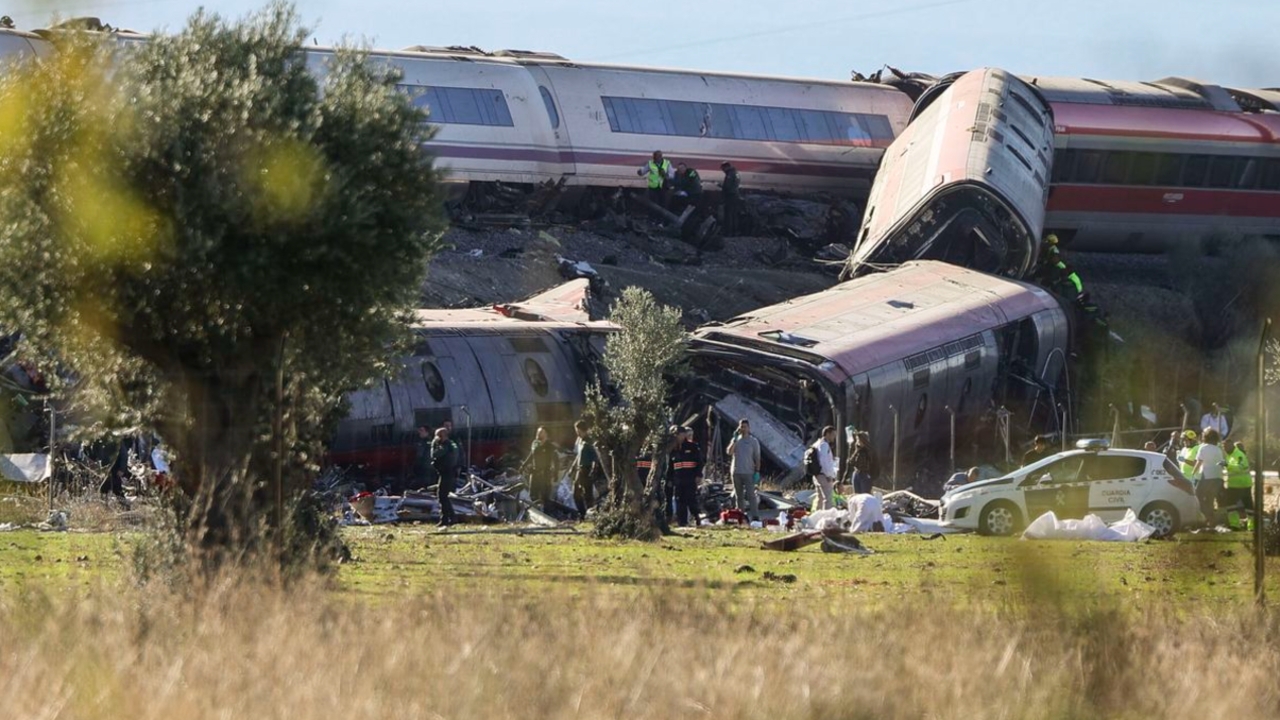
A collision between two high-speed trains occurred near Urda station in Toledo province, central Spain, on the morning of Wednesday, 28 October, resulting in at least 10 deaths and numerous injuries. Authorities warned the death toll may rise after two train carriages derailed and slid off the track, while train services between Madrid, Ciudad Real, and Andalusia were suspended.
A high-speed train collision occurred in Toledo province, Spain, on the morning of 28 October local time, causing at least 10 fatalities and many injuries. Officials warned the death toll could increase further.
Spain's Railway Infrastructure Administration (ADIF) reported the accident happened near Urda station involving Renfe's AVE high-speed train and Iryo train company. Emergency service 112 initially stated the Iryo train was stationary on the track when the AVE train crashed into it. Preliminary information suggests the AVE train rear-ended the Iryo train, causing two Iryo carriages to derail and slide down the embankment.
Esther Padilla, spokesperson for the Castilla-La Mancha regional government, told TVE that the confirmed death toll of 10 is likely to rise and warned the situation could worsen. Government sources speaking to El País newspaper said the accident might be more severe than the train collision in Adamuce in January.
Padilla also stated that the trains involved carried a large number of passengers: Iryo train number 7076 had 146 passengers and one infant, while AVE train number 2080 had 397 passengers.
Manuel Galán, mayor of Urda near the crash site, told TVE that civil protection agencies coordinated with the municipality to prepare the gymnasium building to accommodate dozens of affected passengers. Emergency and rescue teams are actively working on-site to assist those involved.
The Castilla-La Mancha regional government announced that Spain's Military Emergency Unit (UME) is supporting rescue operations, along with agencies from Castilla y León, Madrid, Andalusia, and Navarra regions.
Meanwhile, Spain's Civil Guard deployed a large-scale disaster expert team from the forensic unit SECRIM, traveling from Madrid to the scene to collect and examine scientific evidence related to the accident, aiding a thorough investigation.
Renfe announced the suspension of train services between Madrid, Ciudad Real, and Andalusia routes. The Spanish government canceled all scheduled activities on the same day to respond to the incident.
Spanish Prime Minister Pedro Sánchez expressed condolences to victims and their families via social media, stating he is deeply saddened by the serious accident and is closely coordinating with the Transport Minister and Castilla-La Mancha regional president. He confirmed emergency units are assisting those affected and ensuring safety, working with all relevant authorities.
José Luis Martínez-Almeida, mayor of Madrid, said the city mobilized emergency medical, civil protection, and firefighting personnel to support rescue efforts at the site. Madrid's government canceled all activities on Wednesday and postponed the 2027 annual budget press conference originally scheduled after the cabinet meeting.
The Vox party stated it will continue planned pre-election campaign events in Santander and Valladolid as scheduled, while criticizing the Spanish Socialist Workers' Party (PSOE) in political statements and calling for preservation of evidence related to the accident.
Antonio Maíllo, national coordinator of the United Left (IU) party, expressed deep shock and concern that the accident might be more severe than currently known. He urged all parties to exercise caution and await confirmed information, noting many workers were traveling on both trains.
This accident occurred less than a year after a train derailment and collision with an oncoming train in southern Spain in January, which killed 45 people. That was the deadliest railway accident in Spain since a 2013 collision that claimed 80 lives. The January accident also affected public confidence in Spain’s extensive high-speed rail network.
Authorities are currently focusing on assisting victims, gathering evidence, and investigating the cause of the collision. Updates on the number of fatalities and injuries will be closely monitored.