

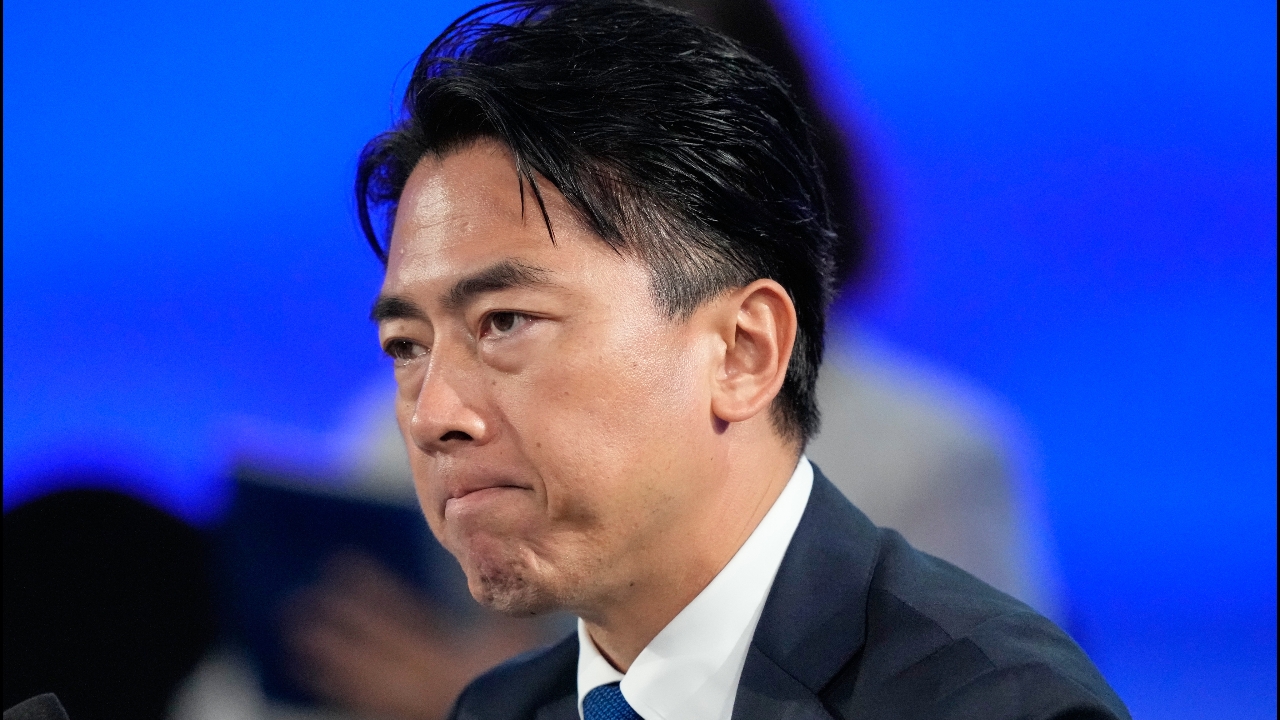
Japan's Defense Minister has reached an agreement with the U.S. to establish a factory in Japan for producing medium-range missiles, aiming to enhance deterrence capabilities and respond to security challenges in the region.
The U.S. and Japan have agreed to establish a factory in Japan to jointly produce modern medium-range air-to-air missiles, a key weapon for F-35 fighter jets. Shinjiro Koizumi, Japan's Defense Minister, announced this progress on the evening of Wednesday, 28 October, during a press conference in Cebu Province, Philippines.
Koizumi revealed this after talks with U.S. Defense Secretary Pete Hegseth on the sidelines of the annual meeting of defense ministers from ASEAN member countries and key dialogue partners across Asia and the Western world. However, he did not disclose further details about the agreement.
Koizumi stated that the missiles to be produced under this collaboration, named "Operation Supercharge," are extremely important for the F-35 fighter jets, which are among the most technologically advanced combat aircraft in the world and are also operated by Japan's Self-Defense Forces.
The Defense Minister also said that during discussions with Hegseth, both parties exchanged views on the increasingly severe regional security situation and agreed to accelerate efforts to strengthen the deterrence and response capabilities of the U.S.-Japan alliance more swiftly and intensively than before.
Both sides also reaffirmed the importance of a free and open international order based on the rule of law, rejecting any attempts to unilaterally change the status quo through force, coercion, or other means. However, Koizumi cautiously emphasized that the discussions were not targeted at any specific country.
Hegseth said in a separate meeting with ASEAN defense ministers on Wednesday that the Trump administration’s security approach is firm, prudent, and clear, aiming to deter coercion and aggression while avoiding unnecessary escalation of tensions.
He also stated that the U.S. wants its allies, partners, and potential adversaries to clearly understand its position, including its commitment to protect its own interests and those of its allies in the region.
Previously, the U.S. government pledged to strengthen deterrence against China's actions in the South China Sea, a disputed area and a major global trade route. China claims most of the sea, while the Philippines, Vietnam, Malaysia, Brunei—members of ASEAN—and Taiwan have overlapping claims.
Conflicts in the South China Sea have periodically intensified, especially confrontations between Chinese coast guard and naval vessels and those of the Philippines in disputed areas. The U.S. has warned it has obligations to defend the Philippines if its personnel, ships, or aircraft are attacked with weapons, including in the South China Sea.
Additionally, China and Japan have disputes over small islands in the East China Sea, which Japan controls. Both sides accuse each other of violating their maritime sovereignty.
This agreement to jointly produce missiles emerges amid efforts by the U.S. and Japan to strengthen military cooperation and enhance deterrence capabilities against threats in the Indo-Pacific region.
Click to read related newsInternational News