

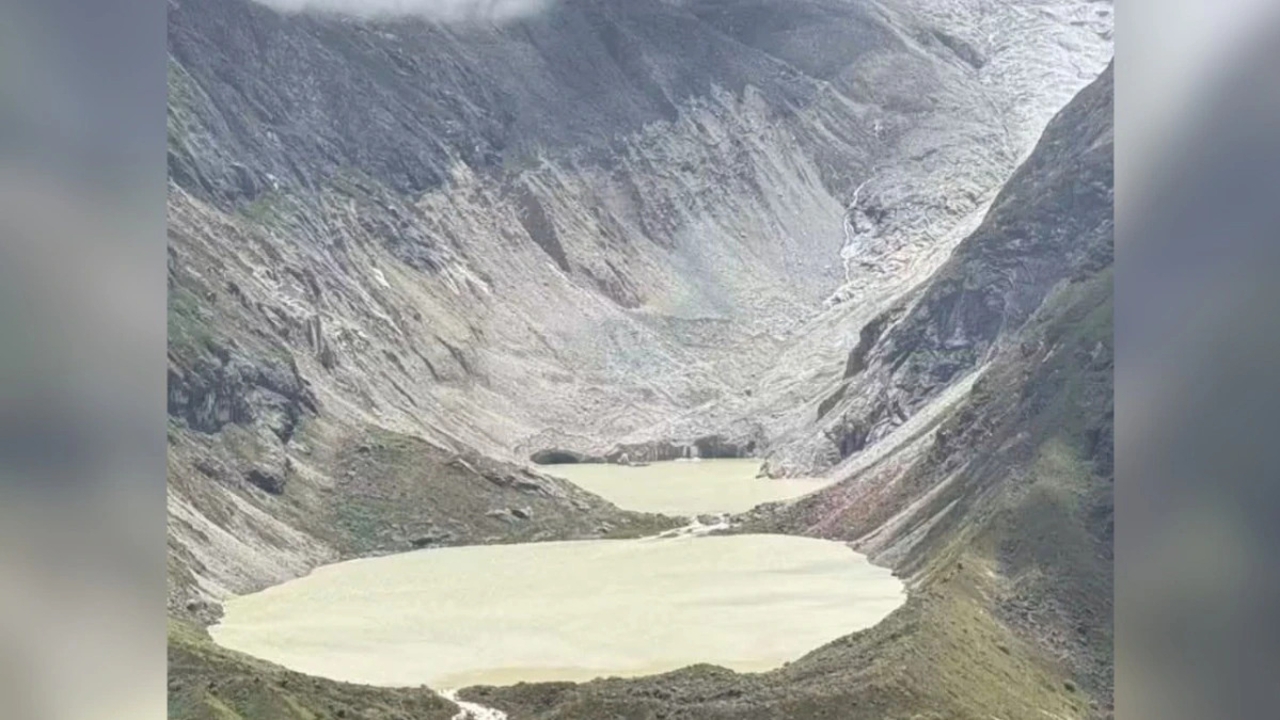
A flash flood occurred due to the bursting of a glacial lake in the Lamtang area of Bhutan, sending a large volume of water flowing into the Mochu and Sankosh rivers. This caused damage to the Gasa Sachu natural hot springs and local infrastructure. Meanwhile, the Indian state of West Bengal issued a high-level alert and evacuated more than 10,000 people to safe areas. There are currently no reports of injuries or fatalities.
The flash flood originated from the bursting of a glacial lake in the Lamtang area, Lunggo district, Gasa county, in northern Bhutan last night. The massive water flow surged down the Mochu River before heading toward the Sankosh River, which runs through northern West Bengal state in India.
Bhutan Broadcasting Service (BBS) television reported on Friday that the floodwaters damaged infrastructure within the Gasa Sachu natural hot springs, a popular tourist site in Bhutan. The full extent of the damage is not yet assessable due to darkness and strong currents. Additionally, there is a possibility that two Bailey bridges, which are prefabricated steel structures, were washed away by the floodwaters.
The Bhutanese newspaper Kuensel reported that some road sections leading to the village of Laya, where the hot springs are located, were damaged by the flood and rendered impassable, resulting in indefinite road closures. However, authorities evacuated residents from the area before the floodwaters reached the hot springs. There have been no initial reports of deaths or injuries.
This situation prompted the West Bengal state government in India to ramp up disaster response measures, issuing warnings to residents along the Sankosh River and its tributaries to quickly relocate to safer areas. The alert especially targets people in the Darjeeling hills, Terai region, and Dooars area, which are vulnerable to flooding.
Raju Bista, a Member of Parliament from the Bharatiya Janata Party (BJP) representing the Darjeeling constituency, posted on the X platform on Thursday, urging residents in the Sankosh river basin and its tributaries to evacuate promptly to avoid risks to life.
Nisith Pramanik, the Minister for West Bengal, stated that authorities received reports of the glacial lake burst in Bhutan, with water flowing down the Mochu River toward the Sankosh River. It is expected that the water will reach the plains within five to six hours, requiring preparations to manage potential flooding.
The government has mobilized state-level disaster management teams and alerted the National Disaster Response Force (NDRF) to stand by for support operations. Additionally, volunteer disaster management personnel have been deployed to the affected areas.
Amit Kumar Shaw, the Superintendent of Police for Alipurduar district, urged the public not to panic, confirming that relevant agencies are coordinating closely with Bhutanese authorities and disaster response teams.
He stated that approximately 4,000 to 5,000 people have been evacuated to temporary shelters, which are set up in schools, and more than 6,000 people have been moved to safe locations. In total, over 10,000 residents have been relocated from high-risk areas.
Moreover, the State Disaster Response Force (SDRF) personnel have been deployed, and the NDRF teams are en route to assist operations. Civil defense officers have also been mobilized to help the affected communities.
Authorities have prepared dry food, drinking water, and other essentials, including sanitation facilities, to support those in shelters. The latest updates indicate that the floodwater's intensity has slightly decreased, but a red alert remains in effect for the Sankosh river basin.
Officials have warned that the rushing waters could carry debris such as dead fish, large logs, and concrete fragments, urging people to avoid riverbanks and low-lying areas.
A glacial lake burst occurs when the natural dam containing meltwater from glaciers breaks or collapses, causing a sudden, massive release of water downstream. This leads to flash floods that can damage roads, bridges, communities, and infrastructure, especially in mountainous regions.
Local reports note that the Shintapu Lake, located beneath Mount Wakila in the Lunggo district of Gasa county, is one of 17 glacial lakes in Bhutan identified as potentially hazardous.
The Gasa Sachu hot springs area previously suffered flash flood damage in 2021 when the Mochu River altered its course and flooded the area.
This recent event has raised renewed concerns about the risks posed by glacial lake bursts in the Himalayan region. Reports indicate that in August last year, a flash flood near the Nepal-China border resulted in over 1,500 deaths and more than 5,000 people missing.
West Bengal authorities continue to monitor river water levels closely, coordinating with Bhutanese officials and disaster response agencies. They urge residents in vulnerable areas to stay updated with official warnings and announcements.
/sourceThe Hindu/TIMES OF INDIA