

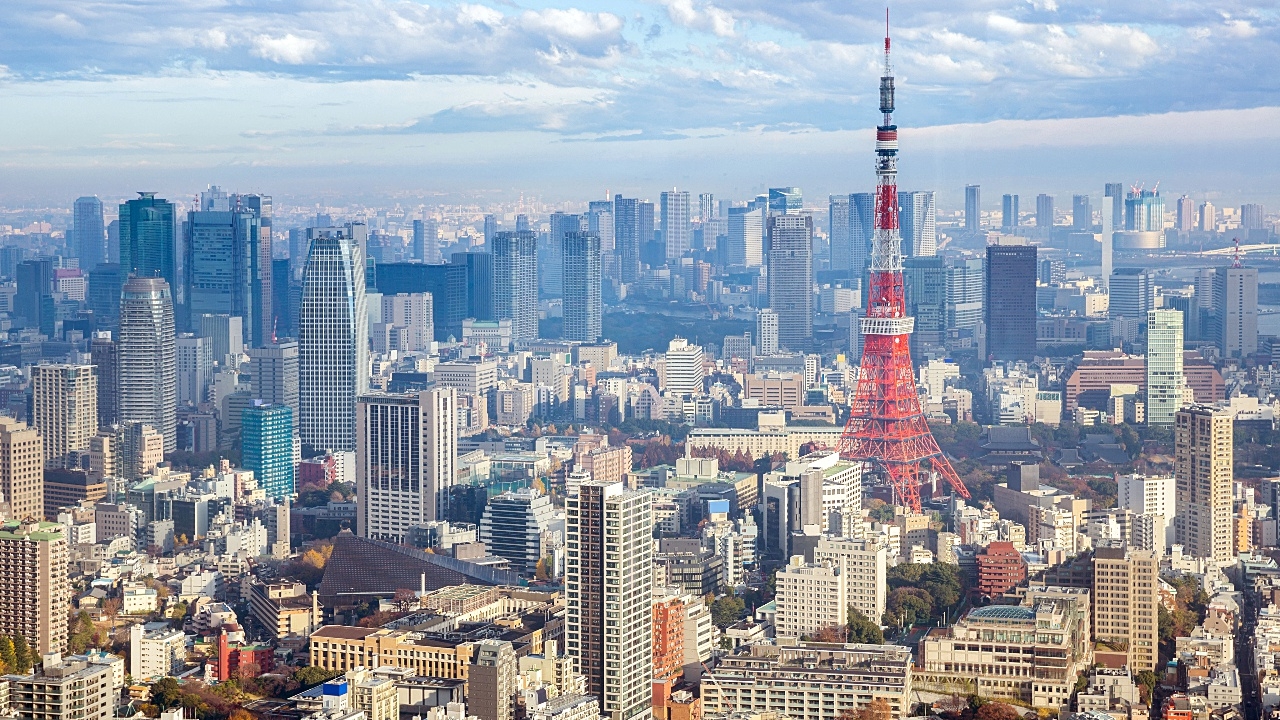
Japan has begun enforcing a law establishing a "Second Capital" to serve as a backup center for government operations and key national functions in case Tokyo experiences a major disaster. The law also aims to decentralize economic activities from the capital region. Four prefectures—Hokkaido, Aichi, Osaka, and Fukuoka—have met the initial qualifications and are preparing to apply for certification.
Japan's law establishing a "Second Capital," designed to serve as a backup center for Tokyo's critical missions and to decentralize economic activity from the capital region, came into effect today (30 Oct). It allows qualified prefectures to apply for this official designation.
This law is a key part of a coalition government agreement signed a year ago between Prime Minister Sanae Takaichi's Liberal Democratic Party (LDP) and the smaller Japan Innovation Party, which has strong support in Osaka.
The Japan Innovation Party aims to restructure Osaka's governance into a metropolitan model similar to Tokyo by creating special administrative wards.
The Japanese government expects to announce basic guidelines on the designation process for the Second Capital status, including a timeline for reviewing qualified prefectures, in November.
Under the law, the Second Capital's purpose is to ensure government operations and essential societal functions can continue if a major disaster impacts Tokyo. It also seeks to decentralize Japan's economic activities from the capital area to reduce concentration of power and economic activity.
Prefectures designated as backup capitals will be eligible for regulatory relaxations and tax incentives to encourage increased private sector investment.
The law allows the Prime Minister to designate one or more prefectures as backup capitals based on applications submitted. There is no limit to the number of such capitals; multiple prefectures may be certified if they meet the criteria.
Currently, four prefectures have expressed intent to apply for this status: Hokkaido in northern Japan, Aichi in the central region, Osaka in the west, and Fukuoka in the southwest of the country.
Previously, on 27 Oct, the Japanese government approved subsidiary legislation to set the criteria and conditions for prefectures seeking designation as a Second Capital.
Key economic and demographic criteria require applicant prefectures to have a GDP of at least 2.1% of the national GDP and to include a city with a population of no less than 1.2% of Japan's total population.
Administratively, applicant prefectures must restructure the designated core city into a special ward system or establish cooperation agreements between the city and prefectural governments to ensure efficient governance and coordination of responsibilities.
Additionally, the subsidiary law mandates that the backup capital must be located outside high-risk zones vulnerable to major earthquakes in the Tokyo area or volcanic eruptions from Mount Fuji, Japan's tallest mountain spanning Yamanashi and Shizuoka prefectures west of Tokyo.
Minoru Kihara, Chief Cabinet Secretary and government spokesperson, stated at a press conference Tuesday that if all four prefectures submit applications and meet the criteria, they will all be designated as Second Capitals.
The establishment of this backup capital system is part of efforts to decentralize Japan's administrative and economic centers, reduce overreliance on Tokyo, and prepare the country to maintain critical operations in the event of a major disaster affecting the capital.
.sourceKYODO NEWS/Japan Today