

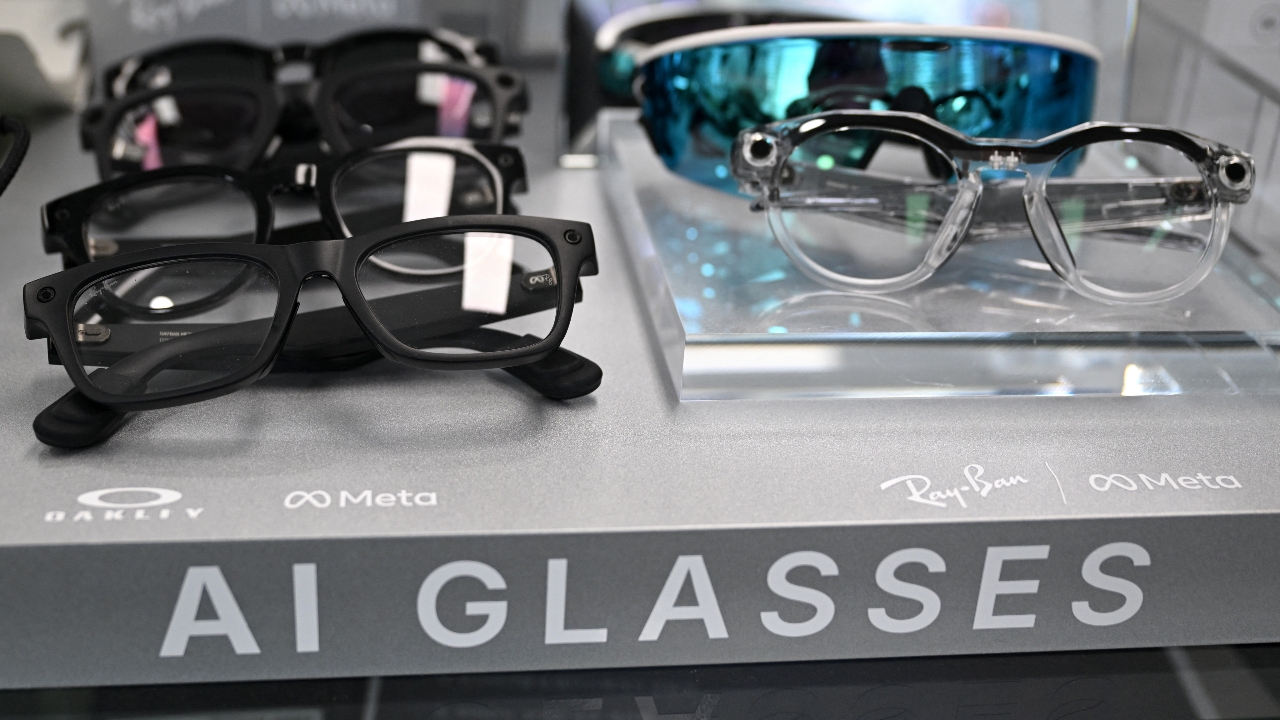
South Korea's Ministry of Education has escalated strict penalties, announcing criminal prosecution and plans to extend university entrance exam bans, known as the "Suneung," to up to three years for students using AI smart glasses to cheat. They have also ordered the deployment of staff nationwide to detect suspicious glasses at all exam centers starting from the November exam.
The Ministry of Education announced it will tighten measures to prevent cheating using AI smart glasses during the College Scholastic Ability Test (CSAT), known as "Suneung," a national exam critical for entry into top universities in the country.
Lee Joon-hyuk, an official from the Ministry of Education, told AFP that the ministry will file criminal charges against students caught using AI smart glasses to cheat on exams in the future.
Under the new measures, the ministry plans to amend higher education laws to increase the ban period for offenders from one year to up to three years. Those caught wearing or using AI smart glasses during exams will have their results disqualified and be banned from the following year's exam under current rules. Those refusing exam supervisors' requests to inspect glasses may face similar penalties after review. Furthermore, merely bringing or carrying AI smart glasses into the exam hall—even without use—could invalidate exam results.
The ministry views the use of AI smart glasses for cheating as a deliberate and premeditated act obstructing the national exam process. Therefore, it plans to refer cases to law enforcement to investigate and pursue charges including obstruction of official duties through deceit or fraud and interference with lawful operations.
These measures are unlikely to be enforced for next month's exam due to only about 20 days remaining for preparation, and Lee said it would be difficult to amend laws in time. However, the ministry aims to implement the new measures starting from next year's exam.
This year's CSAT is scheduled for 19 Nov 2023 GMT+7. AI smart glasses have been added to the list of banned items in exam halls since July, ahead of the 2027 academic year exam, with guidelines issued on how to handle violations.
Starting this year, the ministry will assign specialized staff at every exam center to help identify whether suspicious devices are AI smart glasses. There will be 1,312 personnel deployed nationwide, one per exam center.
If exam supervisors find suspicious devices, the designated staff will conduct initial inspections and assessments. If identification remains unclear, support teams from regional education offices, the Ministry of Education, and the Korea Institute for Curriculum and Evaluation will assist immediately.
These specialized staff can also patrol exam rooms to aid monitoring. This measure aims to reduce the workload on exam supervisors, who previously had to manage exam control and decide whether electronic devices were prohibited.
Additionally, the ministry is considering deploying advanced electronic device detection technologies at exam centers, including radio frequency detectors currently being developed by specialized agencies. They will evaluate feasibility before deciding whether to distribute such equipment nationwide starting next year.
The Ministry of Education also plans to enhance protections for exam supervisors. From this year's exams, all supervisors will be covered by group liability insurance, which will cover damages, legal fees, and litigation costs, with extended periods for claims submission.
This measure aims to protect supervisors from claims or lawsuits from parents or students in cases of errors during exams for which supervisors are not responsible.
Furthermore, starting with the 2028 academic year CSAT, the ministry will consider improving working conditions and compensation for exam supervisors.
The escalation of measures follows multiple incidents of students using or carrying AI smart glasses during exams. Previously, three students were caught wearing or possessing such glasses during written exams held by universities in Seoul.
Similar cases have occurred abroad; last summer, the National Taiwan University in Taipei disqualified an applicant found using AI smart glasses to cheat on entrance exams.
South Korea has previously faced exam cheating cases involving electronic devices. In 2005, a cheating ring was exposed where students used mobile phones to exchange answers during university entrance exams. One individual was sentenced to eight months in prison, suspended for two years.
The Ministry of Education also plans to recommend that universities strengthen anti-cheating measures for their own entrance exams, both written and interviews, with penalties aligned with the new national exam regulations.
The CSAT, or "Suneung," is known for its intense competition and significant pressure on South Korean students. The exam results heavily influence admission to top universities and are often viewed as critical for future economic stability and social status.
On exam day, authorities implement special nationwide measures to assist students. During the English listening test, flights are suspended nationwide for 35 minutes, except for emergency flights. Banks and government offices delay start times by one hour to reduce traffic and help students arrive at exam centers on time.
The immense pressure from South Korea's competitive education system is considered a factor contributing to high rates of adolescent depression and youth suicide compared to other countries worldwide.
Ministry of Education officials stated the government will continue developing measures to create a fair and stable exam environment for students while reducing burdens and risks faced by exam supervisors.