

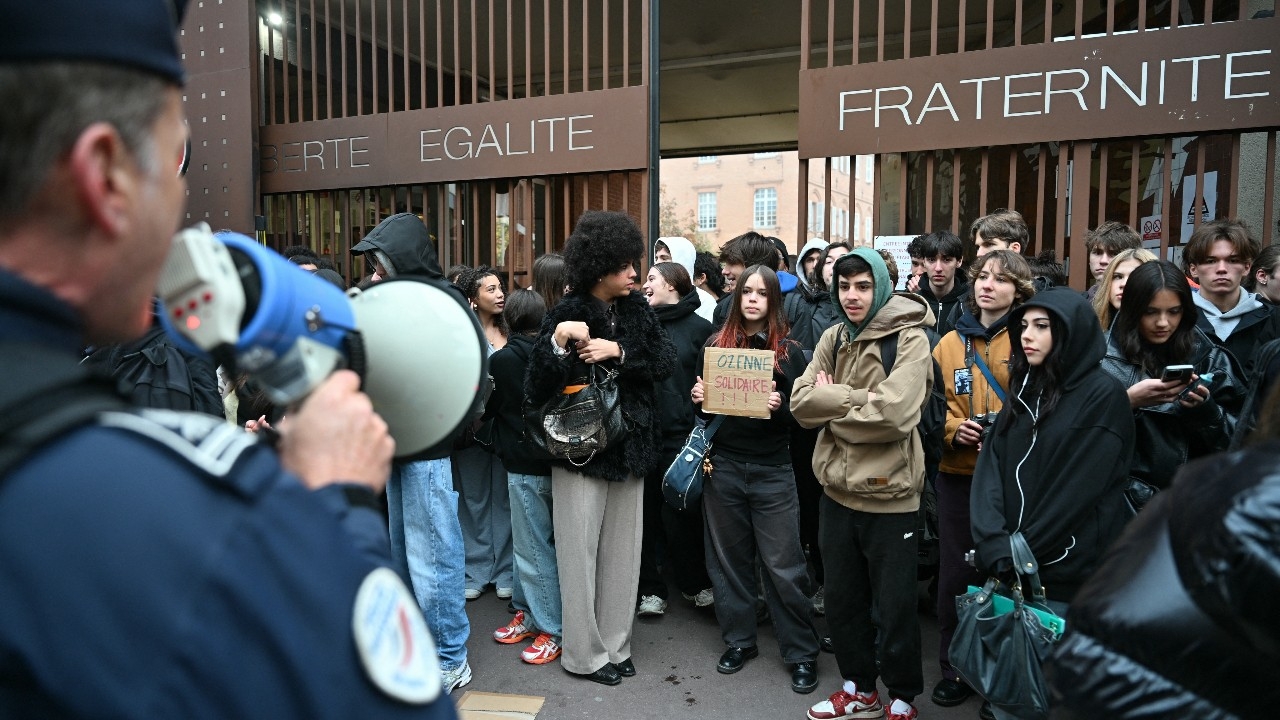
French high school students have resumed blocking entrances at some schools following the end of the autumn break during the All Saints' Day festival, reviving protests ongoing for over six weeks. Although the government announced measures to resolve education and inequality issues, student groups still view the proposals as insufficient. Meanwhile, the government warns the protests are affecting the studies of hundreds of thousands of students.
High school and university students across France began blockading entrances to several high schools on Monday, 2 November 2026, the first day back after the long All Saints' Day holiday, in an effort to continue prolonged social protests exceeding six weeks. This occurred despite the French government’s attempts to offer concessions and various easing measures during the school break.
The protests began in September in suburban Paris over deteriorating school environments and inequalities in the education system, then expanded into nationwide demonstrations incorporating issues from the cost-of-living crisis. Labor unions and activists joined, leading to violent clashes and riots in several major cities in recent weeks. This has become a significant test for the minority government led by President Emmanuel Macron.
Last week, Édouard Geoffroy, the French Minister of Education, announced proposals to end the protests, including allocating €4 billion to repair dilapidated school buildings, canceling planned staff cuts, adding 500 teaching positions, limiting class sizes in upper secondary schools to 28 students, increasing 15,000 university seats, and preparing to abolish the university selection system (Parcoursup) by 2028.
However, the Federation of High School Students and Student Unions (USL, UNEF, FAGE) agreed that these measures represent only a “first step” and are insufficient to resolve structural problems. They demand the government increase education funding to €10 billion and immediately abolish the Parcoursup system, prompting protesters to escalate blockades at schools and universities nationwide.
Édouard Geoffroy stated in an interview that the school entrance blockades on the first day of term affected only a very small proportion, with about 41 high schools blocked—roughly 1% of the approximately 3,700 schools nationwide—mostly around Paris, Marseille, Rennes, Toulouse, and northern France.
The French Minister of Education warned that ongoing school closures are impacting hundreds of thousands of students, especially those preparing for the Baccalauréat exams at the end of the academic year, some of whom have already missed four to five weeks of classes.
The minister emphasized, “Everyone has the legal right to protest, but no one has the right to prevent others from attending school. Such actions put the academic year of hundreds of thousands of students at risk, which we cannot allow.” He criticized that most leaders calling for high school blockades are university students who have already graduated.
Meanwhile, French authorities have increased police presence around educational institutions to prevent disturbances. President Macron has called for a swift return to peaceful teaching, noting government budget constraints amid France’s economic risks of recession and pressures to control public debt.
/sourceAFP/franceinfo/Reuters