

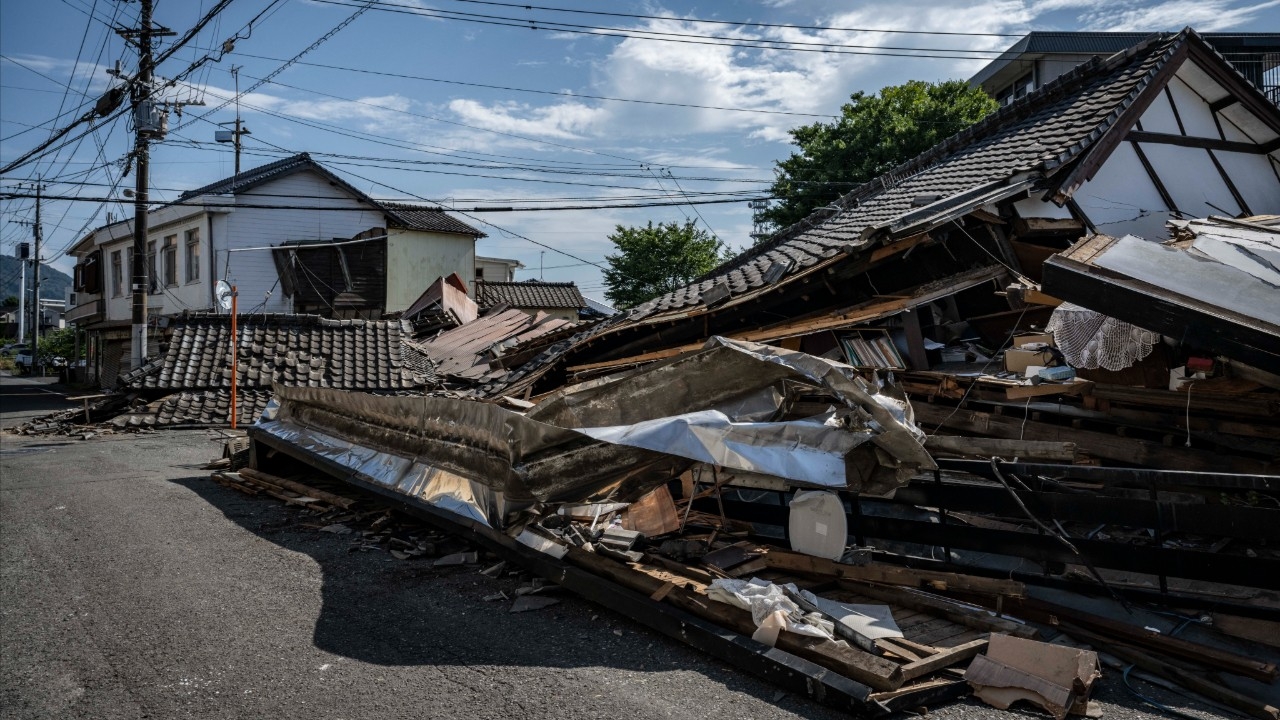
Japan has officially opened the National Disaster Management Office to oversee preparedness and response to severe disasters such as earthquakes and volcanic eruptions that may occur in the future.
On Monday, 2 Nov 2026 GMT+7, the Japanese government announced the official launch of the National Disaster Management Office, staffed by over 350 personnel serving as a comprehensive central command center covering everything from preparedness and emergency response to post-disaster recovery.
Although Japan frequently faces disasters, it previously lacked a central command center, instead relying on temporary coordination by pulling staff from various ministries. Additionally, surveys revealed that fewer than half of local officials had undergone disaster management training in the past five years, and only 15% of municipalities had evacuation plans for the elderly and disabled.
Goshi Hosono, Japan's Minister of Reconstruction and head of the National Disaster Management Office, issued an emergency order for local governments and civil organizations to urgently inspect the structural integrity of homes, secure furniture firmly, review evacuation routes, and stock at least three days' supply of water and portable toilets.
The establishment of the disaster management office comes amid warnings from experts about the possibility of multiple major earthquakes over the coming decades. While precise timing and locations cannot be predicted, officials want the public to remain prepared.
One of the most concerning risks is a massive earthquake linked to the Nankai Trough, an underwater trench off Japan’s southeastern coast. The government estimates such an event could cause up to 298,000 deaths, require evacuation of 6.5 million people, and damage 2.35 million homes.
The government also estimates nearly 200,000 deaths could result from a major earthquake near an underwater trench off Japan’s northern coast. Meanwhile, a strong quake shaking Tokyo could kill as many as 18,000 people, force evacuation of over 4.1 million residents, and damage more than 400,000 homes.
Additionally, an eruption of Mount Fuji could affect the homes of more than 790,000 people and severely disrupt transportation systems and infrastructure.
The National Disaster Management Office aims to improve evacuation centers, which in the past were often gyms or community halls lacking privacy, hot water, and adequate sanitation. Such poor conditions contributed to 3,810 deaths due to living conditions at evacuation centers following the 2011 earthquake.
The office plans to address these issues by providing clean portable toilets, mobile kitchens for hot meals, hot water bathing facilities, and cardboard beds to enhance hygiene and quality of life for disaster survivors.
Follow international news:https://www.thairath.co.th/news/foreign
Source:cna