

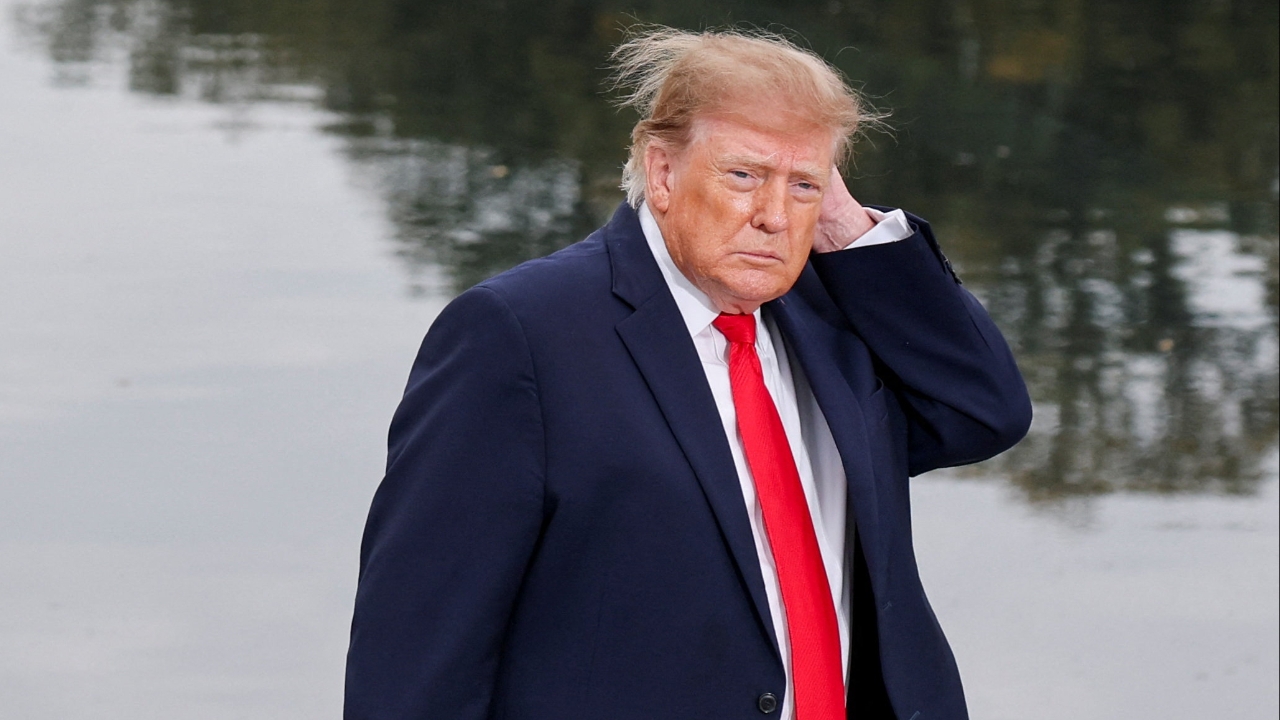
Trump revealed that a deal with Iran might happen soon after U.S. Vice President indicated progress in negotiations, while Tehran is prepared to reopen the Strait of Hormuz within two days if the U.S. accepts its conditions.
U.S. President Donald Trump signaled progress in talks with Iran aimed at preventing a return to fighting. On Monday, 2 Nov 2023 GMT+7, Trump stated on the Truth Social platform that a deal with Iran could happen, adding that Iran wants to reach an agreement as soon as possible.
On the same day, U.S. Vice President J.D. Vance said both he and Trump view the chances of reaching a deal positively. He noted that the U.S. has made progress in negotiations and that it remains to be seen how much further they can advance.
The diplomatic progress led to a more than 7% drop in global oil prices on Monday, after prices surged due to Iran's blockade of the Strait of Hormuz, a key global energy shipping route. This raised hopes that the eight-month-long conflict might come to an end.
These developments occurred ahead of the U.S. midterm elections on Tuesday, 3 Nov 2023 GMT+7, where Trump's Republican Party is trying to maintain its majority in Congress amid public dissatisfaction over the war and rising fuel prices. Meanwhile, the Democratic Party hopes to gain some control in Congress to impose political constraints on Trump's administration.
Iran reveals intense negotiations with Qatar and Pakistan mediating.
Iran's Foreign Minister Abbas Araghchi disclosed that indirect talks between Iran and the U.S. are ongoing through intermediaries. He described the current situation as sensitive and serious, leading to intense discussions and consultations.
Araghchi also said that Qatar and Pakistan play important roles as mediators, while China has called for both sides to return to the negotiation process. Meanwhile, Iran's top security officials discussed the conflict with Russian President Vladimir Putin.
Earlier, Axios news agency reported that Vance sent a letter to Mohsen Rezaee, a senior Iranian security official, to discuss the possibility of reopening new negotiations, marking a high-level move between the two countries after several months.
However, Iran's First Vice President Mohammad Reza Aref viewed the message from the U.S. as an acknowledgment of Iran’s victory, while Trump continued to send threatening signals, having previously stated during his campaign that the U.S. might need to use force against Iran at some point.
Iran ready to reopen the Strait of Hormuz within two days, but the U.S. must accept conditions.
A senior Iranian official revealed that Iran is prepared to consider reopening the Strait of Hormuz within two days if the U.S. agrees to Tehran’s demands.
In September, Iran proposed reopening the Strait of Hormuz within seven days on condition that the U.S. ends the war on all fronts, unfreezes Iranian assets, lifts oil sanctions, and stops blocking Iranian ports.
Iranian Foreign Ministry spokesperson Ismail Baqaei said the possibility of implementing this plan within two days is another sign of Iran’s sincerity in seeking a resolution.
Meanwhile, Chinese President Xi Jinping discussed the war with Sultan Haitham bin Tariq of Oman in Beijing on Monday, with both urging resolution of disputes through political and diplomatic channels, calling on the U.S. and Iran to move toward peace, reach a ceasefire agreement, and prevent further war outbreaks.
China also held talks with Iranian and Saudi officials in Beijing, aiming to help ease regional tensions.
Chinese Foreign Minister Wang Yi stated that China supports Iran in protecting its sovereignty and security, while Iran’s Deputy Secretary of the Supreme National Security Council Ali Baqeri reaffirmed Iran’s unchanging stance to defend its security, sovereignty, and territorial integrity, refusing to compromise on these issues.
Additionally, Araghchi told Al Jazeera on Sunday that the U.S. must accept the new shipping route through the Strait of Hormuz agreed upon by Iran and Oman. He also called on the U.S. to lift recently imposed sanctions and reduce American military presence in the region.
Trump said on Saturday that the U.S. still needs to deal with one or two more targets, including Mount Pigaq in central Iran, suspected to host a nuclear program. Meanwhile, an Iranian Foreign Ministry spokesperson warned that if Iran is attacked, it will respond immediately, severely, and comprehensively.
Click to read related newsInternational news