

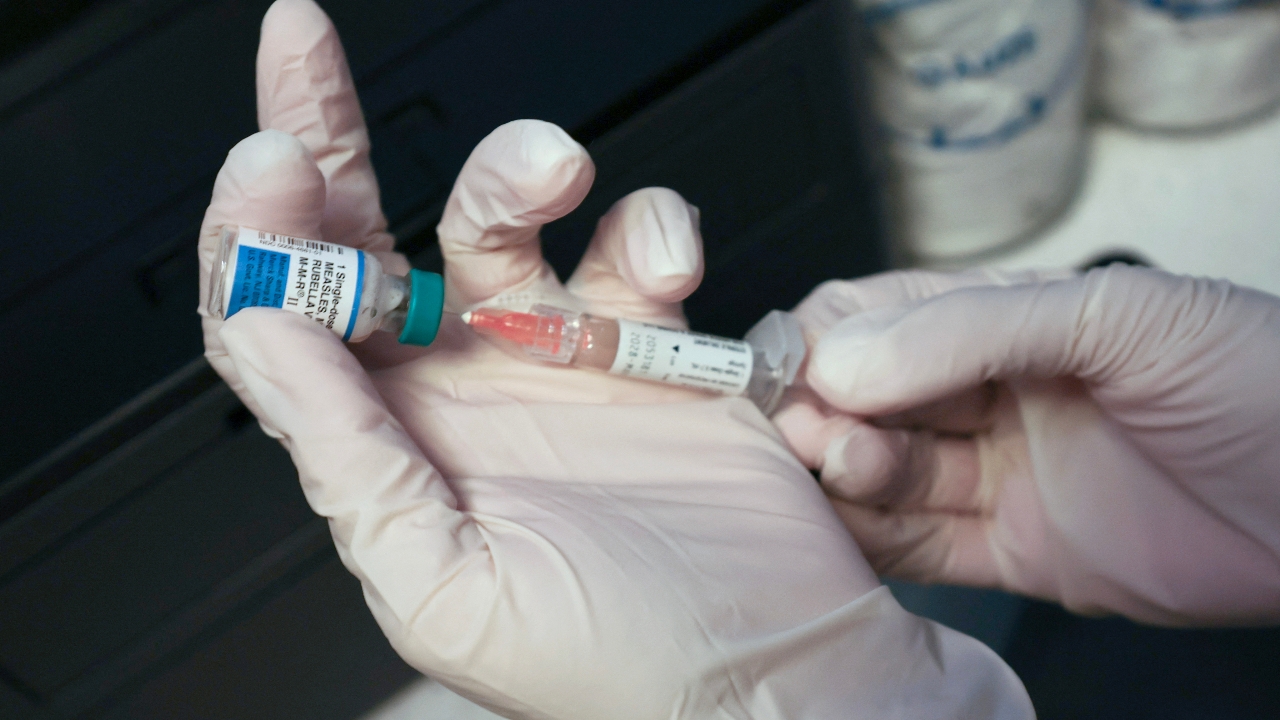
New York state officials have confirmed that a child in Lewis County died from measles, marking the state's first death from the disease in over 30 years, amid the United States' most severe measles outbreak in decades, with more than 4,800 cases nationwide and Pennsylvania being the hardest hit state.
The New York State Department of Health announced that a child in Lewis County died from measles linked to the ongoing outbreak, marking the first confirmed measles death in New York state in over 30 years.
New York Governor Kathy Hochul expressed her condolences to the family of the deceased child, stating that as a mother and grandmother, she cannot imagine the loss the family is facing. She extended her sympathies to everyone who knew and loved the child, emphasizing that measles is a highly contagious disease and that vaccination remains the most effective prevention method.
Hochul also noted that this death serves as a stark reminder of the serious consequences that can occur when efforts to prevent vaccine-preventable diseases are undermined.
The New York State Department of Health and Lewis County public health authorities issued a joint statement expressing sympathy to the family and requesting the public to respect their privacy during this difficult time. They urged New Yorkers to verify their vaccination records, emphasizing that measles can cause severe complications and death, and that vaccination is the best protection.
In October, Hochul declared a statewide disaster emergency to address measles outbreaks in multiple areas of New York and neighboring states. As of 24 October, New York state had recorded 178 cumulative cases, with 170 cases outside New York City and 8 within the city. Lewis County reported 15 cases as of 14 October, all in individuals unvaccinated against measles, mumps, and rubella (MMR).
The New York State Department of Health said it has offered resources and assistance to Lewis County, including community education and vaccination support, to respond to the fatal case, as well as helping other counties facing ongoing outbreaks.
Earlier in October, Hochul stated that New York would seek federal assistance to control the outbreak but did not confirm whether an official request had been made for the U.S. Centers for Disease Control and Prevention (CDC) to send epidemiology teams to assist.
The U.S. Department of Health and Human Services (HHS) reported that, at New York's request, the CDC has deployed epidemiologists and experts to work with state health officials, providing support in disease surveillance, data analysis, strategic planning, and other outbreak response measures.
This situation arises as the United States faces its most severe measles resurgence in decades. The CDC reported three measles-related deaths nationwide this year but did not specify the states involved. Pennsylvania is the epicenter of this year’s outbreak, with 1,433 confirmed cases and five measles-related deaths.
Reported death figures differ among agencies after the CDC changed its method for tracking measles fatalities, switching to data from the National Center for Health Statistics (NCHS) instead of relying on individual state health departments, as was previously done. This change occurred during Robert F. Kennedy Jr.'s tenure as U.S. Secretary of Health and Human Services.
CDC data show that this year there have been over 4,800 measles cases in the U.S., the highest number since 1991, with more than one-quarter of cases occurring in Pennsylvania.
Additionally, the Pan American Health Organization, the regional office of the World Health Organization, is scheduled to hold a committee meeting next week to review the status of measles elimination in the region, with widespread expectations that the U.S. may lose its measles elimination status it has maintained since 2000.
Most public health experts link the increase in U.S. measles cases to declining vaccination rates, although some areas have seen increased vaccination uptake following outbreak surges.
The CDC recommends that children receive two doses of the MMR vaccine to achieve about 97% immunity against measles. However, CDC national survey data indicate that in 2024, only 93% of three-year-old children in the U.S. had received at least one MMR dose, below the 95% threshold needed to prevent outbreaks. By 2025, vaccination coverage among this age group rose to 97%, coinciding with the first U.S. measles death in decades.
CDC data further indicate that about one in five unvaccinated measles patients require hospitalization, approximately one in twenty children with measles develop pneumonia—the most common cause of measles deaths in young children—and about one in 1,000 may suffer encephalitis, or brain swelling.
Robert F. Kennedy Jr. has faced widespread criticism for his stance on the measles outbreak, including statements perceived as downplaying the effectiveness of MMR vaccine immunity. The measles deaths in Pennsylvania have sparked disputes between Kennedy and state officials.
Former President Donald Trump has also made multiple inaccurate claims about vaccines, including falsely linking vaccines to autism and asserting that children receive too many vaccines.
However, HHS stated on Monday that Kennedy and CDC Director Dr. Erica Schwartz both affirm that the MMR vaccine remains the most effective method to prevent measles.
Governor Hochul reiterated that vaccination remains the most crucial tool to prevent other families from suffering measles-related losses, affirming New York’s commitment to evidence-based public health measures and all efforts to protect the health and safety of its residents.