

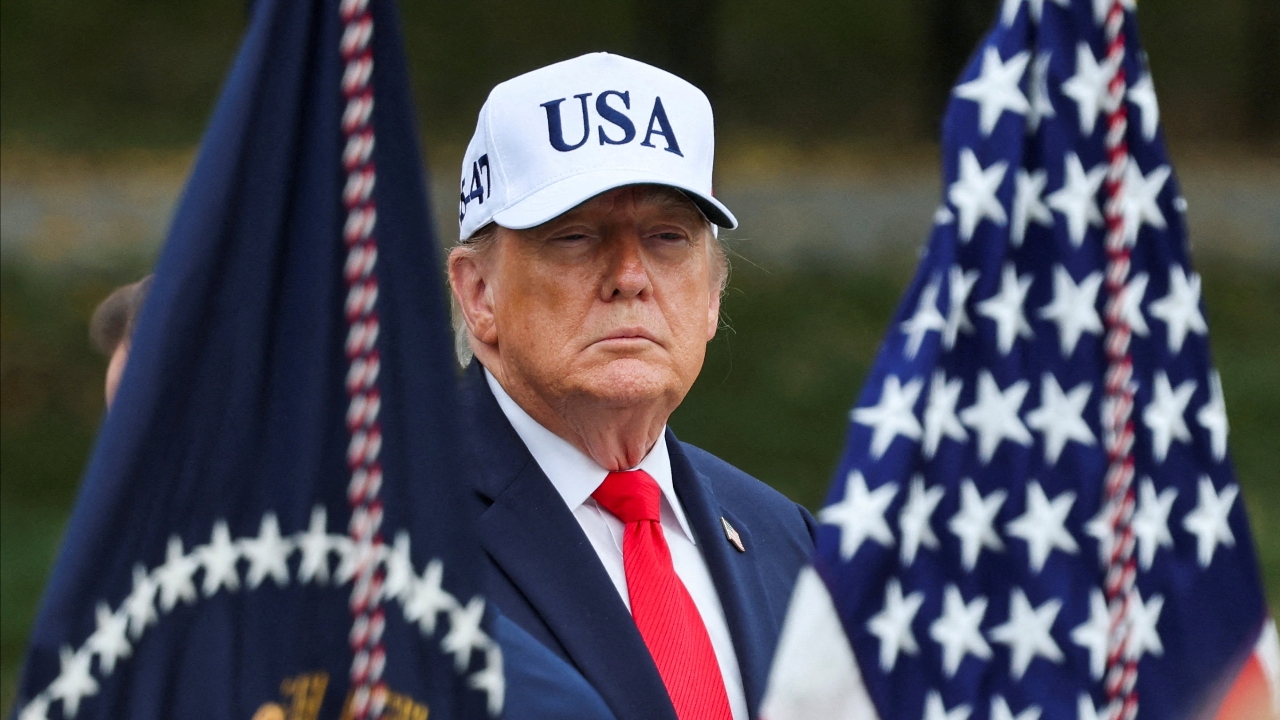
The Democrats' victory in the U.S. midterm elections increases political constraints on President Donald Trump during the remaining two years of his term, especially regarding trade and tax policies that could affect Asia's economy and the approach toward China.
The results of the U.S. midterm elections on Tuesday, 3 Nov 2020 GMT+7, saw the Democratic Party secure majorities in both chambers of Congress. This marks a significant political setback for President Donald Trump and may influence Washington's policies in the last two years of his term, particularly on issues critical to Asia such as U.S.-China relations, trade and taxes, and security commitments in the Indo-Pacific region.
Analysts note that although the election results shift the political balance in the U.S., it remains uncertain how much this will translate into policy changes. The effects Asia should watch fall into three key areas.
1. Asia Watches Trump's Tax Policy, Faces Increased Trade Pressure Risk
Stephen Olson, a senior visiting researcher at Singapore’s ISEAS-Yusof Ishak Institute, warns that once the pressure from the midterms subsides, Trump may have more freedom to pursue aggressive trade policies, including considering additional import tariffs on China and other Asian countries.
One key measure to monitor is the use of Section 301 of U.S. trade law to investigate and retaliate against countries perceived as engaging in unfair trade practices, which could increase pressure on regional economies, especially those reliant on exports to the U.S. market.
However, with Democrats holding increased power in Congress, legislators from both parties may be more willing to scrutinize and oppose Trump's trade policies, particularly tax measures that impact American consumers.
U.S. allies in Asia such as Japan and South Korea hope the new Congress will help mitigate the effects of Trump's tax policies and lead to a more consistent U.S. stance toward its allies.
Meanwhile, policies aimed at reducing dependence on China, particularly efforts to build supply chains for critical minerals like rare earths, tungsten, and lithium, are likely to continue receiving bipartisan support and thus remain largely unchanged.
2. U.S.-China Relations May Face More Pressure Despite Trump’s Desire for Stability
Another issue Asia must closely observe is the U.S.-China relationship, which may become more complicated following the Democrats gaining control of Congress.
Adrian Ang, a researcher at Singapore's S. Rajaratnam School of International Studies, believes the Democrat-controlled Congress may adopt a tougher stance toward China than Trump himself, pushing for stricter trade and technology controls and scrutinizing the delayed $14 billion arms sale to Taiwan.
Additionally, Democratic lawmakers might use oversight mechanisms, summon government officials for briefings, and impose defense budget conditions to hinder Trump’s attempts to ease some sanctions on China.
However, some analysts think U.S. policy supporting Taiwan is unlikely to change significantly, as both Democrats and Republicans have historically maintained a strong pro-Taiwan position.
Meanwhile, China signals a desire to maintain stable relations with the U.S. Mao Ning, spokesperson for China’s Ministry of Foreign Affairs, stated that the midterm elections are an internal U.S. affair and affirmed China’s readiness to work with Washington to honor agreements made by both countries' leaders and manage differences appropriately.
Analysts view current U.S.-China stability as stemming from mutual constraints and vulnerabilities; if the U.S. takes a tougher approach, there is a risk of Chinese retaliation.
The upcoming meeting between Trump and Chinese President Xi Jinping on the sidelines of the APEC summit in Shenzhen is a critical signal reflecting the future direction of the two powers’ relationship, while Trump is also scheduled to attend the ASEAN summit in Manila next week.
3. Asian Security Likely Unchanged Despite Democratic Control of Congress
Regarding security, analysts caution that Asian countries and ASEAN should not expect major shifts in U.S. foreign or military policies solely because Democrats have taken congressional majorities.
Chong Ja Ian, associate professor at the National University of Singapore, noted that although the election marks a significant internal political change in the U.S., ASEAN may see adjustments in Washington’s approach on trade, military use, and diplomacy, but fundamental policies are unlikely to be completely altered.
This is because the midterms did not change the presidency, and Trump still holds broad authority over foreign policy, military force, and tax measures. Congress can oversee and control budgets but cannot entirely block presidential decisions.
Serious limitations on presidential power would require special circumstances such as impeachment proceedings or overwhelming bipartisan support on certain issues.
Moreover, without a two-thirds majority in both chambers, Democrats cannot override presidential vetoes, making it difficult to curb Trump's power if most Republicans continue supporting him.
Watch Trump’s Asia strategy amid increasing domestic political pressures.
In summary, the Democrats’ midterm victory likely subjects Trump to heightened political scrutiny and resistance, especially regarding tax policies and measures against China, which may impact the economies and security of countries across Asia.
However, foreign and diplomatic powers remain primarily with the White House, meaning the key direction of U.S. policies still largely depends on Trump’s decisions.
What Asia must monitor next is not only the political ripple effects in Washington but also how Trump uses the ASEAN summit and meetings with Chinese leaders to signal directions on trade relations, competition with China, and America’s role in the Indo-Pacific region.
Click to read more about international news