

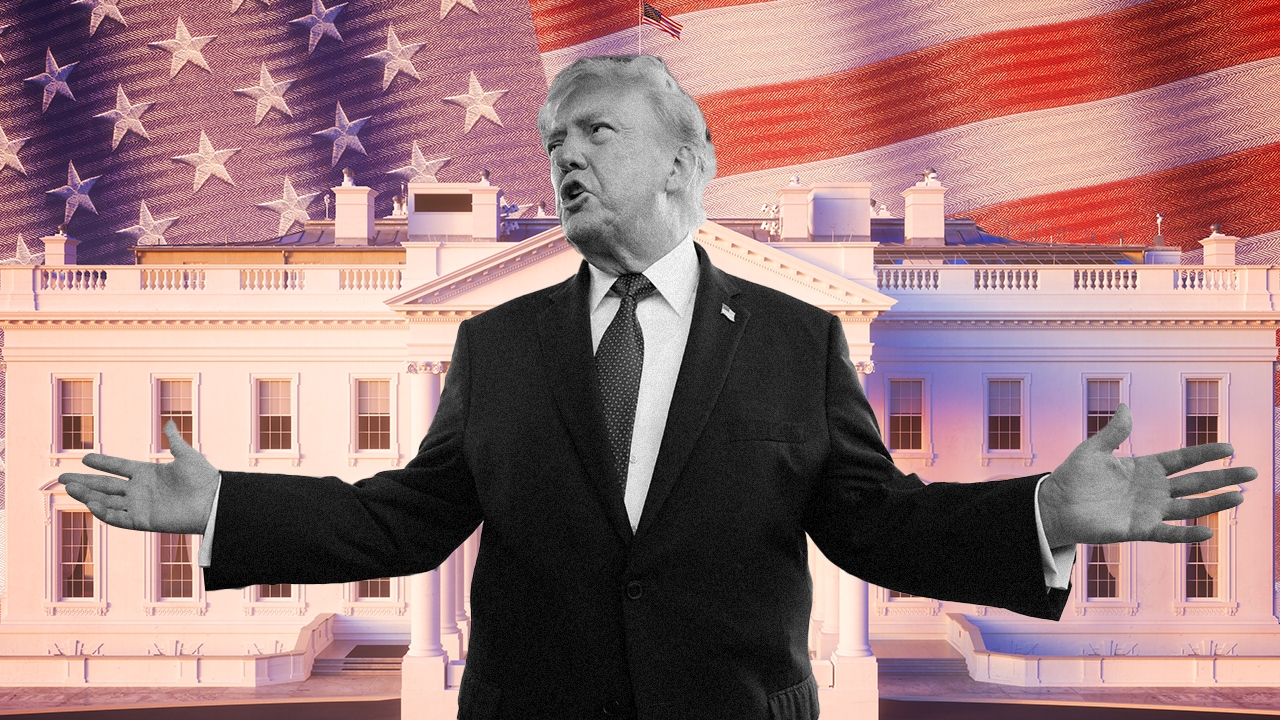
The Republican defeat in the U.S. midterm elections has effects beyond Washington politics, as Trump faces domestic pressure. Attention now turns to how policies toward Iran, Israel, and Ukraine will unfold.
The U.S. midterm election results, with the Democratic Party winning control of both houses, deliver a significant blow to President Donald Trump, who has spent nearly two years trying to reshape U.S. foreign policy, creating uncertainty among allies and adversaries worldwide.
This defeat may further limit Trump's ability to advance domestic policies, as Democrats gain greater tools to scrutinize and oppose the administration. Nonetheless, the U.S. president still holds substantial power over foreign policy.
The key question is whether this political loss will lead Trump to compromise more or push harder to use his authority to achieve his goals, especially on major international conflicts challenging his administration.
Iran feels encouraged but remains cautious, watching whether Trump will choose negotiation or initiate a fresh military attack.
Iran expressed satisfaction with the Republican defeat, seeing it as reflecting American public dissatisfaction with war, yet Tehran’s government remains skeptical that U.S. political changes will lead to improved policies toward Iran.
Trump acknowledged in a phone interview with Fox News that the war in Iran contributed to the Republican loss, while U.S. Vice President J.D. Vance stated more explicitly on X, "The reason we lost is war."
Mohammad Bagher Ghalibaf, Speaker of Iran’s Parliament and a key negotiator with the U.S., described the election results as a verdict from the American people on war, warning that if the U.S. government ignores public will, Iran is prepared to respond.
However, Iran's Supreme Leader Mojtaba Khamenei warned that anyone assuming the election results would cause a U.S. policy shift is seriously mistaken. Iran remains ready for possible renewed conflict while simultaneously pursuing diplomatic channels.
The situation grows more concerning amid reports that Trump is considering escalating attacks on Iran, despite occasionally stating there are no immediate plans to intensify conflict. Iran warns that any new attacks would provoke a broader response than previous clashes.
Ali Vasegh from the International Crisis Group analyzed that the Iran war has become a political burden for Trump, forcing him to choose between a deal enabling a face-saving victory or using military force to regain leverage. The weakened leader might risk battlefield action to restore prestige.
Meanwhile, U.S.-Iran negotiation channels are reactivating after stalling this summer, with Iran sending officials to meet Qatar mediators who are discussing proposals with Washington. Previously, Iran offered to open the Strait of Hormuz within two days if Trump accepted seven Iranian conditions.
Chatham House analysts believe Iran may feel validated by the election results but do not expect the country's problems to ease. Trump still seeks diplomatic wins without appearing weak, while Iran may exploit Trump’s domestic pressures to demand more favorable terms.
It is thus possible both sides will intensify diplomatic efforts alongside military posturing, with a temporary agreement on the Strait of Hormuz more attainable than a comprehensive deal.
Israel fears the end of U.S. support era amid growing opposition in both parties.
For Israel, the midterm election results are a major warning. Earlier announcements suggested a sudden cut in U.S. military aid to Israel. The Democrats' sweeping victory in both houses heightens Israeli government concerns about the future of its key alliance.
Support for Israel from both Democratic and Republican parties has visibly declined, with many Democrats upset over Gaza war casualties, and some Republicans believing the U.S. supports Israel excessively.
Michael Oren, former Israeli ambassador to the U.S., said criticism of Israel has become a shared issue across both parties and is gaining traction within the Democratic Party and among growing numbers of Republicans.
He views the end of military aid as possibly just the beginning of changes, including reduced or ceased intelligence sharing and ending cooperation on key military systems like the Iron Dome air defense, as well as altering U.S. stances in the UN Security Council, where presidents from both parties have vetoed resolutions to protect Israel.
Yaakov Katz, former executive editor of the Jerusalem Post, warned that changes could go beyond cutting military aid, with the U.S. potentially suspending arms sales, imposing sanctions, and cutting budgets for joint economic cooperation programs with Israel.
Anti-Israel sentiment in the U.S. has intensified amid the Iran war, as some Americans view the joint U.S.-Israeli attacks as a war pushed by Israeli Prime Minister Benjamin Netanyahu to draw Trump in. Netanyahu also seeks renewed attacks on Iran, which could escalate a conflict affecting oil prices and American living costs, further damaging Republican popularity.
Additionally, Netanyahu faces domestic political challenges after Israel’s parliamentary election a week before the U.S. midterms, losing his majority. His main rival, Gadi Eisenkot, former military chief, still lacks enough support to form a government alone.
Yar Golani, leader of Israel’s left-wing Democratic Party, warned Israel cannot afford more lost time and must change leadership to steer the country away from risks of sanctions and international isolation.
Ukraine looks beyond the Trump era, eyeing new opportunities but fearing Putin may accelerate aggression before time runs out.
Regarding Ukraine, relations between President Volodymyr Zelensky and Trump deteriorated sharply in the weeks before the election, with Trump pushing for Zelensky's replacement, promoting energy deals favoring Russia, and disrupting U.S.-Ukraine cooperation on technology and intelligence.
This prompted Kyiv to prepare for U.S. political changes and look beyond the Trump era, although Ukraine still depends on Washington for weapons, funding, and security guarantees.
After months of unfriendly treatment from the Trump administration, Ukraine assessed that it cannot rely solely on the U.S.
Serhiy Kyslytsya, deputy official in Ukraine’s presidential office, confirmed on national TV that Ukraine will build stable, sincere relations with whichever U.S. party gains power, continue seeking Patriot missile defense systems, and prepare to work with the new Congress and any executive orders Trump might issue to circumvent Congressional restrictions.
For Ukraine, Trump’s political defeat may be good news, potentially reducing his leverage and reopening stronger support for Ukraine in the future, after Trump previously claimed peace deals were easy but pressured Ukraine to accept terms favoring Russia.
However, Ukraine must watch a significant risk: Russian President Vladimir Putin may see about one year before the 2028 U.S. presidential election to regain Republican support for Ukraine.
So far, Putin has been unable to convert his seemingly close ties with Trump into battlefield victories, but with Trump's political power weakening, Russia may accelerate efforts to achieve the best possible outcome in the Ukraine war during the remaining time.
Source:CNN
Click to read related news aboutInternational news