

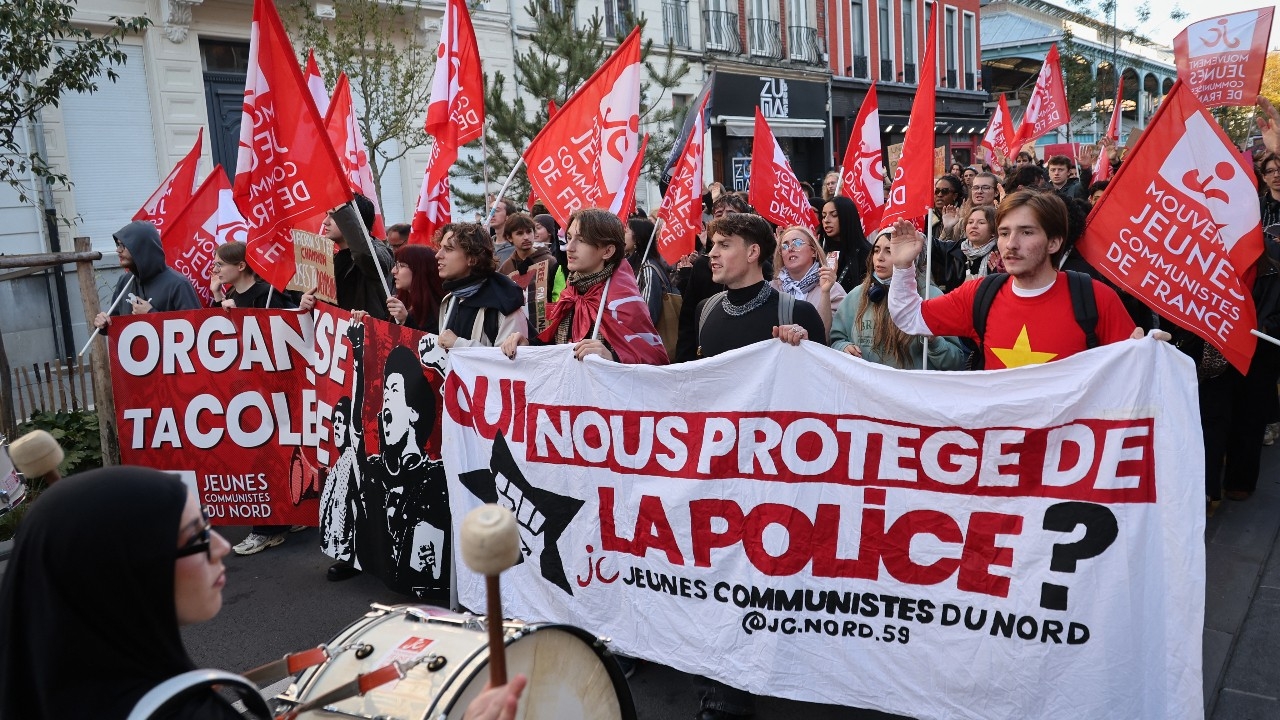
France is facing a new wave of protests as labor unions have teamed up with student movements to call for nationwide strikes and demonstrations at over 252 sites on 5 November. Up to 700,000 people are expected to take to the streets demanding increases in the minimum wage and solutions to rising fuel and living costs, while authorities have mobilized 70,000 police officers with strict security measures in place.
Labor unions across France are preparing for strikes and protests nationwide today (5 Nov) to demand wage increases and solutions to the cost-of-living crisis, amid ongoing social discontent since early autumn.
According to the protest map from the CGT labor federation, 252 demonstrations have been announced nationwide, with schools and transport systems expected to be impacted by the strikes.
The unions’ demands include raising the minimum wage, which has not seen a special increase since 2012; wage hikes covering all sectors; tax reforms to promote fairness; maintaining quality public services; and improving education conditions for youth.
Marylise Léon, secretary general of the CFDT labor union, told BFM television that workers should be able to live decently on their earnings and urged both the government and employers to address these issues.
French authorities estimate that between 500,000 and 700,000 people will participate in protests nationwide, excluding Paris, where around 80,000 are expected to march starting at 2 p.m. local time.
The unions hope participation numbers will approach those of the 2023 pension reform protests, which drew over one million demonstrators.
This protest wave arises amid dissatisfaction with rising living costs and social inequality, with high school student movements initiating demands for better education conditions that have since expanded into broader protests.
On 17 October, France experienced one of its most severe riots in years, marked by clashes with police, looting, and destruction of public property. Authorities admitted security and intelligence shortcomings contributed to the events.
Laurent Nuñez, France’s Interior Minister, announced the deployment of 70,000 police and security personnel nationwide, warning of a firm response to any violence or disorder.
High school student protests occurred in several cities, with Paris police using tear gas to block students attempting to block the entrance of Hélène-Boucher high school. While most protests remained peaceful, some confrontations with police involved tear gas and water cannons to disperse crowds.
An investigation into attempted murder is underway following an arson bomb attack on security forces in Paris on 31 October. Police response has faced criticism for excessive force, with internal inquiries into allegations of police brutality against protesters, resulting in multiple severe injuries and thousands of arrests.
Another contentious issue is the restriction of march routes in Paris, with the Paris police forbidding the union-proposed path originally planned between Place de la Bastille and Place de la Concorde. The Paris Administrative Court upheld this ban after the unions appealed.
The approved new route will run from Place de la République to Place de la Nation, located east of central Paris, avoiding the city center and key sites like the Parliament, the presidential palace, and the government offices.
Several unions criticized the route ban as an attempt to limit freedom of assembly, while CGT representatives in Toulouse in southern France affirmed they would march downtown despite the court upholding the police ban.
Fabrice Fort, a CGT representative, said the accumulated discontent is growing and that public support remains strong for the movements by high school and university students. He questioned restrictions on freedoms, particularly the ban on demonstrations, which has motivated even those usually silent to become active.
Transport and education sectors are affected by the strike. The French Ministry of Education estimates that 17.54% of teachers and staff in public primary schools are participating in the strike.
The National Railway Company of France (SNCF) has four unions—CGT, Unsa Ferroviaire, Sud Rail, and CFDT—calling for a strike, with the company expecting disruptions on regional and Paris commuter lines, while high-speed TGV services will be minimally affected.
Paris’s RATP transport network is expected to operate normally for metro, buses, and trams, except for the RER B train line, which will run at half capacity in the northern section and two-thirds capacity in the southern section.
This protest comes as France faces pressure to resolve financial issues ahead of the presidential election in six months, which will choose President Emmanuel Macron’s successor, with far-right parties currently leading in opinion polls.
Similar youth movements have also occurred in several European countries, including Denmark, Germany, and Italy, over recent weeks.
/sourceAFP/franceinfo