

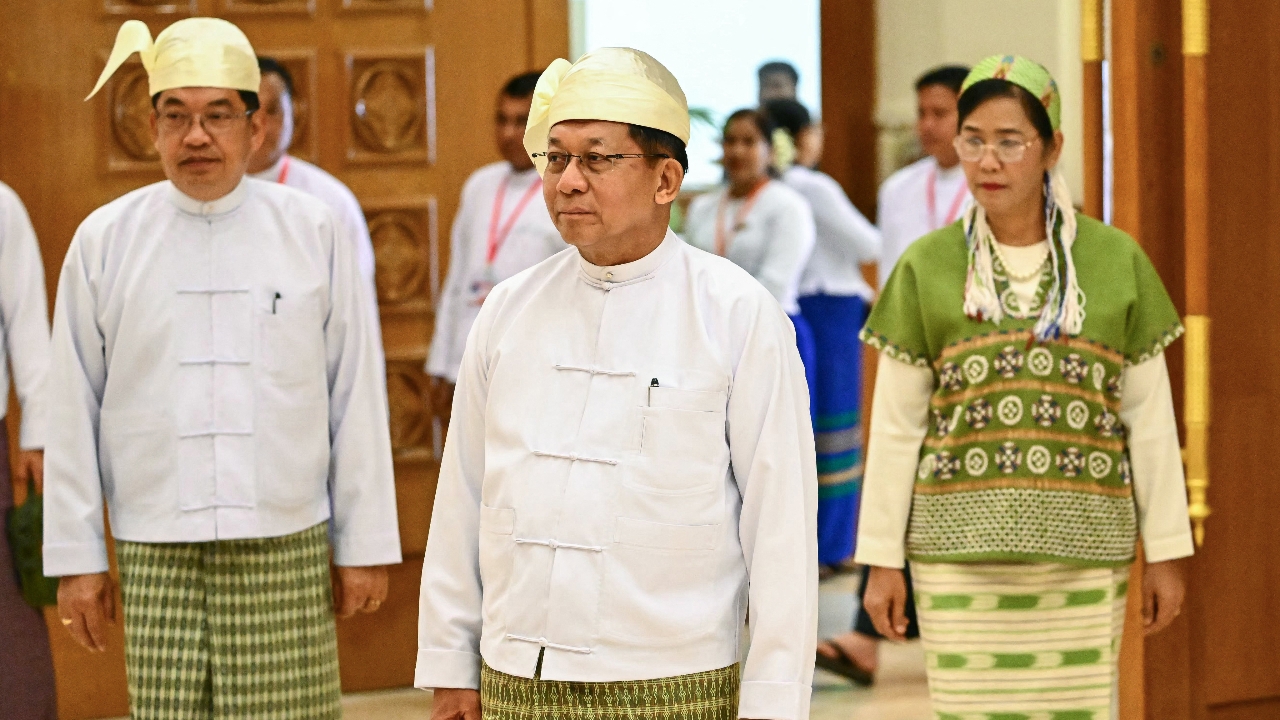
Myanmar's Election Commission announced that by-elections will be held on 4 April 2027, covering 55 constituencies at both parliamentary and local council levels, including areas where voting was not possible in the previous general election due to the civil war. The military-backed party already holds a majority in parliament amid criticism that the election is an attempt to legitimize the military government.
Myanmar has announced by-elections for 4 April 2027 to fill vacant seats in the national parliament and state and regional assemblies, including areas previously unable to hold voting due to the ongoing intense civil war.
The Union Election Commission of Myanmar stated that the by-elections will be held in 55 constituencies: 34 seats in the House of Representatives, 5 in the House of Nationalities, and 16 in the state and regional assemblies, according to an announcement published in the state newspaper Myanmar Alin on Friday, 6 November.
Earlier, AFP reported that the by-elections would cover 39 constituencies in the House of Representatives and House of Nationalities, with about one-third being areas where voting in the previous general election was canceled for security reasons. However, the Election Commission's latest announcement includes a total of 55 constituencies, incorporating seats in state and regional assemblies.
The by-elections will be conducted in areas still experiencing ongoing conflict, including northern Sagaing, central Mandalay, and western Chin state, with at least seven constituencies located in towns recently recaptured by the military from anti-government armed groups.
Additionally, there are areas in seven states and regions where fighting continues between the military and anti-military opposition groups.
The remaining by-elections aim to replace parliamentary members who vacated their seats under the constitution due to appointments or promotions to higher government positions.
Myanmar's parliament comprises 440 seats in the House of Representatives and 224 in the House of Nationalities, with military-appointed members holding 25% of seats in each chamber.
These by-elections are the first votes since the general election concluded in January, in which the Union Solidarity and Development Party (USDP), supporting the military, won nearly 90% of parliamentary seats alongside allied parties, ensuring their continued political dominance.
Former Commander-in-Chief Min Aung Hlaing, leader of the 2021 coup, was sworn in as president in April following staged elections held by the military government in December and January, which the military claimed restored the country to democracy.
However, the elections have been widely criticized as highly restricted processes designed to legitimize military rule. Voting could not take place in areas controlled by anti-government armed groups, who view the elections as merely staged.
Myanmar has faced conflict and unrest since the military seized power from the civilian government led by Aung San Suu Kyi in 2021. Following violent crackdowns on protests by security forces, many anti-military opponents took up arms, expanding the civil war nationwide.
Several major opposition parties, including Aung San Suu Kyi's National League for Democracy (NLD), formerly the ruling party, were dissolved after refusing to participate in elections they deemed illegitimate. Aung San Suu Kyi remains under detention.
While the by-elections may allow participating parties to demonstrate public support, they are not expected to significantly alter the parliamentary power balance, as the USDP and its allies already hold a majority.
Myanmar's civil war is entering its sixth year, with more than 100,000 deaths estimated by ACLED, a global conflict and violence monitoring organization.
Source: AFP /The Associated Press