

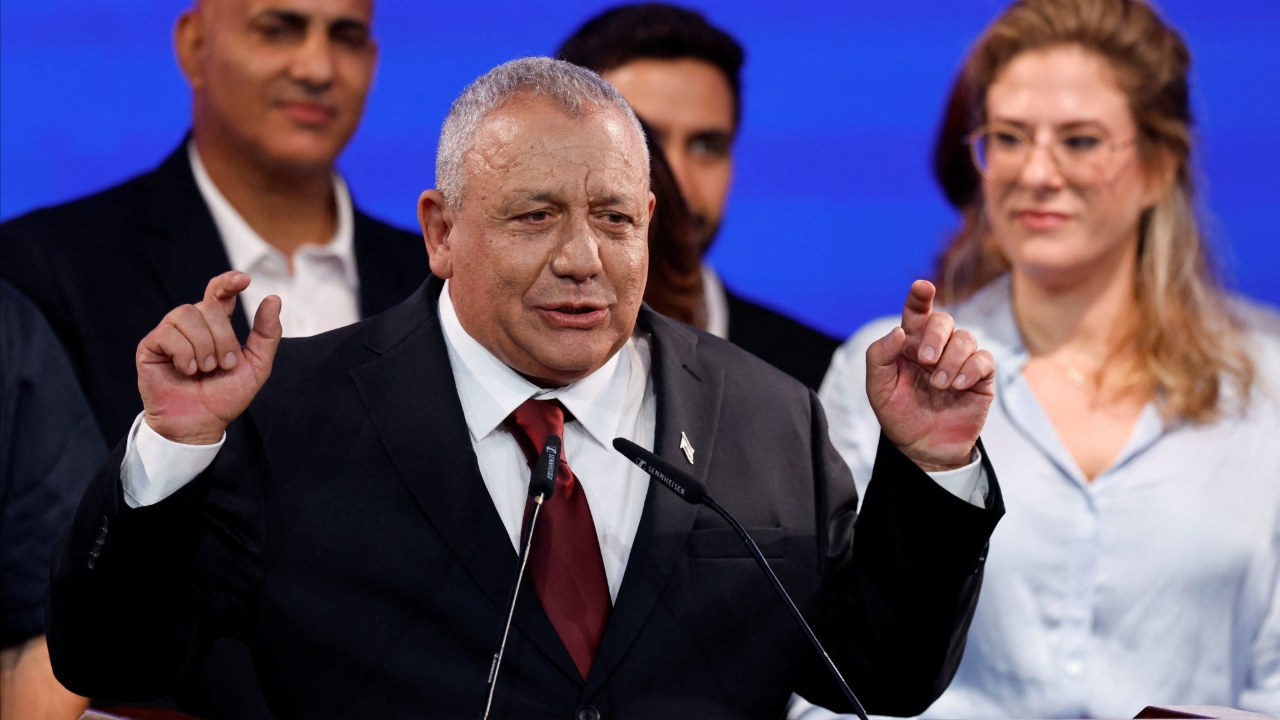
The Israeli president has decided to assign opposition leader Kadi Eisenkot the task of forming a new government, despite Benjamin Netanyahu having won more parliamentary seats in the election.
On 7 Nov 2026 GMT+7, Israeli President Isaac Herzog announced that he had entrusted Kadi Eisenkot, leader of the opposition party, with forming a new coalition government after no political group, including those led by Eisenkot or Prime Minister Benjamin Netanyahu, secured a parliamentary majority in last week's election.
Eisenkot, a former chief of staff of the military, will have 28 days to attempt to form a government, with the option to request an additional 14-day extension.
The Israeli president holds the authority to appoint the individual he believes has the greatest chance of successfully forming a government, without being obligated to choose the leader of the party with the most seats.
Thus, although Netanyahu's right-wing Likud party and its allies won a combined 53 parliamentary seats, and Eisenkot's centrist opposition bloc secured 48 of the 120 total seats, Eisenkot received support and was nominated for prime minister by 67 votes during consultations with the president, compared to Netanyahu's 46 votes.
President Herzog stated that to avoid another election and to build a stable government, he expects political groups and party representatives to understand that not all campaign promises and alliances can realistically be fulfilled at this time.
Meanwhile, the two Arab political alliances—the United Arab List and the Joint List—secured a record total of 19 seats, becoming a key factor in government formation. Previously, almost all Jewish parties had declared they would not join a government with Arab parties.
If Eisenkot does not include Arab parties or reach agreements with them to gain support, he will need to negotiate with ultra-Orthodox Jewish parties, presenting a challenging and complex task.
Analysts suggest one possible outcome is a new Israeli national unity government combining Netanyahu's and Eisenkot's parties, as previously occurred in 2020 when Netanyahu and centrist rival Benny Gantz agreed to alternate power.
Alternatively, Israel might have a right-wing government led by Netanyahu that attracts defectors from Eisenkot's side, or a government led by Eisenkot supported by Arab parties—both scenarios remain possible.
Follow international news:https://www.thairath.co.th/news/foreign
Source:bbc