

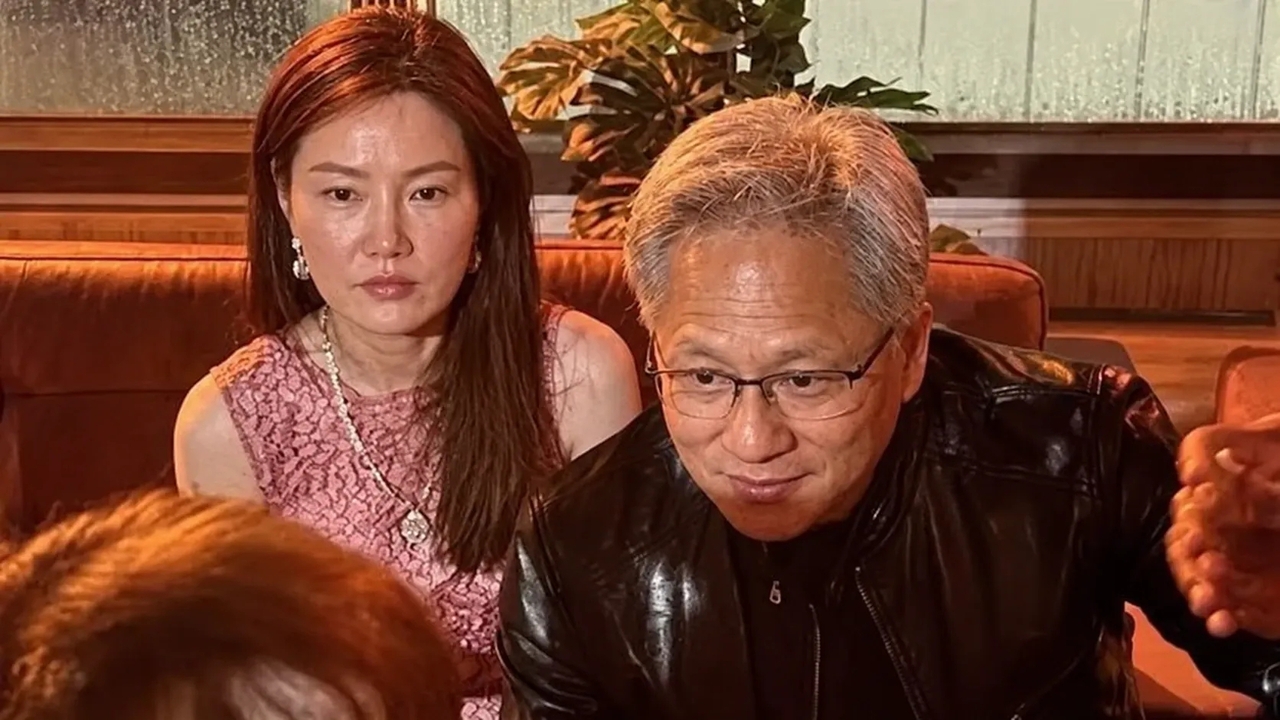
Jensen Huang, CEO and co-founder of Nvidia, a global leader in artificial intelligence chip manufacturing, is facing significant pressure after U.S. media reports revealed his close relationship with a Chinese businesswoman whom U.S. intelligence agencies suspect of being a spy for the Chinese government. Huang has admitted to an extramarital affair and apologized to his family, while Nvidia's board announced an independent investigation amid concerns this could involve access to advanced AI chip technology and U.S. national security.
The origin of the issue: Jensen Huang's relationship with Alice Huang.
The matter gained major attention on 29 Oct 2026 after The New York Times reported that Jensen Huang had a close relationship with a businesswoman named Alice Huang, who is not related to him and is a former executive at Megaspeed, a company headquartered in Singapore.
Reports state that U.S. intelligence agencies have been monitoring Alice Huang and found evidence suggesting she works for Chinese intelligence, tasked with collecting business and technology-related information from key figures in the chip industry.
U.S. officials also believe Alice Huang sought to build a close relationship with Jensen Huang to gain access to information or influence him to ease restrictions on exporting advanced AI chips to China.
However, it must be clearly noted that accusations of espionage and information gathering come from news reports and intelligence sources, not court judgments, and no public evidence has confirmed Jensen Huang shared classified information with the Chinese government.

Who is Alice Huang and what is her connection to Nvidia?
Alice Huang is a Chinese businesswoman active in technology and chip industries, having worked in multiple sectors before joining Megaspeed, a company involved in data centers and AI processing equipment.
Megaspeed is significant here as it is a major purchaser of Nvidia chips and processing equipment, reportedly buying billions of dollars worth from Nvidia and associated businesses, according to The New York Times.
Reports also indicate U.S. agencies are investigating Megaspeed amid suspicions that the company may have helped China access advanced AI chips restricted from export, especially high-performance chips the U.S. prohibits selling to China due to national security concerns.
Information from The New York Times and Financial Times reports states that U.S. intelligence believes Alice Huang was recruited or supported by Chinese intelligence to gather information and build relations with Jensen Huang.
This issue is thus not only about a personal relationship of a tech executive but also ties into AI chip export controls, U.S.-China technology competition, and risks of critical technology being used by adversaries.

How has Nvidia responded and what has Jensen Huang admitted?
Initially, Nvidia denied any wrongdoing in Jensen Huang's relationship with Alice Huang, stating that meetings with client executives are a normal part of the CEO's duties, with Huang meeting thousands of client executives annually.
Nvidia also affirmed that data center clients in Asia receive only general business information, not trade secrets or data related to U.S. national security.
However, the situation changed notably on 8 Nov 2026 when Jensen Huang sent a message to Nvidia employees admitting to infidelity and apologizing to his family, colleagues, the board, shareholders, and business partners.
Huang stated his actions caused pain to his wife and children, accepted full responsibility, and vowed to work to regain trust.
In the same message, Huang addressed national security concerns, affirming his support for the board's investigation, willingness to cooperate fully, and reiterated his commitment to protecting Nvidia and supporting U.S. national security.
Nvidia launches independent investigation: Does this threaten Huang's CEO position?
Following the media storm and political pressure in the U.S., Nvidia's board announced an independent investigation overseen by a committee not involved in day-to-day management, with external legal counsel participating.
The company stated that although there is currently no reason to believe Nvidia's confidential information or U.S. national security has been compromised, the investigation will review all available information to establish the full facts.
The board expressed confidence in Jensen Huang and the management team, noting that Huang supports the investigation process and will cooperate fully.
Nvidia confirmed that Huang remains CEO and is committed to continuing company leadership without interruption.

U.S. Congress summons Jensen Huang amid national security concerns.
The matter has escalated politically, with senior Republican members of the U.S. House of Representatives calling for Jensen Huang to testify before Congress regarding his relationship with Alice Huang and Nvidia's data security measures.
In a letter dated 4 Nov 2026, Representatives Brian Mast, Chair of the Foreign Affairs Committee; John Moolenaar, Chair of the China Task Force; and Eric Crawford, Chair of the Intelligence Committee, requested a closed-door hearing with Huang on 18 Nov.
Legislators cited significant concerns raised by the reports about Chinese access to critical U.S. technology and data, emphasizing the need to assess the national security impact.
Meanwhile, some Democrats have also expressed interest in investigating the matter, viewing AI chip export controls and scrutiny of tech company ties to individuals potentially linked to the Chinese government as important issues.
This issue may therefore become a bipartisan investigation of keen interest in U.S. politics.

Why is this significant for U.S.-China AI chip competition?
Nvidia is one of the most critical companies in the AI industry, producing processing chips used in data centers and AI systems of leading global tech companies.
Since 2022, the U.S. has imposed export controls limiting China's access to high-performance chips and chipmaking equipment, citing concerns that China might use such technology to advance military capabilities and AI systems threatening national security.
Jensen Huang plays a key role in U.S.-technology industry relations as he has advocated for government consideration of chip exports to China and met with former President Donald Trump to discuss chip and AI policies.
In 2025, the Trump administration also imposed a 15% tariff on certain Nvidia chip sales to China, reflecting how chip exports have become both economic and strategic national security issues.
If investigations find classified information was shared or security measures breached, consequences could extend beyond Nvidia to export controls, tech company regulation, and AI competition policies between the U.S. and China.
Impact on stock market and investor confidence.
Nvidia is among the world's most valuable companies, and Jensen Huang has been instrumental in its success for over 30 years.
Market analysts believe the investigation could increase uncertainty for Nvidia's stock, as investors weigh not only financial performance but also Huang's ability to lead strategy and maintain relationships with governments, customers, and partners worldwide.
If the investigation raises doubts about Huang's CEO position or management capability, market impact may be more severe than if the issue were solely a personal relationship matter.
However, Nvidia currently affirms that Huang will remain CEO and that the board continues to have confidence in his leadership.

Outstanding questions to follow.
There remain key questions awaiting answers from the investigation, including:
What role does Alice Huang play in Chinese intelligence, and is there evidence confirming such activity?
Does the relationship between Alice Huang and Jensen Huang involve exchange of business or classified information?
Did Megaspeed facilitate China's access to AI chips restricted from export?
Does Nvidia have adequate systems to vet customers and prevent chip diversion to restricted countries?
Will the board find any rule violations or national security risks?
Will Jensen Huang have to testify before Congress, and will investigation outcomes affect his CEO position?
Conclusion.
The case involving Jensen Huang and Alice Huang is more complex than a typical extramarital affair of a global executive, as it intersects with U.S.-China technology competition, AI chip export controls, and national security.
What is confirmed now is that Huang has admitted to infidelity and apologized to his family, while Nvidia has launched an independent investigation into concerns of foreign intelligence targeting, though no evidence currently shows confidential information or national security has been compromised.
Allegations that Alice Huang is a Chinese spy and that the relationship aimed to access information or influence chip export policies remain matters for ongoing investigation and proof.
The core issue is not merely whom Jensen Huang is involved with, but whether this relationship could have facilitated access to AI technology critical to great power competition.