

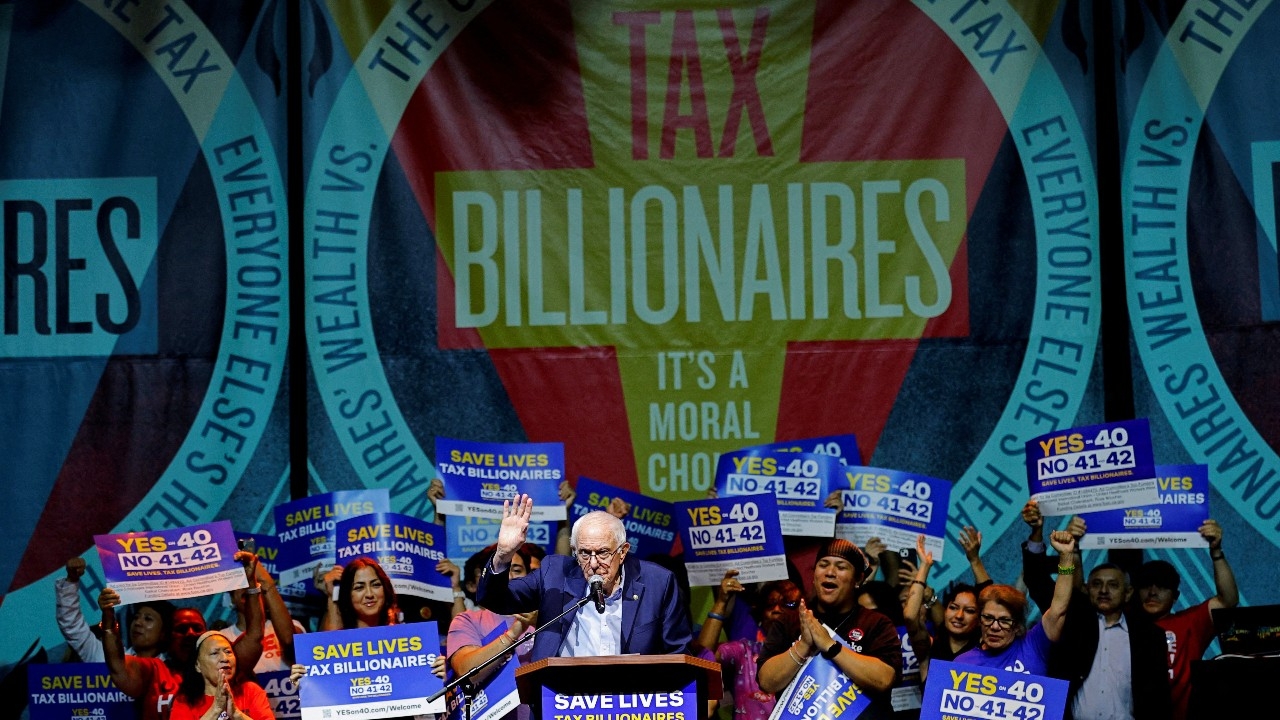
California voters in the United States rejected the "wealth tax" measure, Proposition 40, which proposed a tax on billionaires with net assets exceeding 1 billion US dollars. This defeat marked a setback for progressive politicians led by Senator Bernie Sanders, while billionaires and technology company leaders spent hundreds of millions of dollars campaigning against it.
California voters voted down Proposition 40, a measure to impose a wealth tax on billionaires, marking a significant defeat for progressive politicians advocating that the country's wealthiest share more tax burdens to reduce economic inequality.
The measure proposed a one-time 5 percent tax on net assets of those with wealth exceeding 1 billion US dollars, expected to raise about 100 billion US dollars. Most of the revenue would offset cuts in federal public health funding, with 10 percent allocated to education programs and food assistance.
Supporters, including Senator Bernie Sanders from Vermont, argued that the tax was necessary to sustain the state's public health system, especially given projections that California would lose around 100 billion US dollars in federal health funding over the next five years.
However, the measure faced opposition from California Governor Gavin Newsom, who is rumored to be a 2028 presidential candidate. He warned that taxing billionaires could backfire by driving wealthy residents to leave the state, taking investments, businesses, and jobs with them, and could deter tech entrepreneurs from starting businesses in California.
Opposition efforts were financially supported by tech billionaires, including Google co-founder Sergey Brin and at least 11 other billionaires, who collectively donated 269 million US dollars to the political action committee Building a Better California. This group raised over 333 million US dollars to campaign against the measure.
Reports indicated that opponents raised about ten times more funds than supporters, with Brin alone contributing over 100 million US dollars.
Opponents also argued that the measure might prompt many billionaires to leave California, negatively impacting personal income tax revenues, a key source of state budget funding, as well as affecting businesses and employment. Some groups also feared that this tax could lead to increased taxes on the general public and affect retirement savings.
Opinion polls showed that most voters under 30 supported the measure, while about seven in ten voters aged 65 and older opposed it. Additionally, about half of households earning less than 100,000 US dollars per year supported the tax, whereas nearly 60 percent of higher-income households opposed it.
Despite the referendum results falling short of expectations, supporters announced plans to reintroduce the billionaire wealth tax for a public vote in 2028, affirming that the large sums spent to defeat the measure did not diminish the importance of addressing economic inequality.
Meanwhile, Senator Ron Wyden, a Democrat preparing to chair the Senate Finance Committee, affirmed that pushing for fair taxation of billionaires remains a key priority for the Democratic Party at the national level.