

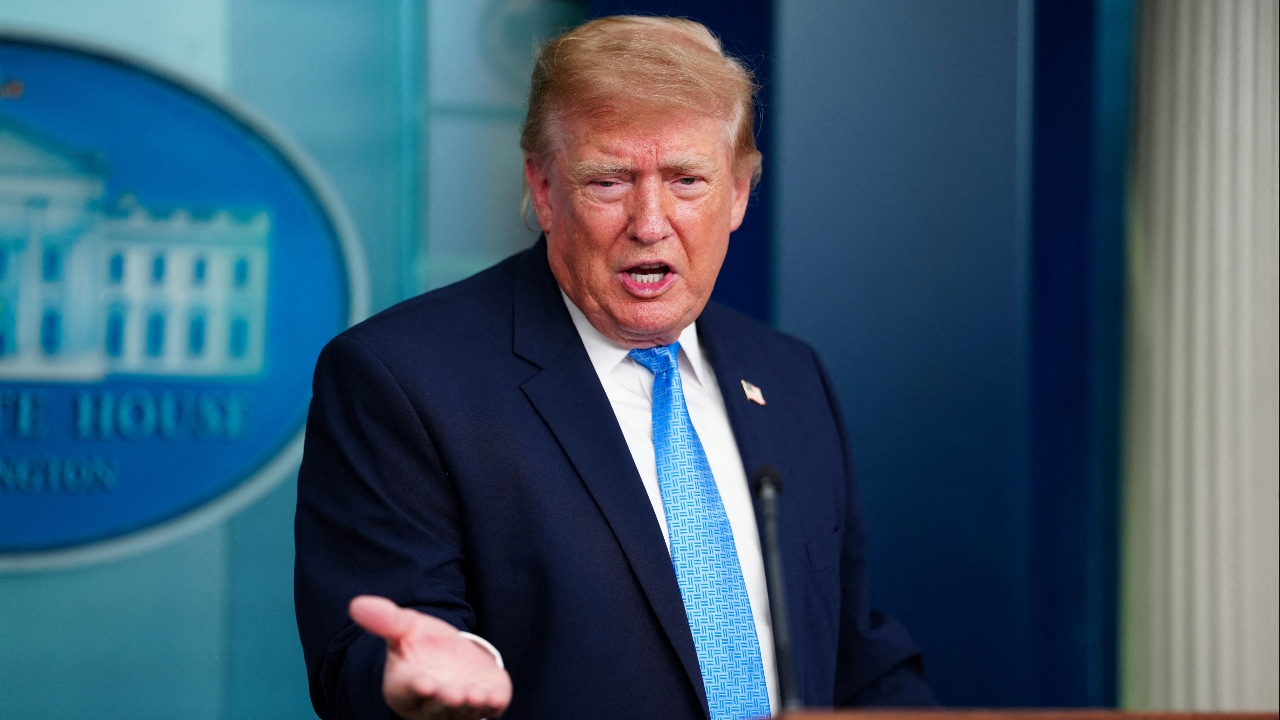
Trump indicated that the military war with Iran is nearly over following talks with Qatar's Prime Minister, revealing progress in negotiations to end the conflict. However, the U.S. continues its naval blockade and remains prepared to strike again if the situation changes.
Donald Trump, President of the United States, told reporters at the White House on Monday, 9 Nov 2020 GMT+7, after meeting with Sheikh Mohammed bin Abdulrahman bin Jassim Al Thani, Qatar's Prime Minister, that the military war with Iran is almost over and that the U.S. is maintaining the current situation.
Trump said that Iran's military forces and infrastructure have been heavily damaged, but the U.S. still seeks a long-term solution to ensure Iran cannot develop nuclear weapons.
This statement represents one of Trump's clearest signals that he does not intend to launch a major attack on Iran soon, after previously threatening to escalate military operations several times if Tehran did not accept U.S. conditions.
Trump also noted positive signs in negotiations and the possibility that the war could end, with Iran engaging the U.S. politely. He added that military action might no longer be necessary, but U.S. forces remain fully prepared should the situation change.
However, the U.S. shows no signs of withdrawing the thousands of troops deployed near Iranian waters and continues the naval blockade to intercept Iranian oil shipments to the global market, with Trump confirming the blockade will proceed.
Earlier, Qatari officials presented proposals regarding Iran's nuclear program to the U.S. last week, with Qatar acting as a mediator coordinating talks between Washington and Tehran.
Nevertheless, Iran insists on several conditions before resuming nuclear talks with the U.S., including ending the blockade of Iranian ports, lifting sanctions, unfreezing Iranian assets, compensating war damages, and halting regional conflicts, including Israeli military operations in Lebanon.
U.S. Secretary of Defense Pete Hegseth said the next decision on the war depends on Trump, with one option being to declare an end to military operations while monitoring to prevent Iran from moving existing nuclear materials.
Meanwhile, Thomas Massie, a Republican congressman from Kentucky, has pushed to hold a vote to impeach Hegseth, citing issues related to the conduct of the war with Iran amid criticisms that the Trump administration started the conflict without proper authorization, potentially violating the War Powers Act.
Previously, Trump told CNN in a phone interview on Sunday that if talks with Iran progress and a strong agreement is reached, the chances of the U.S. needing to strike again are very low. However, he warned that the U.S. has already identified Iranian infrastructure targets, including 38 bridges, which could be attacked if military action resumes.
Although Trump signaled the war is near its end, the U.S. military has carried out at least two limited strikes against Iran in the past week, targeting air defense systems. Additionally, on Saturday, U.S. forces attacked and disabled a commercial vessel accused of attempting to breach the naval blockade near Iranian ports.
Source:AP
Click to read related news aboutInternational news