

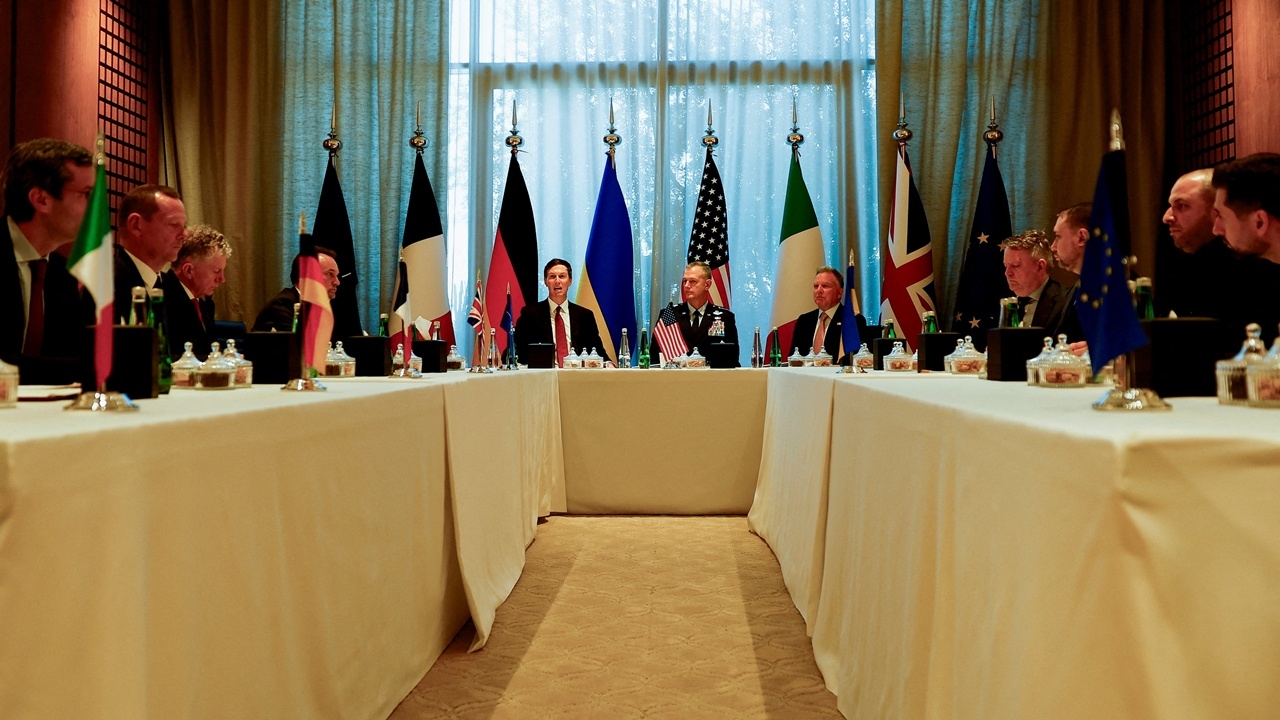
The first day of trilateral talks between Russia, Ukraine, and the US in Abu Dhabi has concluded. US officials described the discussions as effective and showing initial signs of flexibility.
Foreign news agencies reported that the first day of trilateral peace talks between Russia, Ukraine, and the US in Abu Dhabi, the capital of the United Arab Emirates, on Tuesday, 10 Nov 2026 GMT+7, ended after about four hours of discussion, with further talks scheduled for Wednesday.
US Secretary of State Marco Rubio said the first day of talks was "highly effective," while Jared Kushner, special US envoy and Donald Trump's son-in-law, stated that the US helped to "narrow the gap" between the two sides, focusing on the "post-war security architecture."
Although no major agreement was reached, US officials revealed that both sides began showing flexibility regarding who would control eastern Ukraine after the war.
Kushner stated on X that the conflict is "extremely difficult and complex," and the US is "entering these talks with commitment and realism," emphasizing that the negotiations are only intended to "generate momentum toward the next phase of talks."
The Donbas region in eastern Ukraine remains the main point of contention in efforts to end the war, with Russia demanding Ukraine withdraw forces and cede the Donetsk oblast areas still held by Ukraine to Russia.
Ukraine, on the other hand, wants to freeze the frontline at its current position to maintain control over territories it considers vital for future security.
Meanwhile, the US has stated that territorial issues cannot be resolved until there is clarity on the "new security architecture," such as guarantees for Ukraine's protection or adjustments to NATO's role in Eastern Europe.
European parties have expressed concern about being excluded from decisions regarding the continent's security. Although the US believes Europe should be involved, Russia rejected European proposals like an unconditional ceasefire.
Russian Foreign Minister Sergey Lavrov reiterated that a ceasefire would allow Ukraine to rebuild its forces, so Russia will not agree to it.
Meanwhile, several Ukrainian MPs, including Oleksandr Mareshko, voiced skepticism about US President Donald Trump's role, viewing him as pushing for a "quick deal at Ukraine's expense," which Kyiv will definitely reject.
Mareshko also said the only way to force Putin to negotiate seriously is by increasing pressure through sanctions and deep strikes, noting that "as long as Putin's war machine keeps running, he has no incentive to negotiate."
Meanwhile, as the talks continue, Russia has intensified attacks on Ukraine's energy infrastructure and other areas, which Ukraine sees as an attempt to pressure Kyiv into accepting Moscow's terms.
Follow international news:https://www.thairath.co.th/news/foreign
Source:bbc