

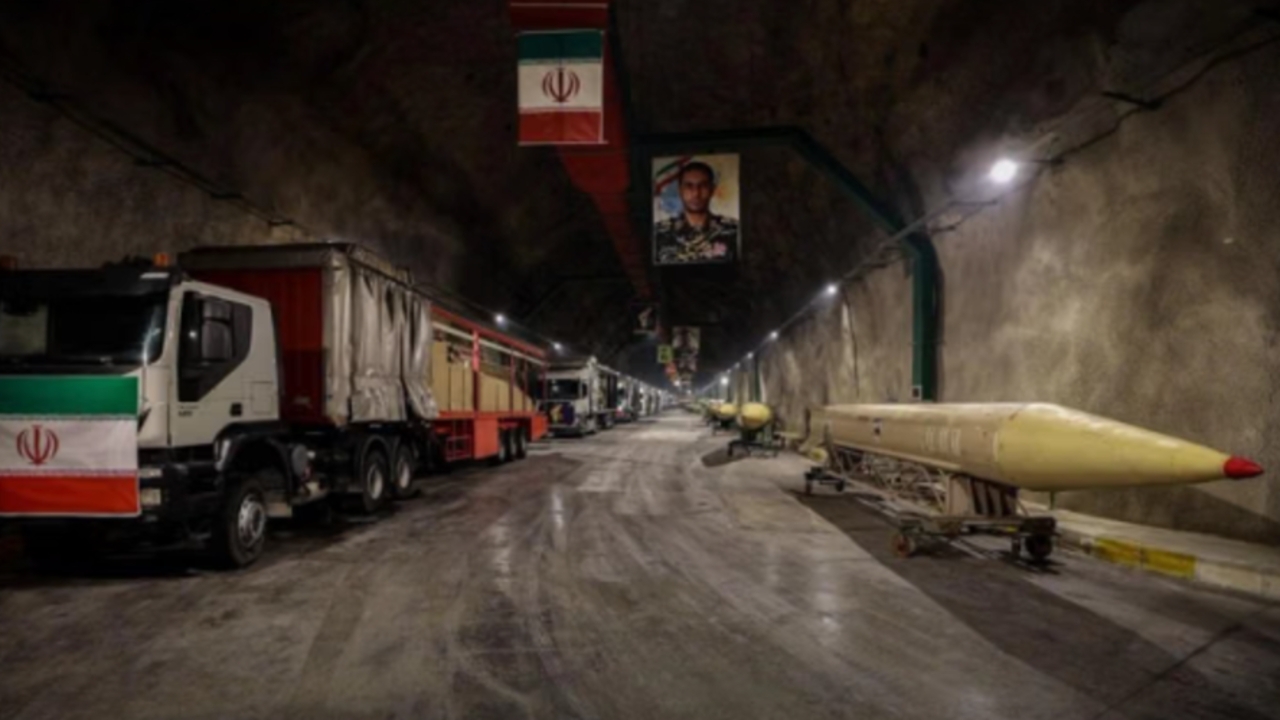
Iran's Islamic Revolutionary Guard Corps (IRGC) revealed images of a new underground missile base, with senior commanders inspecting it, and warned the U.S. and Israel that if Iran is attacked again, retaliation would not be confined to the Middle East.
On Tuesday, the IRGC released footage of what it described as a new underground missile base, along with images showing senior military commanders touring the facility.
Iranian state media published photos of Ali Abdollahi, Iran's army chief of staff, and Majid Mousavi, commander of the IRGC Space Force, inspecting various areas inside the underground missile base. However, authorities did not disclose the base's location nor specify when the inspection took place.
During the visit, Abdollahi warned that if Iran is attacked again, its response could extend beyond the Middle East region.
He stated, "If the enemy moves to attack us again, our response will expand beyond this region."
Earlier, on Saturday, IRGC spokesman Hossein Mohebbi announced plans to reveal a new underground missile base, explaining that the IRGC has relocated part of its missile production underground to protect against air strikes and maintain operational capability during wartime.
He also warned that Iran might deploy previously unseen weapons if conflicts with the U.S. and Israel intensify.
This development comes as the Washington administration considers additional military measures against Iran following U.S. airstrikes on Qeshm Island earlier this month.
Iran Advances Network of Underground Missile Bases
Iran has spent years developing underground missile storage and launch facilities, known as "Missile Cities," designed to shield its arsenals from air attacks and enhance military retaliation capabilities.
These underground bases have been targeted by Israeli military operations; during last year's conflict, Israel struck Iranian missile launch sites, weapon depots, and related military infrastructure to degrade Tehran's missile response capacity.
Satellite images reviewed by Reuters in February showed Iran repairing missile bases damaged in the conflict, while also reinforcing and camouflaging sensitive military and nuclear sites.
Related NewsInternational News