

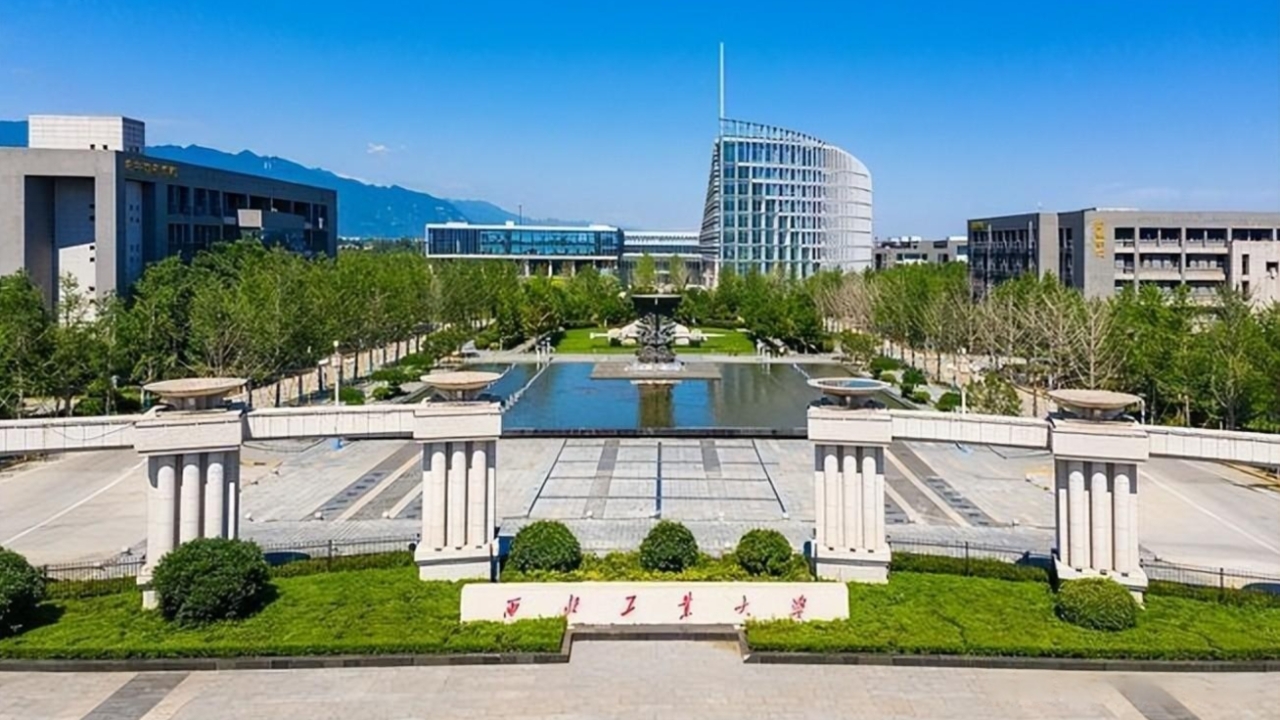
Procurement documents reveal that Northwestern Polytechnical University in China, linked to the People's Liberation Army, purchased two Nvidia H200 artificial intelligence chips last October, despite being on the US export blacklist since 2001. Additionally, multiple leases of servers equipped with Nvidia chips restricted from export were identified, highlighting weaknesses in US measures aimed at blocking China's access to advanced technology.
Procurement documents reviewed by Reuters show that Northwestern Polytechnical University, closely connected to the People's Liberation Army, purchased two Nvidia H200 AI processing chips last October. Though this university is on the US list restricting technology exports, the purchase totaled 874,700 yuan (approximately 4.4 million baht), according to procurement records published on the university's website on 21 October.
The documents state that the purchase was made by the university's business administration faculty through a Chinese technology firm named Shaanxi Bosuan Network Technology, rather than directly from Nvidia.
The H200 chip is one of Nvidia's high-performance processors designed for training and operating advanced AI systems. Exporting this chip to China requires a US government license, which is typically denied to blacklisted entities such as this university.
Besides direct chip purchases, documents show that the university signed five contracts this year to lease computing services through Chinese companies, gaining access to Nvidia H200 chips and other high-performance processors by renting server computing power equipped with these chips.
Reuters reports that these chip purchases and processing service leases had not been previously disclosed. Neither the university, Nvidia, nor the US Department of Commerce's Bureau of Industry and Security, which oversees export controls, responded to Reuters’ inquiries. Contact details for Shaanxi Bosuan Network Technology could not be identified.
Northwestern Polytechnical University, located in Xi'an in northwest China, is among seven top Chinese universities known as the "7 Military-Affiliated Educational Institutions," specializing in research and development of defense technologies. The university conducts research on military aircraft, missiles, and satellites.
The US Department of Commerce added this university to its export control list in 2001, citing involvement in missile proliferation and military research. Restrictions were tightened in 2019, requiring export licenses for US technology shipments to this university, which are generally denied.
These purchases illustrate that Chinese military-linked academic institutions continue to access US AI processing capabilities through domestic suppliers, both by direct chip purchases and by leasing servers equipped with such chips.
Reuters examined 26 Chinese procurement documents published this year, finding that several universities and research institutes acquired Nvidia chips restricted by US export controls or leased processing services from Chinese providers using these chips. Some institutions have close ties to China's defense industry and military research.
Procurement documents indicate that in January, the university's cybersecurity faculty signed two seven-month server leases, each with eight H200 chips installed, valued at 441,700 yuan and 441,000 yuan respectively. These were used to fine-tune AI models and train reinforcement learning systems.
The university also leased servers equipped with eight Nvidia A100 chips and eight A800 chips, both chip models banned from export to Chinese entities. The H200 is the highest-performance chip listed in the university's procurement documents.
Additionally, in April, another institute within the university purchased computing services requiring at least 24 A100 chips under a 375,000 yuan contract for simulating fluid structure and dynamics.
These procurement and lease contracts were awarded to several lesser-known Chinese technology companies, with limited information on the chip sources and server locations. Chinese law requires public sector buyers to verify suppliers' capability before awarding contracts.
Further document review found that other Chinese universities and educational institutes have also acquired Nvidia chip models restricted by US export controls.
Shenzhen University purchased three Nvidia H100 high-performance chips last September for 769,800 yuan.
Wuhan University of Technology acquired a server equipped with one H100 chip in June for 355,000 yuan and separately purchased four A100 chips under a distinct contract valued at 344,000 yuan.
Beihang University, also among the "7 Military-Affiliated Educational Institutions" and closely linked with China's aviation, aerospace, and defense industries, bought four A800 chips in April for 489,000 yuan. This university conducts military aviation and space research.
Two Chinese government procurement notices in July and September named companies selected to supply processing services using Nvidia H800 and A800 chips to universities under the Chinese Academy of Sciences. Both chip models are subject to US export restrictions. One contract specified an access fee of 10 yuan per hour per H800 chip.
Another January procurement document identified a company supplying six A100 chips valued at 484,800 yuan to a government agency in Shenzhen.
Previously, Reuters reported that Chinese military-linked educational institutions acquired servers from Super Micro Computer, Dell, and Gigabyte equipped with Nvidia chips restricted by US export controls through domestic distributors. An underground market in China also trades high-performance Nvidia chips sourced from overseas warehouses and third-country intermediaries.
Last week, Reuters reported that a small number of H200 chips entered China via indirect channels, although the Chinese government has not approved large-scale imports of these chips.
These disclosures come as Nvidia and its CEO Jensen Huang face intense US political scrutiny. Huang has lobbied the US government to relax AI chip sales restrictions to China and has been reported as a target of alleged Chinese espionage operations.
Huang argues that allowing Nvidia to continue selling chips in China helps maintain US technological leadership and keeps Chinese customers reliant on US technology. However, some US Congress members warn that China's access to Nvidia's highest-performance AI chips could accelerate development of AI for weapons design, intelligence analysis, and military enhancement.
Democratic and Republican members of Congress have called for tougher controls on China's access to advanced AI chips, including measures to track chip location and usage, and increased congressional oversight of such technology exports.
Meanwhile, three Republican chairs of Congressional committees have requested a briefing from Huang on 18 November regarding reports of his contacts with individuals alleged to be Chinese intelligence officers.
During the Trump administration, partial exports of H200 chips to China began in January; however, this policy did not lift separate export restrictions on blacklisted entities like Northwestern Polytechnical University. Export licenses also include safeguards to prevent blacklisted organizations or military end users from remotely accessing the exported chips.
.SourceReuters