

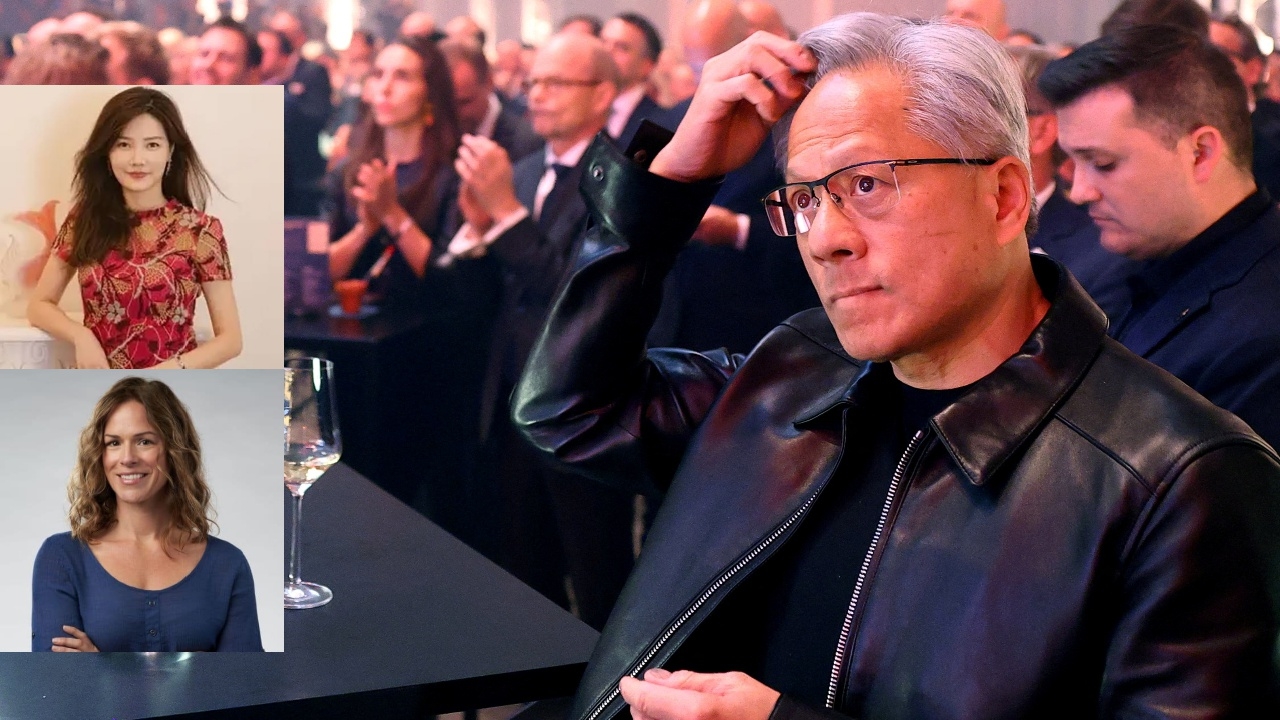
Jensen Huang, CEO of Nvidia, is facing significant pressure after The New York Times reported he had an extramarital relationship with a female executive who is his direct subordinate. The company's board has called a special meeting to consider his future amid the scandal involving a Chinese woman accused of espionage, while Nvidia's stock dropped more than 8% in after-hours trading.
Jensen Huang, co-founder and CEO of Nvidia, the world's largest AI chip maker, is facing a leadership crisis after reports emerged of two extramarital affairs and allegations related to U.S.-China security concerns.
The New York Times reported that Huang had an extramarital affair with a female Nvidia executive who directly reports to him, citing information from five former and current employees who requested anonymity due to the sensitive nature.
The female executive is Kimberly Powell, Nvidia's 48-year-old Vice President of Healthcare Business, while Huang is 63, and both are married to other people.
Two sources stated the pair were photographed showing affection inside a hotel in San Jose, California, during Nvidia's annual technology conference in March, with one eyewitness recording the images on a mobile phone.
Three sources said Huang's security staff saw someone taking photos and detained the person, requiring them to sign a nondisclosure agreement. However, The New York Times noted it has not independently viewed the video.
When reporters called Huang on Wednesday about his relationship with Powell, he replied, “I don't think you should speak to me directly,” before hanging up. Nvidia declined to comment, and Powell has not responded to interview requests.
Powell joined Nvidia in 2008, was promoted to Senior Director of AI Business Development in 2016, and became Vice President of Healthcare Business in late 2017. She oversees Nvidia's chip technology applications in education and medicine, particularly medical imaging devices, and frequently speaks at global tech conferences.
At Nvidia’s March GTC annual conference, Powell presented on using AI to advance health and biology, with presentation slides featuring a cartoon image of Huang.
Reports indicate Huang and Powell's relationship has been discussed within the company for some time, while Nvidia's code of ethics requires employees to avoid conflicts of interest, including personal relationships, and states the company will promptly investigate misconduct allegations.
Many companies prohibit executives from having personal relationships with direct subordinates to prevent abuse of power.
Meanwhile, Reuters reported, citing sources close to the matter, that Nvidia's board met Wednesday evening (11 Nov) to consider whether to dismiss Huang as CEO amid escalating leadership crises.
This meeting marks a significant shift from the previous Sunday, when the board expressed confidence in Huang and his management team.
Under Nvidia’s bylaws, the CEO can be removed by a majority board vote, regardless of cause. Currently, Nvidia has 11 directors, all independent except for Huang.
News of Huang's potential removal, first published by The Wall Street Journal, caused Nvidia shares to plunge more than 8% in after-hours trading. If sustained, the drop would erase around $600 billion in market value since the board announced an investigation into Huang's relationship with Alice Huang, a Chinese businesswoman accused of espionage.
Previously, The New York Times reported that Alice Huang, a Chinese executive close to Jensen Huang, was identified by U.S. authorities as working for Chinese intelligence and possibly facilitating Nvidia chip exports to China.
These allegations have sparked scrutiny of Nvidia’s corporate governance and the CEO’s personal conduct, prompting the board to launch an internal investigation and hire law firm Wachtell, Lipton, Rosen & Katz to assist.
Leaders of three key Republican committees in the U.S. House of Representatives have requested Huang provide information about his relationship with Alice Huang in a closed-door session. Failure to comply may result in a congressional subpoena. China denies espionage allegations, and Alice Huang has not responded to requests for comment.
Former President Donald Trump said he has not discussed the allegations with Huang but expressed support for the Nvidia CEO, a close ally.
Additionally, Axios reported, citing senior sources, that U.S. Commerce Secretary Gina Raimondo delayed Trump’s plans to crack down on companies suspected of illegally exporting Nvidia chips to China. The White House and Raimondo’s spokesperson have not commented.
If Huang is removed or resigns, Nvidia, valued at around $4 trillion, will face a leadership vacuum, as Huang co-founded the company in 1993 and has been instrumental in making Nvidia a leading AI chip producer globally.
Huang owns about 3.6% of Nvidia shares and has dozens of executives reporting directly to him, reflecting his close operational control.
Bloomberg reported Wednesday that Nvidia’s board has hired an external firm to identify potential candidates to succeed Huang, citing sources close to the matter.
Armina Rosenberg, fund manager and co-founder of Minotaur Capital, which holds Nvidia shares, said longtime CFO Colette Kress might be a suitable interim CEO candidate, but the crucial question is who will guide the company’s long-term technology direction.
The prediction market Polymarket adjusted odds to show an 88% chance Huang will resign or be removed by year-end, with Ian Buck, head of Nvidia’s data center customer business, considered the leading successor candidate.
Rosenberg said the market is beginning to consider the possibility of Nvidia operating without its founder rather than viewing it as a remote risk, adding that losing Huang would significantly impact the company.
The crisis comes just days before Nvidia is set to release its quarterly earnings and business outlook on 17 November.
Investors and analysts believe short-term demand for Nvidia chips is unlikely to drop significantly, but companies financially supported by Nvidia, especially those building data centers for its chips, could be affected.
Nick Fores, Chief Investment Officer at Vantage Point Asset Management in Singapore, said Nvidia is funding its customers, and during rapid market growth or bubbles, even a slowdown can shift momentum from uptrend to downtrend.
Following the news, Nasdaq Futures dropped 1%, Micron shares fell nearly 2%, and CoreWeave declined 6% in after-hours trading. However, other chipmakers like AMD and Broadcom rose 4% and 3%, respectively.
In Asia, Samsung Electronics shares rose about 1%, while SK Hynix shares fell nearly 1%.
In a staff memo on Sunday (8 Nov), Huang admitted to being unfaithful to his wife and took full responsibility but did not disclose details about the relationship.
Previously, he transformed Nvidia from a small chipmaker into a key AI chip supplier, central to the U.S.-China technology rivalry.
Huang’s case is among U.S. CEOs involved in relationships with subordinates; in 2018, Brian Krzanich resigned as Intel’s CEO after admitting a consensual relationship with an employee.
The following year, McDonald’s fired CEO Steve Easterbrook and later sued him for violating company policy by having sexual relationships with multiple employees.
Nvidia has yet to issue an official statement regarding reports about Huang's relationship with Powell or the board meeting, while Reuters noted it could not independently verify these reports.
. . .Reuters/Business Times