

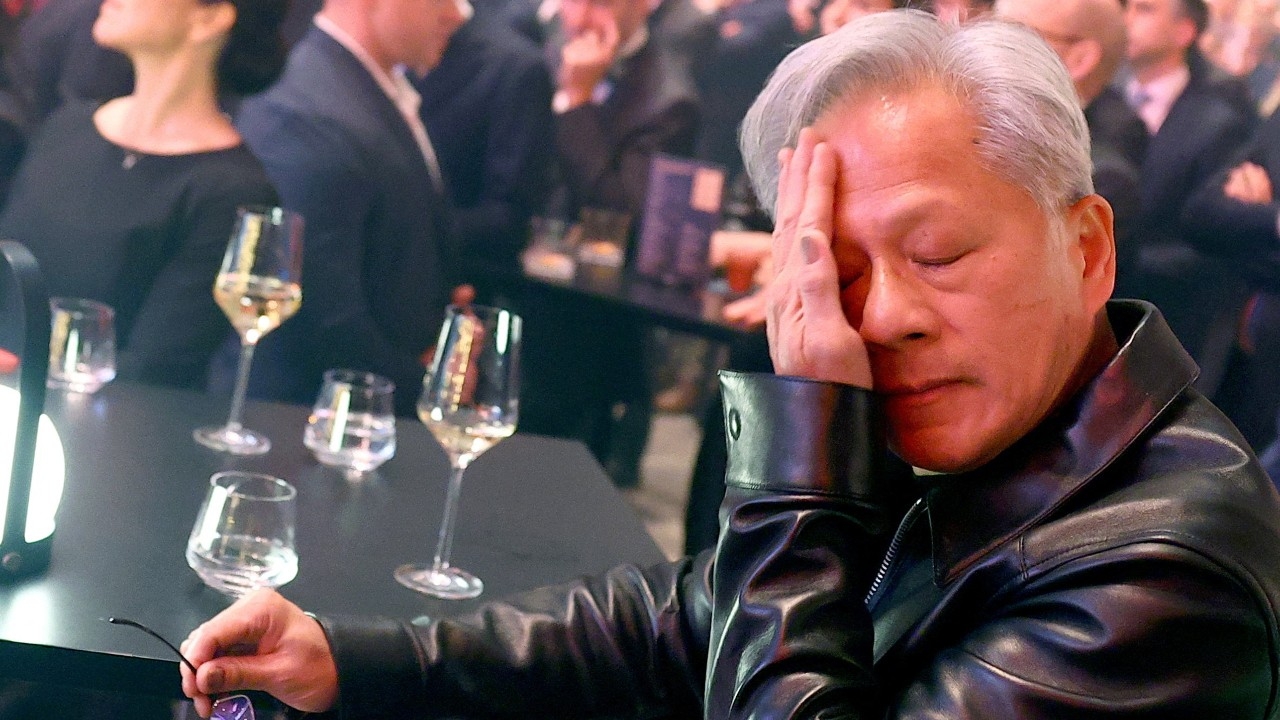
Amid reports that Nvidia's board is set to consider the future of co-founder and CEO Jensen Huang following allegations of extramarital affairs with a woman accused of being a Chinese spy, attention is focused on potential successors. Candidates include senior executives within the company, family members, and leaders from other tech firms, amid the challenge of finding someone who can lead Nvidia's technology, strategy, and AI business operations.
Finding a new leader to succeed Jensen Huang, CEO of Nvidia, the world's largest AI chipmaker, has become a major challenge for the company after reports emerged that the board is reviewing Huang's future amid multiple extramarital affair allegations.
U.S. media reported that Nvidia's board met on 11 Nov 2023 GMT+7 to discuss whether to remove Huang from his position. Reuters reported that the company hired an external firm to help find qualified CEO candidates. However, Nvidia has not officially commented on these reports.
Huang, 63, founded Nvidia in 1993 and has led the company continuously for over three decades. He played a key role in transforming Nvidia from a graphics chipmaker for video games into a global leader in AI acceleration chips, expanding its network of customers, suppliers, business partners, and investments across the global tech industry.
Huang remains deeply involved in shaping Nvidia's strategy and operations, making succession more than a choice of an experienced executive; the successor must manage technology, business, and industry partnerships in AI simultaneously.
Two internal executives under close watch
The most mentioned internal candidates at Nvidia are Colette Kress, Chief Financial Officer, and Ian Buck, Vice President of AI Products for large data centers.
Kress, 59, joined Nvidia in 2013 after working at major tech firms including Microsoft, Cisco, and Texas Instruments. She is well known to investors, having regularly co-presented quarterly earnings with Huang.
Semafor, citing insiders, reported that some board members support appointing Kress as interim CEO due to her financial management experience and market credibility.
Josh Gilbert, senior analyst at trading platform eToro, said Kress is a suitable choice to steady the company during transition, though permanent CEO selection might require technological expertise central to Nvidia.

Another candidate is Ian Buck, an engineer who joined Nvidia in 2004 and has been key in developing the company's AI chip technology, including co-developing CUDA software that enables efficient AI processing on Nvidia chips.
Buck currently oversees AI hardware and software products for large data centers and is familiar to Nvidia's customers. He holds a PhD from Stanford University, with research contributing to the company's AI software development.
However, Buck has less experience managing large publicly traded companies than some other executives, a factor investors may consider.
Futurum Equities' chief market strategist Shay Bolor views Buck as a key internal candidate for long-term leadership due to his involvement with CUDA and AI data center business.
Executives from other tech companies
Beyond internal personnel, executives from other tech and chip firms have been mentioned as possible candidates, including:
Rene Haas, CEO of UK's Arm and former Nvidia executive, with experience managing chip design and complex customer and partner networks. He understands semiconductors and AI business well. Nvidia previously attempted to acquire Arm in 2020, but the deal fell through due to regulatory scrutiny.
Lisa Su, CEO of AMD, Nvidia's key competitor in chip processors. She has long managed a semiconductor company and led AMD to develop products that compete with major chipmakers. However, AMD's business is still much smaller than Nvidia's, and its AI chips require significant development to gain comparable popularity.

Johny Srouji, Apple's head of hardware overseeing chip development for iPhone, Mac, and other devices. He has experience in chip design, hardware-product integration, and long-term technology planning, but most of his experience is within Apple's ecosystem and he has not demonstrated broad sales and customer relationship roles like Huang.
Matt Garman, CEO of Amazon Web Services (AWS), with technology knowledge and experience managing a large business providing cloud computing and developing Amazon's own chips. However, Amazon was initially seen as trailing competitors Microsoft and Google in AI infrastructure.
Sanjay Mehrotra, CEO of Micron Technology, a major memory chip manufacturer. He has experience leading the company through industry cycles and Micron's stock has risen over 2,700% with AI-driven memory demand growth. However, his expertise centers on memory and manufacturing rather than GPU design and software systems.
Amin Vahdat, a Google executive managing Tensor Processing Unit (TPU) development, a technology competing with Nvidia's AI chips. He has strong technical expertise but less experience managing large complex public companies facing investor pressures than some other candidates.
Additionally, Jeff Fisher, a long-time Nvidia executive of 32 years, has been mentioned in succession speculation.

Huang family members also involved at Nvidia
Three of Huang's family members work at Nvidia: daughter Madison Huang, son Spencer Huang, and son-in-law Nico Caprez.
Among them, Caprez holds the most prominent role as Vice President of Global AI Infrastructure Growth, playing a key role in engaging with new cloud providers and data center projects.
Madison is Nvidia's Senior Director of Product Marketing, with prior marketing experience at luxury goods group LVMH, while Spencer is Director of Product Management in the company's robotics division.
However, Huang has stated he does not want his children to bear the burden of managing Nvidia and has said they must prove their capabilities and carve their own paths first.
Potential for co-CEO structure during transition
Armina Rosenberg, fund manager and co-founder of Minotaur Capital in Sydney, an Nvidia shareholder, believes appointing a permanent new CEO may take time. The board might appoint senior executives familiar with the company and implement a co-CEO structure.
This approach could divide responsibilities, with Kress overseeing business and finance, and Buck handling product and technology, to steady the company through the transition.
Some analysts see Arm CEO Rene Haas as a notable external candidate due to his industry reputation and semiconductor business understanding.
No official candidate list has been announced, and Nvidia has not disclosed Huang's succession plan. The board's decision will be crucial for the company's direction, which significantly impacts the global AI industry and technology markets.