

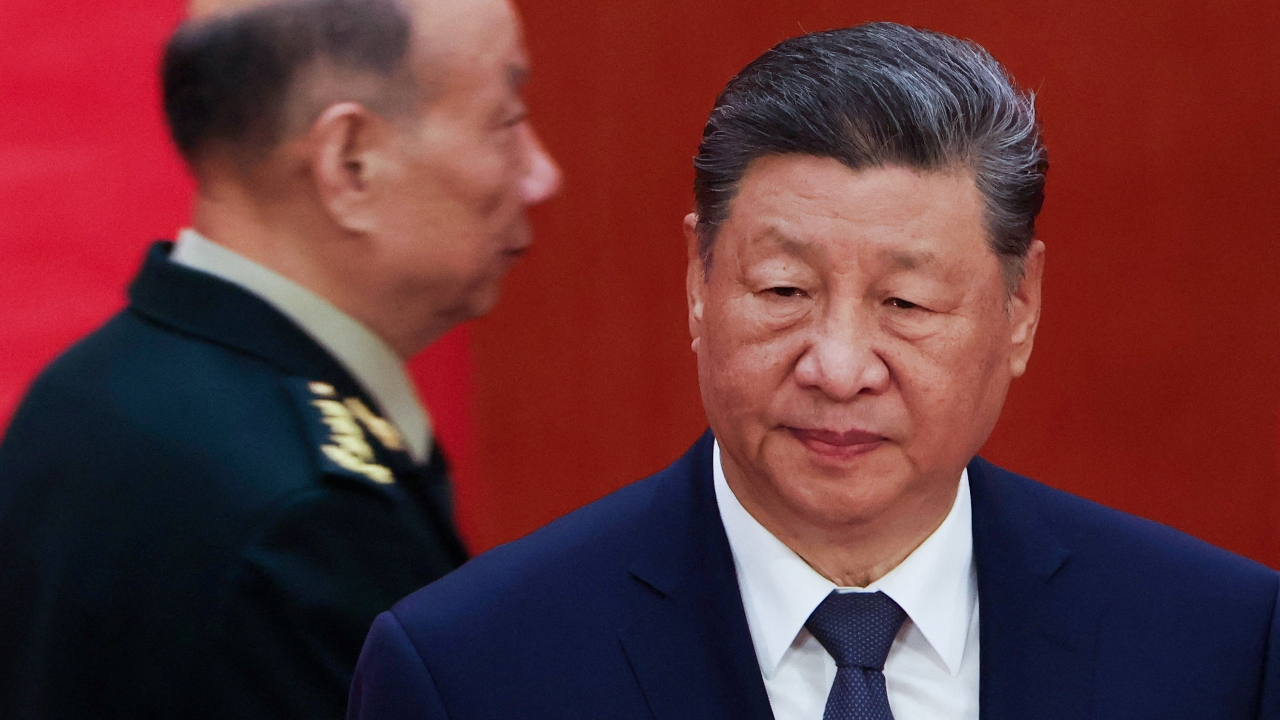
Chinese President Xi Jinping delivered a speech on the 160th anniversary of Dr. Sun Yat-sen's birth, reaffirming the historic mission to fully reunify Taiwan with the motherland under the "One Country, Two Systems" framework. He stressed that the tide of history is unstoppable but did not mention the use of military force.
President Xi Jinping stated that the tide of history cannot be stopped, calling for the complete reunification of Taiwan with China. He affirmed that reunification must happen and that China will pursue a peaceful approach, though he did not mention the use of force.
Xi made this statement during the 160th anniversary commemoration of Dr. Sun Yat-sen, a revolutionary hero and key figure in Chinese history, held at the Great Hall of the People in Beijing. He said resolving the Taiwan issue and achieving complete reunification is a historic mission the Chinese Communist Party is steadfastly committed to, a shared desire of the Chinese people, and a natural condition for restoring China's national greatness.
Xi Jinping said, "The tide of history cannot be stopped. The complete reunification of the motherland must and will happen."
The Chinese leader emphasized that China adheres to the "peaceful reunification" approach and the "One Country, Two Systems" policy, expressing readiness to discuss with Taiwan under the One-China principle, which regards both sides of the Taiwan Strait as parts of one country.
Xi Jinping called on all Chinese people, including those in Taiwan, to unite in opposing groups that support Taiwan independence and to promote peaceful development of cross-strait relations toward full reunification.
He praised Sun Yat-sen as a great national hero, patriot, and pioneer of China's democratic revolution, urging people to carry forward Sun's will and intellectual legacy to jointly push for the rejuvenation of China's national greatness.
Sun Yat-sen was born in 1866 and led the 1911 revolution that ended China's millennia-old imperial rule and led to the founding of the Republic of China before his death in 1925.
The Chinese leader said the Chinese Communist Party is a steadfast supporter, loyal partner, and successor of the revolutionary mission initiated by Sun Yat-sen. He added that over more than 100 years, the party has led the people in writing the greatest chapters in China's history.
Xi Jinping stated that the best way to honor Sun Yat-sen is to learn from, inherit, and carry forward his precious spirit to strengthen the country and achieve national rejuvenation.
He also called on the people to promote patriotism, work toward building a strong and prosperous China, place the people at the center, and focus on improving quality of life and shared prosperity for all citizens.
Furthermore, he emphasized the need to boldly develop theories and innovations in ideology, adapting Marxism to China's context and era. He urged people to stand firm against obstacles and challenges, saying, "We must inherit the fighting spirit, build capabilities, be prepared for strong winds, high waves, even dangerous storms, and overcome all risks and challenges ahead."
China considers Taiwan, which has a democratic government, part of its territory, although Taiwan's government firmly rejects this claim. Beijing has proposed the "One Country, Two Systems" model for Taiwan to have self-governance, but this approach is not supported by any major political party in Taiwan.
Although Xi did not mention military force, China has never ruled out this option for reunification. The Chinese military conducts daily operations around Taiwan and has expanded its activities into the Pacific Ocean. Taiwan's government has not yet commented on Xi's statement.
Last month, Taiwan urged its people to avoid participating in Chinese events commemorating Sun Yat-sen, accusing Beijing of distorting Sun's image and historical legacy.
In China, Sun Yat-sen is honored as a national hero, great patriot, and pioneer of the 1949 communist revolution that led the defeated Republic of China government to retreat to Taiwan, where it still governs today.
In Taiwan, Sun Yat-sen is officially recognized as the "Father of the Nation," with his portrait displayed in the presidential office, although his political philosophy of the "Three Principles of the People" is no longer a compulsory subject for students.
Taiwan's President Tsai Ing-wen and the ruling Democratic Progressive Party support a distinct Taiwanese identity separate from China and have recently taken a firmer stance toward Beijing regarding the Republic of China's role.
Taiwan strongly objects to China's attempts to claim legitimacy and credit for victory in World War II, asserting that the Republic of China fought alongside the Allies, while the People's Republic of China had not yet been established.
China accuses Tsai Ing-wen of being a "separatist" and refuses to negotiate with her, while Tsai insists that Taiwan's future is for the Taiwanese people alone to decide.
Xi Jinping's statement comes one week before the APEC summit in Shenzhen, southern China, where he is scheduled to meet U.S. President Donald Trump again, and just over two weeks before Taiwan's important local elections.