

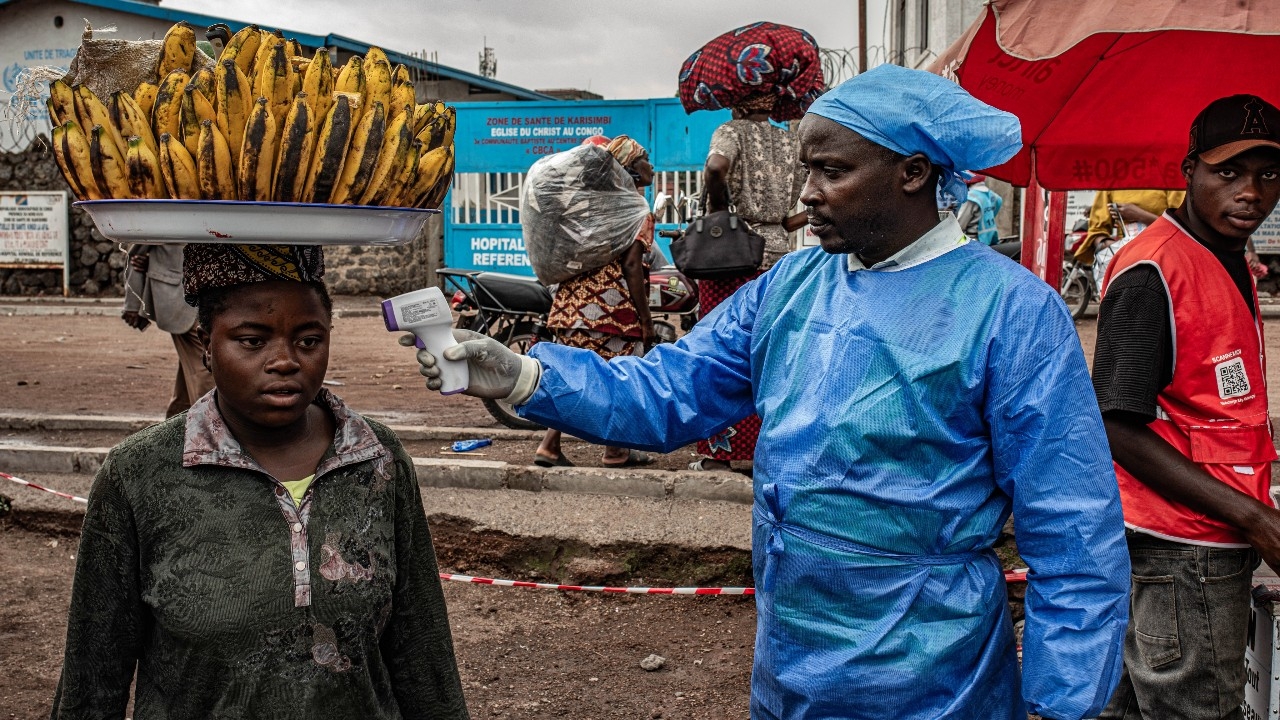
Doctors Without Borders revealed that over 700 million US dollars, or more than 23.6 billion baht, allocated to combat Ebola in the Democratic Republic of Congo mysteriously "disappeared," leaving frontline workers unpaid and ambulances without fuel amid a severe outbreak that has killed more than 5,400 people and infected over 11,000.
Doctors Without Borders (MSF) issued a warning that hundreds of millions of US dollars designated to tackle the Ebola outbreak in the Democratic Republic of Congo (DR Congo) have not been effectively delivered to those who need them, while the outbreak remains uncontrollable.
MSF's report states that many frontline workers have not received salaries, lack proper training, and face shortages of essential equipment and medical supplies; in some areas, ambulances have no fuel to operate.
Since the outbreak was declared in May, over 5,400 people have died from Ebola in DR Congo, with more than 11,000 infected, making this the second deadliest Ebola outbreak ever recorded.
MSF called on the Congolese government and United Nations agencies to tighten oversight and accountability to ensure that disbursed funds are used effectively, guaranteeing that outbreak responders receive proper training, compensation, equipment, and support, and resources are allocated to the most critical areas.
MSF's warning aligns with concerns raised last month by the Africa CDC, which stated that $700 million of the $962 million budgeted to various organizations for Ebola response could not be accounted for regarding how the funds were spent.
At that time, Jean Kaseya, director of Africa CDC, said it was too early to conclude that the money was embezzled, considering it a serious problem of transparency and financial reporting.
Samuel-Roger Kamba, DR Congo's health minister, expressed similar concerns, noting that agencies receiving aid must report operational details to the ministry for oversight and audit, but so far only 22% have complied with reporting requirements.
Kamba stated via platform X that government regulations clearly require full transparency, and outbreak response must be conducted under a single plan, budget, and coordination system.
MSF's report noted that despite large funding allocations, many frontline workers struggle to control the disease with almost no equipment or budget support; additionally, Ebola surveillance teams exist only on paper without actual field operations.
Javid Abdelmoneim, MSF president, said the organization's teams witnessed operational failures in many areas that are almost indescribable, and after six months since the outbreak response began, such conditions are unacceptable.
A key measure to stop Ebola spread is contact tracing, involving identifying all individuals who had contact with infected persons and isolating them to prevent further transmission.
However, MSF stated that despite officially allocated resources for this critical task, surveillance systems remain severely flawed, with two-thirds of deaths occurring in communities rather than healthcare or treatment centers.
British epidemiologist Neil Ferguson estimates that more than half of infected individuals may remain undetected, indicating the outbreak could continue for about another year, according to Reuters.
MSF also expressed concern about excessive concentration of efforts and resources in some areas while other urgent regions receive insufficient aid, noting delayed responses in North Kivu province and significant neglect in Haut-Uele province.
In both provinces, MSF found that response teams lack adequate resources to manage the situation effectively, and many healthcare facilities lack basic necessities such as water, chlorine disinfectant, and systems to triage patients by urgency.
MSF warned that these problems have caused some healthcare facilities to become new sources of infection rather than places for patient care and outbreak control.
The outbreak's epicenter is in eastern DR Congo, a region plagued by decades of conflict and ongoing fighting, with some affected areas controlled by rebel groups, and few passable roads, making travel and aid delivery extremely difficult.
On 12 Nov, the United Nations and DR Congo government warned that the hardest-hit Ebola areas are facing a severe food crisis, with nearly 10 million people in the region urgently needing assistance.
The latest outbreak is caused by the Bundibugyo Ebola strain and has spread beyond DR Congo borders, with reported cases in Kenya, Uganda, and Nigeria.
However, last Wednesday, the last Ebola patient in Kenya was discharged from the hospital, marking a significant milestone in the country's disease control efforts.
The Bundibugyo Ebola strain is relatively rare and currently has no approved vaccine or treatment, despite ongoing trials of vaccines and therapies.
.sourceBBC