

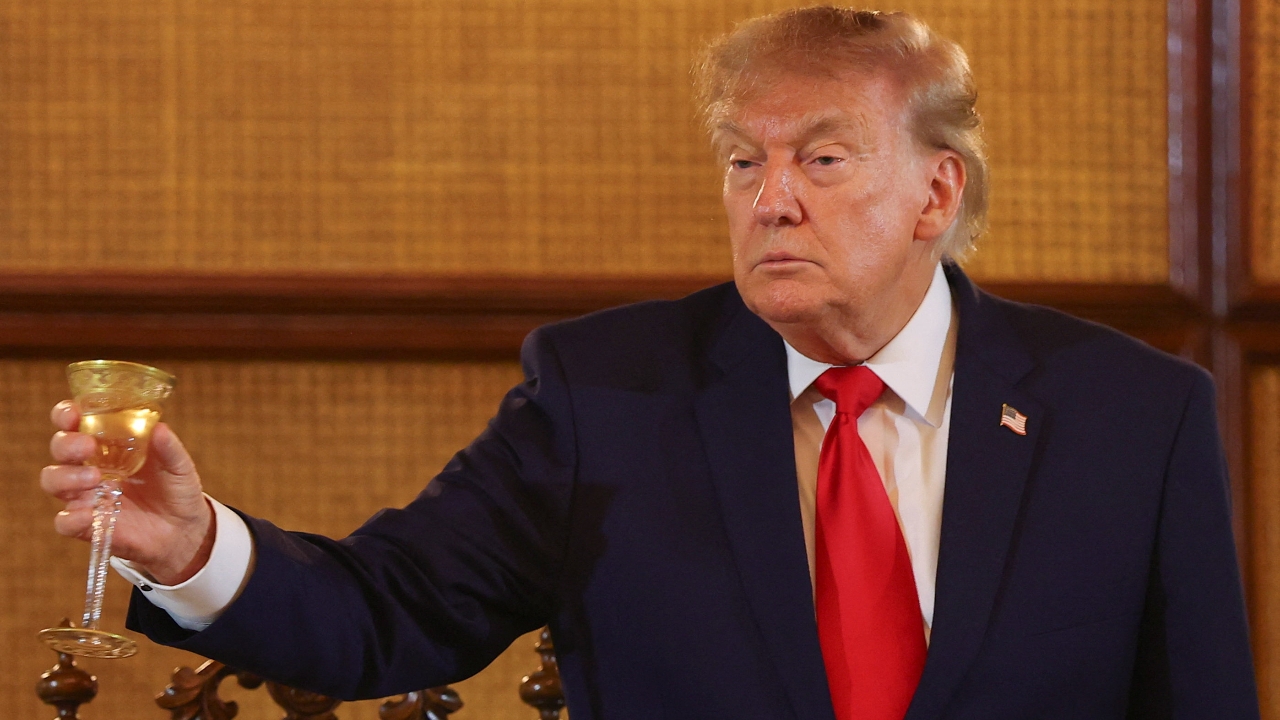
Trump aims to hold bilateral talks with the leaders of Russia and North Korea during the APEC summit in Shenzhen after visiting the Philippines. Meanwhile, Putin has arrived in China and is preparing to meet with Xi Jinping.
U.S. President Donald Trump is advancing his Asian tour mission, seeking diplomatic progress through meetings with various national leaders amid domestic political pressure following his party's significant election defeat. Meanwhile, Russian President Vladimir Putin arrived in China on Wednesday, 18 Nov 2025 GMT+7, ahead of the summit and his meeting with Chinese President Xi Jinping.
On Tuesday, Trump visited the Philippines to participate in discussions with the Quad group—comprising the U.S., India, Japan, and Australia—and revealed his desire to have one-on-one talks with Putin and North Korean leader Kim Jong Un during the Asia-Pacific Economic Cooperation (APEC) summit in Shenzhen, China.
Trump told reporters he is ready to meet with both leaders if the opportunity arises, adding that Kim Jong Un also wants to meet him in China. However, a few hours earlier, Chinese authorities stated there was no information regarding any meeting between the U.S. and North Korean leaders.
This Quad meeting marks the first since Trump resumed the U.S. presidency in January 2025. The group aims to coordinate security cooperation to counter China's influence in the region. Nonetheless, analysts suggest the limited meeting time may result in mere greetings and goodwill exchanges rather than significant agreements.
While Trump's visit to the Philippines was welcomed with a military band and honor guard at the airport, about 2,000 protesters gathered to oppose the visit. They carried signs demanding Trump leave and opposed the U.S. Pax Silica project, a technology supply chain initiative that has sparked controversy in the Philippines.
Trade war, chips, and rare earths: Hot topics at the Asian forum
During the three-day ASEAN summit, U.S. import tariff measures remained a key issue closely watched by many countries.
Chinese Premier Li Qiang criticized what he called unilateral policies and trade protectionism, highlighting expanding trade cooperation between China and ASEAN. Leaders of Brazil and Canada shared similar views, emphasizing the need to reduce dependence on the U.S. market.
Trump affirmed that the U.S. will accelerate rare earth production to catch up with China within 10 months, stating that America is currently producing rare earths at unprecedented levels.
Moreover, just hours before Trump's arrival in Manila, the U.S. government announced new rules controlling transfers of advanced artificial intelligence (AI) chips, which may affect ASEAN countries. Malaysia, Thailand, and Indonesia will require special licenses as the U.S. assesses a higher risk of chips being re-exported to other destinations.
Meanwhile, Singapore stated it is exploring ways to facilitate reliable access to chips for companies within the country.
Pax Silica sparks protests in the Philippines
On Wednesday, Trump is scheduled to meet Philippine President Ferdinand Marcos Jr. at the presidential palace before traveling to Shenzhen, China.
Hayley Channer, Director of Economic Security at the U.S. Studies Centre at the University of Sydney, believes Trump's visit to the Philippines is likely connected to efforts to promote the U.S. Pax Silica project, aimed at building a comprehensive technology supply chain from mining to chip production.
The project seeks to reduce China's dominance in the semiconductor and rare earth industries but has faced months of opposition in the Philippines due to plans to build a 1,620-hectare AI manufacturing hub north of Manila, which may displace indigenous families from their land and homes.
. Source:channelnewsasia
Click to read related newsInternational News