

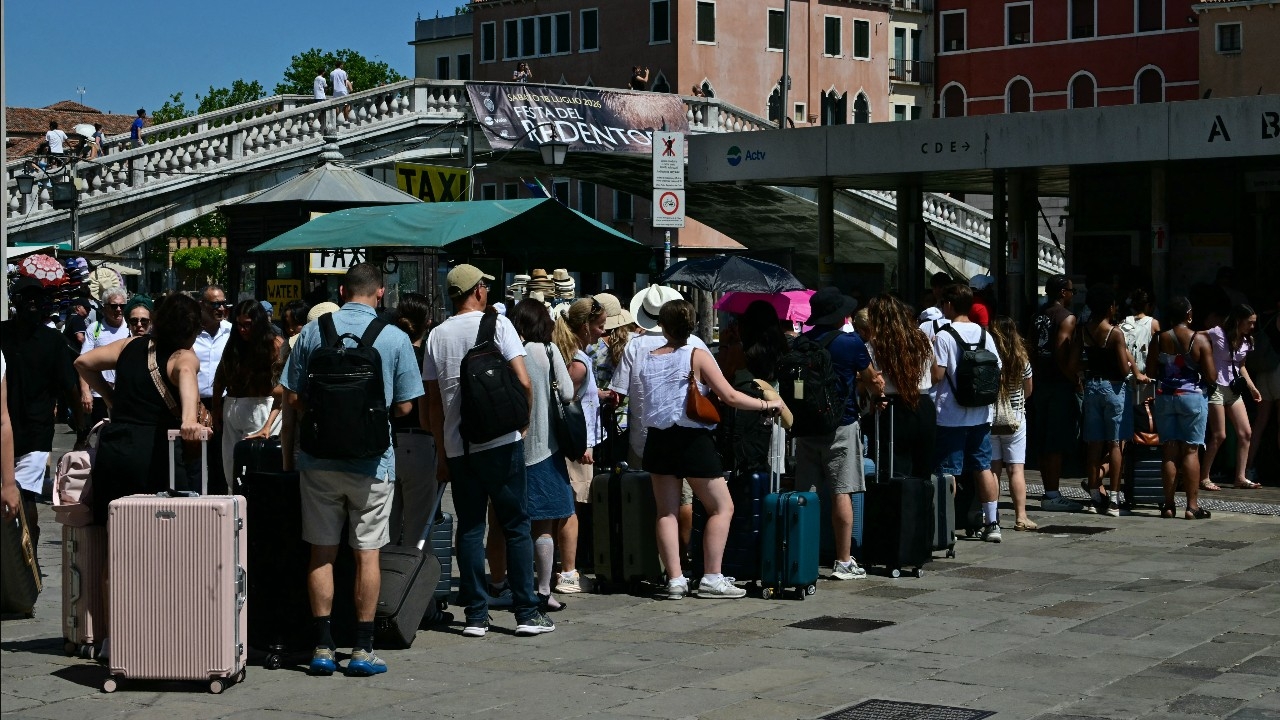
Venice, Italy, faces multiple challenges including rising sea levels and an overwhelming number of tourists. The city is hastily implementing a giant floodgate system aiming to buy 50-70 more years of protection, while local residents contend with high living costs and housing increasingly reserved for tourists.
Venice, Italy, is confronting a major challenge in preserving its world-famous historic city. Rising sea levels due to climate change threaten its ancient buildings and canal-side areas. Meanwhile, excessive tourism pressures infrastructure, housing costs, and the daily lives of locals, raising concerns about how long the city can maintain its traditional identity.
According to a report by CNA, Venice, located in northeastern Italy, has coexisted with tidal phenomena for centuries. However, as sea levels rise, flood risks increase, especially for a city known for its historic buildings and distinctive canals. Venice is also a UNESCO World Heritage site attracting millions of tourists annually.
MOSE: The giant floodgate system buying Venice more time against rising seas
Venice's primary flood defense is the MOSE system (Modulo Sperimentale Elettromeccanico), a large movable barrier that can be raised to block Adriatic Sea waters from flooding the Venetian lagoon during unusually high tides.
This system is designed to protect the low-lying city from flooding and to provide authorities with additional time to develop long-term protective strategies.
Alvise Papa, head of Venice’s water level forecasting and alert center, stated that the floodgate system will give the city approximately 50-70 more years to plan and consider permanent protection measures for the future.
Nonetheless, experts have proposed various responses, ranging from building surrounding dikes and installing additional barriers to more drastic options such as relocating residents to higher ground.
Robert Nicholls, a professor specializing in climate change adaptation at the University of East Anglia in the UK, believes flood risks cannot be completely eliminated but can be managed. However, he warns that as sea levels continue to rise, existing defenses may face increasing challenges.
Venice is also sharing knowledge and experiences with other cities facing similar issues, including Rotterdam and Amsterdam in the Netherlands, Hamburg in Germany, and various cities and prefectures in Japan, collaborating on responses to severe storms and rising sea levels.
Tourist overload impacts locals and historic buildings
Beyond natural threats, Venice must manage the problem of overwhelming tourist numbers. While tourism is a vital source of income for hotels, restaurants, and gondola operators, the heavy boat traffic generates waves that cause vibrations and additional damage to centuries-old buildings.
Venice's canals serve as the city's streets, used by passenger boats, ambulances, and cargo vessels delivering goods to hotels and restaurants. This dense water traffic adds further pressure to the historic city.
At the same time, rising demand for short-term tourist accommodation drives up housing prices, making it harder for locals to find homes. Some residents say the city has been transformed entirely into a commodity for tourists, and the crowds make daily life difficult—simple tasks like buying bread, shopping, or using public transport are affected by the throngs.
However, some locals view tourism as essential for the city’s economy, generating income and jobs for restaurants, hotels, gondola operators, and various transport services.
Daniele Minotto, deputy director of the Venice Hotel Association, revealed that the Chinese tourist market has grown significantly in recent years, rising from a small segment to become the sixth-largest tourist market in Venice. This growth is partly due to increased direct flights from major Chinese cities like Shanghai and Beijing.
Venice charges entry fees to control tourists
To ease tourist overcrowding, Venice began charging day-trip tourists an entry fee in 2024. Authorities say the revenue will fund maintenance of the historic city, which costs over 100 million US dollars annually to preserve.
In 2026, this fee will cover 60 days from April to July, up from 54 days in 2025. Tourists who pay at least four days in advance will be charged 5 euros (about 5.80 USD), while those paying closer to their visit date will pay 10 euros.
However, Michele Suin, a city council member responsible for budget matters, stated in September that the current fees are too low to significantly reduce tourist numbers.
Authorities are therefore considering raising the maximum fee to 30 euros, but such an increase would require discussion and approval from the Italian government first.
Source:channelnewsasia
Click to read related news aboutInternational news