

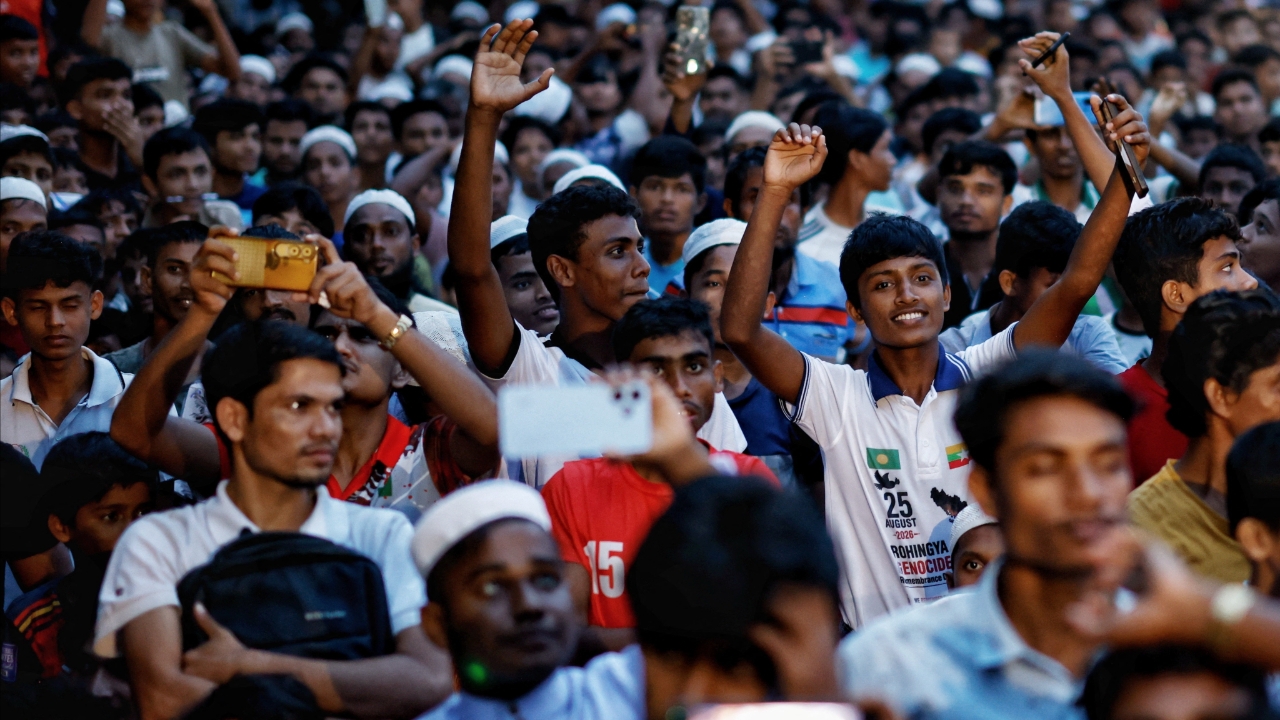
The International Court of Justice has ruled that Myanmar is guilty of genocide against the Rohingya minority and ordered reparations as well as facilitation of their return to their homeland.
On Thursday, 19 Nov 2026 GMT+7, the International Court of Justice (ICJ), also known as the World Court, issued a historic verdict finding Myanmar guilty of genocide against the Rohingya minority. This marks the first time in the court’s 80-year history that a state has been held responsible for genocide.
The ICJ judges voted 9 to 6 to find Myanmar guilty after a seven-year evidence review since The Gambia filed the case in 2019.
Judge Yuji Iwasawa, President of the ICJ, stated that the nature and extent of Myanmar’s military operations in Rakhine State during 2016-2017 were excessively brutal, indicating a clear intent to destroy the Rohingya population.
The ICJ rejected Myanmar’s claim that its "clearance operations" were legitimate counter-terrorism measures, noting that the Myanmar military did not distinguish between armed groups and civilians, instead committing mass killings, widespread sexual violence, severe harm to children, and attacks on Rohingya fleeing across the border into Bangladesh.
The court ordered Myanmar to compensate the Rohingya, return all lost or damaged property to its owners, and facilitate safe, voluntary, and dignified repatriation of the Rohingya to their original homes, including family reunification.
Myanmar must also guarantee protection of the Rohingya from discrimination and persecution in the future.
However, while the ICJ’s ruling is final and legally binding, the court has no enforcement power and can only refer the matter to the United Nations Security Council (UNSC) for further action.
Enforcement faces obstacles, as the ICJ is opposed by the U.S. government under President Donald Trump, with U.S. UN ambassadors criticizing the court for allegedly lowering the standards for genocide cases, potentially exposing U.S. military personnel to prosecution.
The Rohingya ruling is also closely watched for its potential impact on South Africa’s case against Israel for alleged genocide of Palestinians in Gaza.
Meanwhile, Myanmar’s military government led by Senior General Min Aung Hlaing, who commanded the military during the genocide, is unlikely to comply with the court’s order.
The situation in Rakhine State remains dire amid ongoing civil war. The Arakan Army (AA), an ethnic armed group, controls most of the area while the Myanmar military continues airstrikes, dimming prospects for the over 1.2 million Rohingya refugees in camps to safely return home.
Follow international news at:https://www.thairath.co.th/news/foreign
Source:CNN