

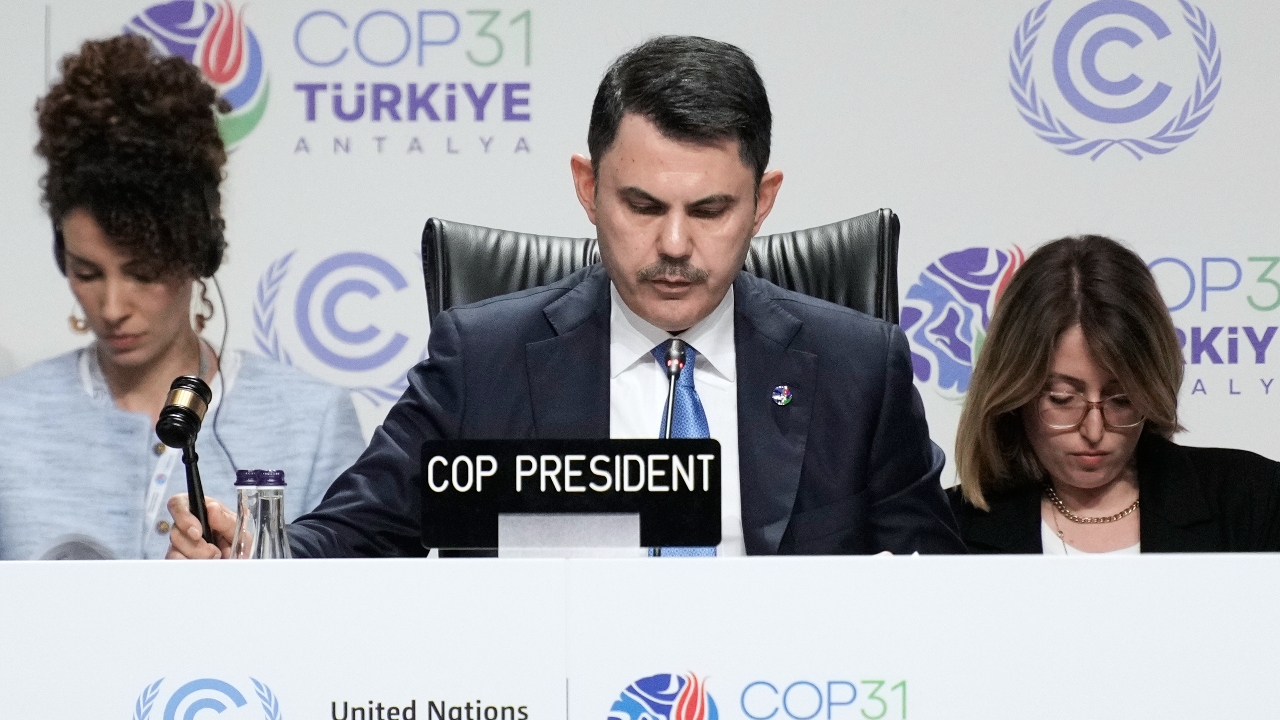
The COP31 meeting concluded without international consensus on transitioning away from fossil fuel use, due to opposition from oil-producing countries.
The 31st session of the United Nations Framework Convention on Climate Change Conference of the Parties (COP31) in Antalya, Turkey, on Sunday, 22 Nov 2026 GMT+7, ended without reaching a major agreement after prolonged negotiations lasting over two weeks, becoming the longest COP meeting in history and marking the biggest failure since COP15 in Copenhagen in 2009.
Oil-producing countries opposed including the phrase “transition away from fossil fuels” in the draft agreement, leading to its removal entirely, with the focus shifting instead toward enhancing carbon capture and storage technologies rather than reducing fossil fuel consumption.
Mr. Murat Kurum, COP31 chair, acknowledged the lack of sufficient support to pass the agreement: “We have done our utmost,” but “it is clear that some parties in this room oppose the contents of this document. We acknowledge there is no consensus on this document.”
Environmental groups criticized this as enabling continued oil and gas production without addressing the root causes. Mr. Harjit Singh, founder of the Satat Sampada Climate Foundation, said, “You cannot solve the fossil fuel crisis by pretending we don’t need to phase out fossil fuels.”
As a result, the European Union (EU), Norway, Panama, and the Marshall Islands refused to sign off on the agreement because it failed to address fossil fuels, one of the main drivers of the climate crisis.
Vulnerable countries expressed disappointment over the draft agreement, which, although it proposed tripling adaptation finance by 2035, did not specify clear figures or baseline criteria for collecting funds from wealthy nations.
“Wealthy countries refuse to put money on the table to help communities prepare for and recover from climate disasters and instead give free passes to polluters... Having no agreement is better than having one that reinforces failure,” Mr. Singh stated.
Many experts harshly criticized the meeting's outcome as a global leadership failure, especially as UN reports recently warned that the world is on track to exceed the 1.5 degrees Celsius target, potentially reaching a disastrous 2.8 degrees Celsius if nations do not enhance their responses.
Mr. Mohamed Adow, director of the energy research institute Power Shift Africa, strongly condemned the meeting, calling it “the worst COP ever,” adding that its collapse should serve as a wake-up call for the world.
However, some officials remained optimistic. Mr. Chris Bowen, COP31 chief negotiator, said the outcome was very disappointing but highlighted “many positives” from the talks, such as over 90 countries signing commitments to accelerate the shift toward electrification of economies.
Notably, the United States did not participate in this COP meeting because President Donald Trump had already withdrawn from international climate cooperation. Meanwhile, global attention was diverted to geopolitical crises and the Iran war, which significantly impacted global energy supplies.
Follow international news:https://www.thairath.co.th/news/foreign
Source:cnn