

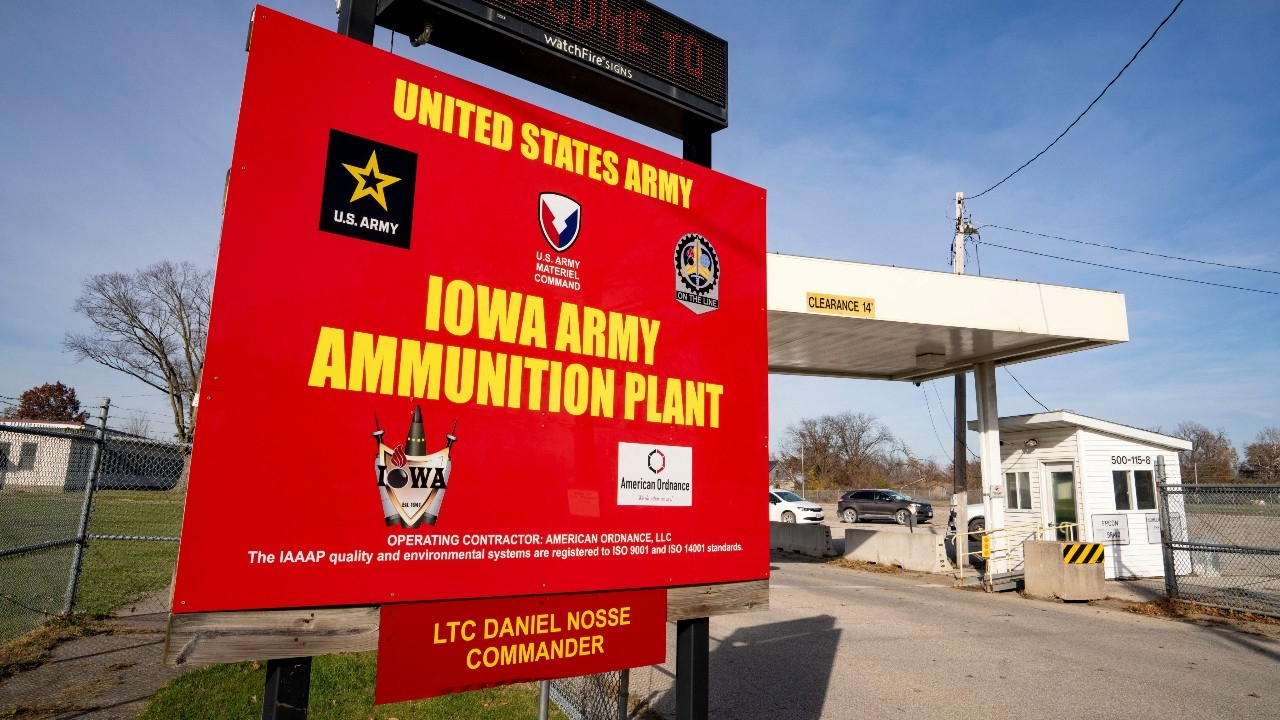
The U.S. military has confirmed it will proceed with detonating over 5 tons of explosive chemical agents despite a court's temporary suspension order due to concerns that hazardous chemicals could disperse hundreds of kilometers.
On 22 Nov 2026, the U.S. military informed the appellate court it will destroy a stockpile of explosive chemical "lead azide" consisting of 68 drums, about 9,700 to 10,000 pounds (4.4–5 tons), by detonation inside its ammunition plant in Middletown, Iowa, by Tuesday, 24 Nov, even though the Environmental Protection Agency (EPA) permit has been temporarily suspended by the court.
In documents submitted to the court, the U.S. Department of Justice stated that the approaching freezing temperatures combined with the removal of the bunker’s safety doors in preparation for destruction put the chemicals at risk of sudden spontaneous explosion.
Additionally, the 68 drums of lead azide have severely deteriorated to the point that even opening the 55-gallon plastic drum lids for chemical neutralization risks causing an explosion. The military argues the choice is not whether to detonate, but between "planned detonation with warnings and cleanup" or "an unexpected, unprotected explosion."
The military confirmed it will follow contamination inspection and cleanup measures after the explosion, even while invoking an emergency exemption without an EPA permit.
Previously, the military warned that the detonation would release a cloud of toxic lead dust harmful to the nervous system, potentially drifting as far as 100 miles (approximately 160 kilometers) or more.
Opposing experts from the Iowa Environmental Council and the Sierra Club further warned that the explosion might emit other toxic gases such as hydrazoic acid, hydrogen cyanide, and volatile organic compounds (VOCs), risks the EPA has not fully evaluated.
Environmental groups criticized the emergency as the result of military negligence, while the city manager of Iowa City said the city only learned of the issue from news reports on 17 Nov and had received very limited official information, complicating response planning.
Nonetheless, Iowa Governor Kim Reynolds has launched a dedicated website to consolidate information from the military and EPA, and ordered state security, public health, and natural resources agencies to coordinate closely through an emergency operations center to prepare for and protect local residents.
Follow international news:https://www.thairath.co.th/news/foreign
Source:desmoinesregister