

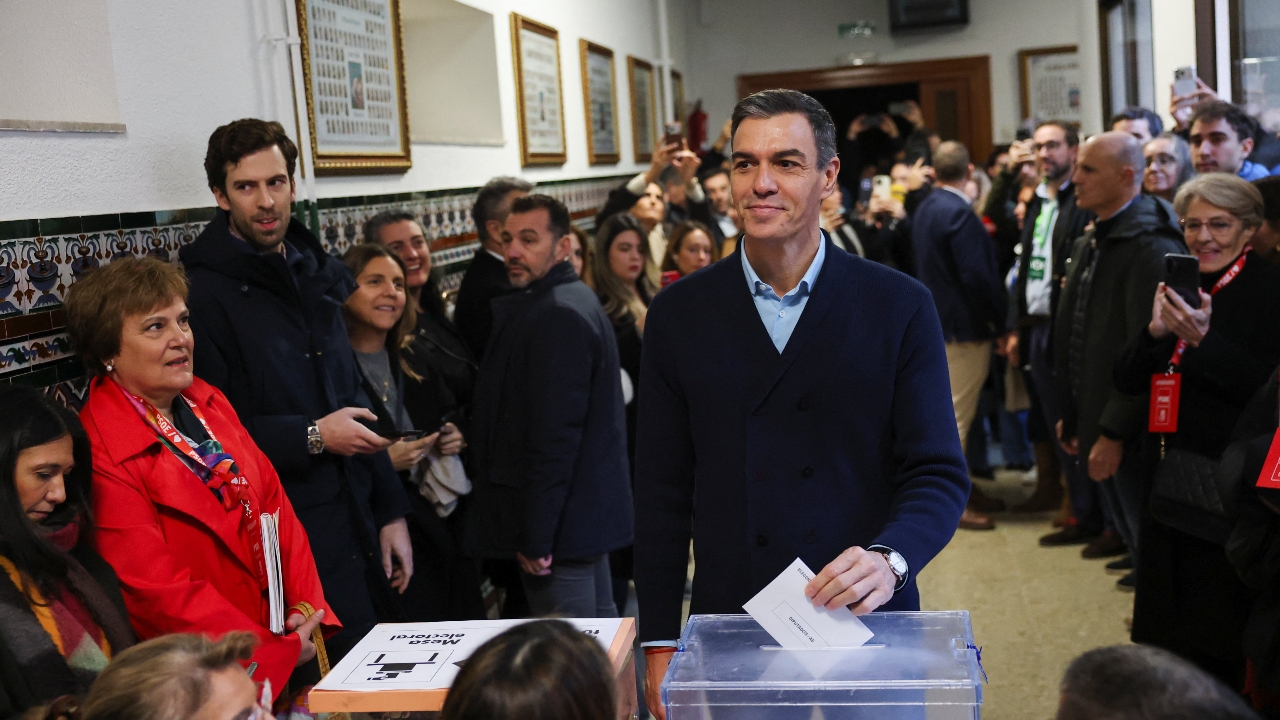
Millions of Spaniards went out to vote in a general election held ahead of schedule amid a housing and cost of living crisis, while Prime Minister Pedro Sánchez's party faces a tough battle.
On Sunday, 29 Nov 2026 GMT+7, millions of Spaniards gradually went to vote in a general election that Prime Minister Pedro Sánchez from the Socialist Party (PSOE) called eight months earlier than originally planned, after parliament voted down a housing reform bill, prompting him to dissolve parliament.
Sánchez's PSOE faces intense competition from the conservative People's Party (PP) led by Alberto Núñez Feijóo. Polls show Sánchez's party slightly trailing, but he remains confident of ultimately winning.
The shortage of affordable housing is the main issue in this election, followed by the cost of living and immigration, which have sparked major protests in recent months.
Since taking office in 2018, Sánchez has been prominent internationally for opposing Israel's actions in Gaza and criticizing U.S. President Donald Trump, but domestically his popularity has been hurt by the housing crisis, corruption scandals, and two severe train collisions.
In previous Spanish general elections, almost no party has secured a parliamentary majority alone. Thus, even if Sánchez's party wins, it may struggle to form a left-wing coalition government.
Conversely, if Feijóo's PP forms a government, it will likely rely on support from the far-right Vox party led by Santiago Abascal, with whom it has previously governed regionally.
Vox's participation in a national government could significantly impact Spain and shift Europe's power balance, as the party promotes a "Spanish citizens first" policy for welfare and advocates deporting foreigners who do not contribute economically.
Critics say this ideology echoes the dictatorship era of Francisco Franco (1936-1939), though Vox denies these accusations.
Follow international news:https://www.thairath.co.th/news/foreign
Source:bbc