

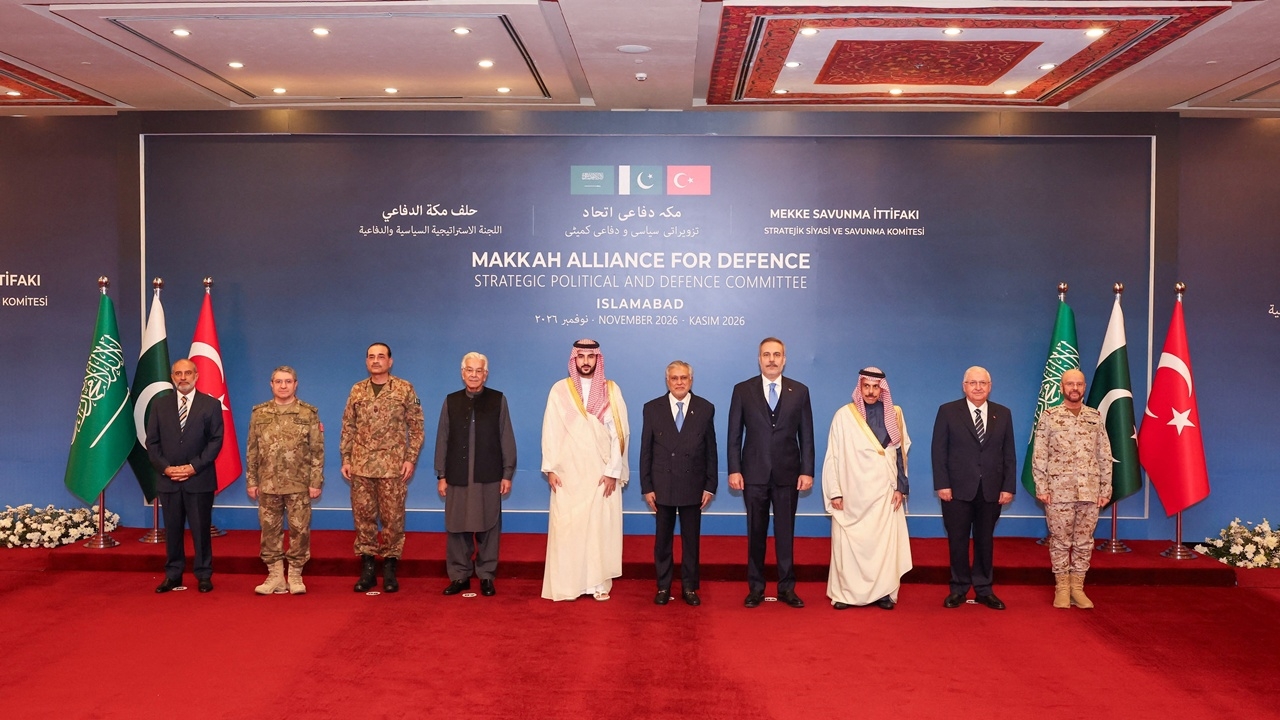
Pakistan has officially announced the deployment of troops to assist Saudi Arabia under a joint defense agreement after the Houthi rebels launched continuous attacks on various parts of Saudi Arabia.
On Sunday, 29 Nov 2026 GMT+7, the Pakistani government declared the official deployment of military forces to Saudi Arabia to bolster national defense, following continuous attacks over recent months by the Iran-backed Houthi rebels from Yemen on various Saudi territories.
This troop deployment occurs under the “Mecca Joint Defense Agreement,” signed by Pakistan, Saudi Arabia, and Turkey on 7 Aug 2026 GMT+7, stipulating that an armed attack on any of the three nations is considered an attack on all. However, Pakistan has not disclosed the number of troops sent, their mission details, or deployment duration.
Earlier, the Houthi rebels claimed responsibility for attacks on five key Saudi sites from Saturday to Sunday, including King Khalid International Airport in Riyadh, radar systems, the Jazan oil refinery and gas separation plant operated by Saudi Aramco, as well as a power plant in the south.
These attacks prompted Saudi authorities to issue emergency alerts urging citizens to take shelter and reported intercepting several missiles, with no civilian injuries from debris.
However, the attack on the Jazan refinery last Thursday resulted in the death of one Nepalese worker and temporarily disrupted some operations.
Meanwhile, the Saudi-led Arab coalition launched military operations targeting Houthi command centers and key equipment used to threaten navigation in the Red Sea and Bab el-Mandeb Strait.
Mohammed Ali al-Houthi, a senior Houthi leader, condemned Pakistan and Turkey for ignoring Saudi Arabia’s crimes and the blockade on Yemen, warning that this new alliance would fail as previous attempts have.
Saudi Arabia has been under heavy pressure since the Iran conflict erupted in February, allowing the Houthis to expand their frontlines and seize Yemen’s Red Sea coast, blocking oil transport routes, which has affected Saudi exports and driven up global oil prices.
This situation has forced Riyadh to increasingly rely on regional allies such as Pakistan, Turkey, and Egypt, which recently sent air defense systems and fighter jets last month to help intercept missiles and drones. Pakistan is also cooperating with Qatar to mediate peace talks between the U.S. and Iran.
Follow international news:https://www.thairath.co.th/news/foreign
Source:euronews