

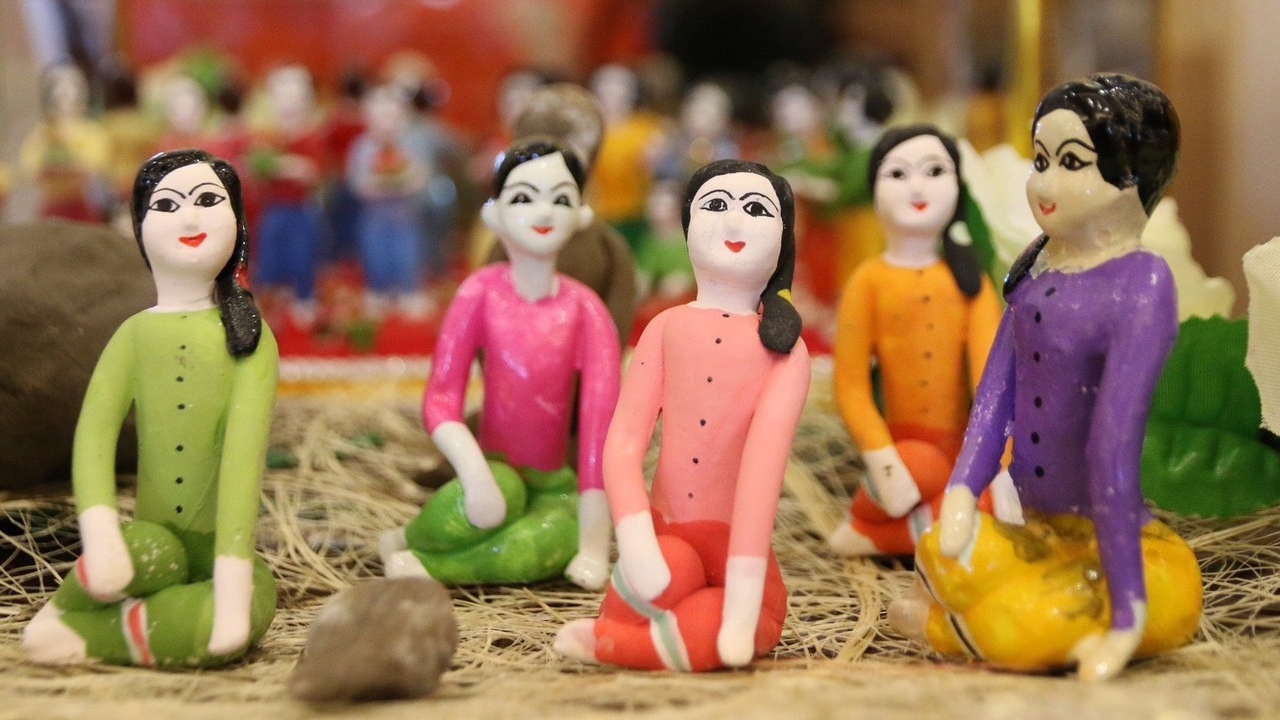
The Department of Intellectual Property has elevated the value of clay artwork by registering the GI "Bang Sadet Palace Dolls," emphasizing the unique "living clay" as a cultural heritage of the Chao Phraya River Basin in Ang Thong Province.
The Department of Intellectual Property announced the registration of a new geographical indication (GI) item, "Bang Sadet Palace Dolls," a specialty of Ang Thong Province. This craft reflects the identity of handmade art born from the royal benevolence of the royal family, transforming clay from rice fields into artistic creations that generate income. The craft is distinguished by its meticulous modeling, reflecting traditional Thai lifestyles and wisdom, and is being promoted as a creative economic product in fine arts, gaining international recognition for the local area.

Mrs. Oramon Sapthaweetham, Director-General of the Department of Intellectual Property, revealed that "Bang Sadet Palace Dolls" are artworks made from fine clay found in Pa Mok District, Ang Thong Province. This sediment clay from the Chao Phraya River Basin is sticky and of excellent quality. The dolls are carefully hand-shaped and then fired until the clay turns orange-red or brick color. These artworks vividly depict stories of daily life, customs, folk games, and various vegetables, fruits, and animals from different eras.
Mrs. Oramon added that "Bang Sadet Palace Dolls" originated between 1974 and 1976 when the people of Bang Sadet village, Ang Thong Province, who were primarily farmers, suffered repeated flooding and severe income loss. On 4 January 1976, Her Majesty Queen Sirikit, the Queen Mother, visited the villagers, learned of their hardships, and conceived the idea to revive the craft of "palace dolls" as an additional occupation. She emphasized using local materials like clay from the rice fields without requiring high costs. Following this royal initiative, a project to teach doll molding was established in Bang Sadet on 19 January 1976, with art experts as instructors. This project received continuous royal patronage from all members of the royal family. Princess Maha Chakri Sirindhorn visited to encourage the villagers, presided over the craft teachers’ ceremony, and offered inspirational guidance to those starting this new occupation.

Furthermore, Her Majesty the Queen Mother and Princess Maha Chakri Sirindhorn supported marketing efforts. In the early stages, when the products were unknown, they purchased all the dolls and sold them at the Chitralada Shop. They also arranged for officials to continuously buy villagers’ works to boost morale and confidence that these crafts could generate sustainable income and growth. Later, on 28 April 1976, His Majesty King Bhumibol Adulyadej the Great, along with members of the royal family, visited the palace doll project at Wat Thasuthawat and praised the work, presenting awards to encourage the Bang Sadet Palace Doll producers. This was a significant turning point that saved the craft from near extinction, restoring it as a precious cultural heritage that truly reflects the roots of Thai culture in the Chao Phraya River Basin. It became the third GI product registered in Ang Thong Province after Bang Chao Cha’s large golden santol fruit and Ek Kanrat drums, both registered earlier. It is also the 25th and final GI product registered in 2025, bringing Thailand’s total GI products to 246, with an economic value exceeding 114.359 billion baht.

The Department of Intellectual Property is committed to continuously promoting and developing GI products, including implementing quality control and traceability systems to build consumer confidence, pushing for GI registration abroad to create trade opportunities and increase global recognition of Thai GI products, and developing GI products to premium levels connected with cultural tourism and the creative economy. These efforts aim to generate tangible income for communities. The registration of the "Bang Sadet Palace Dolls" GI not only preserves local wisdom but also serves as a key tool for adding value, creating jobs, and sustainably improving the quality of life in the community, Mrs. Oramon concluded.
." State Policy . Additional