

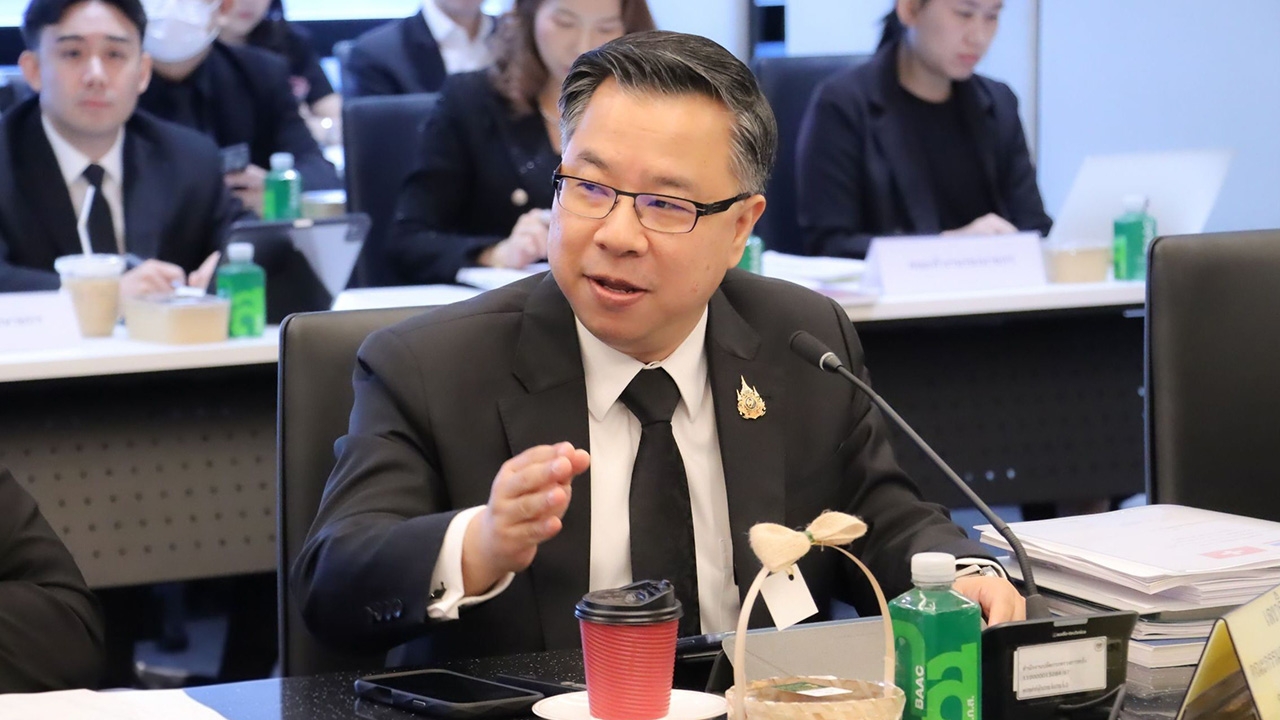
At its first meeting of 2026, the Board of Investment (BOI) approved seven data center projects totaling 96 billion baht. The board emphasized investor confidence in Thailand’s infrastructure amid the global digital industry’s growth, supporting Thailand’s emergence as a regional digital hub and establishing a foundation for long-term economic growth.
Mr. Narut Therdsteerasuk, Secretary-General of the Board of Investment (BOI), revealed that on 15 January 2026, the BOI meeting chaired by Deputy Prime Minister and Minister of Finance Mr. Akniti Nitithanprapas approved seven data center investment projects with a combined investment value exceeding 96 billion baht. The projects include:

In 2025, there were 36 data center investment promotion applications totaling 728 billion baht, mostly in key industrial and economic zones including Rayong (33%), Chonburi (32%), and Samut Prakan (12%), with the remainder spread across Pathum Thani, Chachoengsao, and Bangkok. These large-scale investments come from both Thai and foreign operators such as Zenith Data Center and Cloud Services from the UK, Galaxy Peak Data Center from Singapore, Thai DC One from Thailand, and Telehouse (Thailand), part of KDDI from Japan.

“Digital technology is rapidly evolving as organizations worldwide accelerate their digital transformation through key technologies like Cloud Computing, AI, and IoT. Consumers increasingly use digital platforms for work, study, shopping, and entertainment, driving higher demand for stable and secure data storage and processing systems. This makes data centers, cloud services, and related infrastructure essential to the digital economy. Leading data center operators choosing to invest in Thailand reflects global investor confidence and will support the growth of the digital economy, especially in finance and e-commerce,” Mr. Narut said.

Regarding investment promotion policies for data centers to maximize benefits for Thailand, at the end of 2025 the BOI tightened conditions. These include requiring at least 50% of managerial and specialist positions to be filled by Thai personnel within three years, and mandating projects to undertake activities developing human resources and the domestic ecosystem such as staff training, curriculum development with educational institutions, research and development, upgrading Thai SMEs’ skills, and supporting local supply chains. These activities must be completed before corporate income tax exemption benefits are granted. Additionally, there are standards for efficient electricity use (PUE) and proper water management. The BOI also differentiates incentives by location, offering higher benefits for projects outside the EEC area to reduce electricity demand concentration in the EEC and promote regional development.
Read more news " government policy " here.