

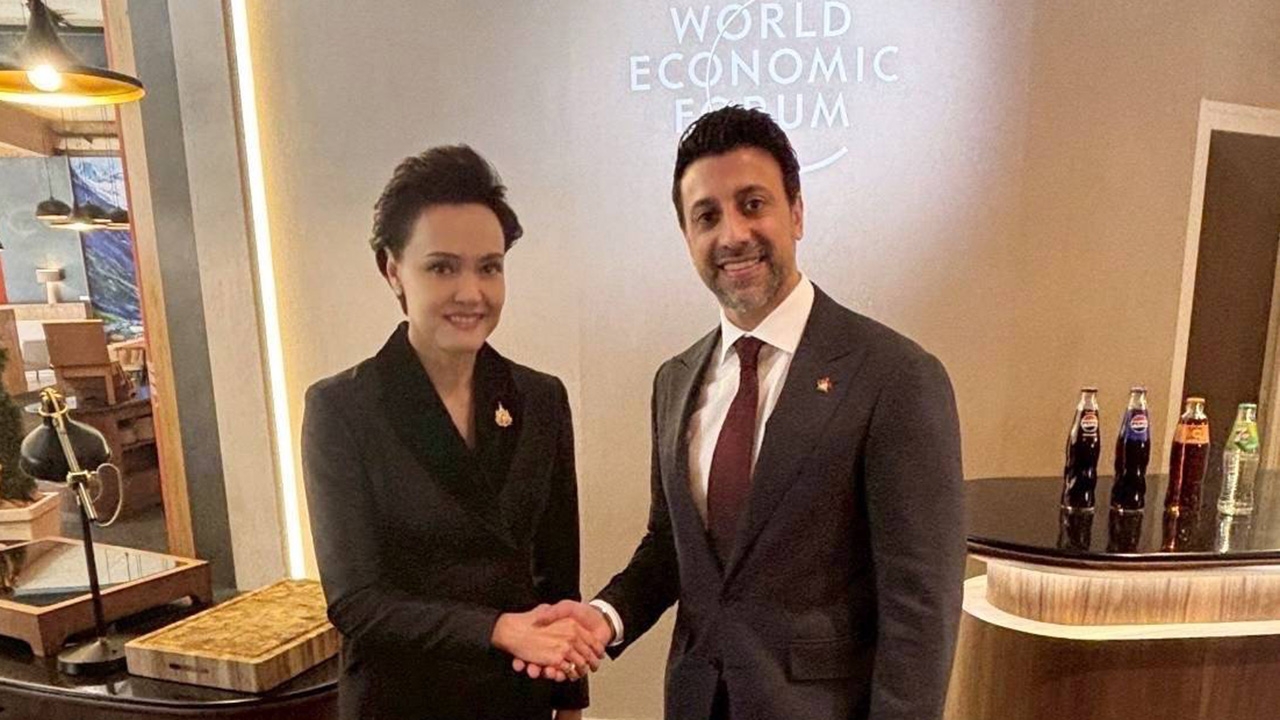
The "Commerce Ministry" held talks with the Canadian Minister of International Trade to advance economic cooperation, supporting FTA negotiations targeting completion this year, and preparing to launch direct flights between Vancouver and Bangkok to promote agricultural and food exports.
Mrs. Supachai Sutthumpun, Minister of Commerce. She revealed that on 20 Jan 2026 GMT+7, she met with Mr. Maninder Sidhu, Minister of International Trade, during the 56th World Economic Forum in Davos, Switzerland, to discuss enhancing economic, trade, and investment cooperation between Thailand and Canada amid global economic uncertainties.

Mrs. Supachai stated that Thailand-Canada relations have continuously developed dynamically, with this year marking the 65th anniversary of diplomatic ties. She emphasized Thailand's readiness to collaborate with Canada to advance economic and trade relations, particularly through negotiating a free trade agreement (FTA) both regionally—ASEAN-Canada—and bilaterally—Thailand-Canada. Canada has shown clear eagerness to expedite the Thailand-Canada FTA negotiations, which leaders agreed to initiate during the APEC Economic Leaders' Meeting in October 2025. They aim to complete the negotiations within this year if possible, which would open greater trade and investment opportunities. For Thailand, a successful FTA with Canada would be its first with a North American country and a key mechanism to reduce both tariff and non-tariff trade barriers, connect supply chains, and promote mutual regional trade gateway roles.

Mrs. Supachai said that Canada recognizes Thailand's importance as an economic partner and strategic location in the region. Plans include launching direct flights between Vancouver and Bangkok to improve connectivity and ease travel. Additionally, Canada is interested in expanding trade with Thailand, especially in agricultural products and meats. Thailand is prepared to export agricultural and food products to Canada, such as rice, cooked chicken, pet food, sauces, and processed seafood. Both countries see opportunities to build on their respective strengths like raw materials, technology, location, and logistics, as well as consider food cooperation to expand into third-country markets. Furthermore, both sides have potential to develop cooperation in sectors of mutual interest to support trade and investment expansion, particularly in areas where Canada excels in innovation and technology, including agriculture and food, clean energy, automotive, aerospace, electronics, and digital technology.
Mrs. Supachai added that Canada is also interested in cooperation under the ASEAN Digital Economy Framework Agreement (DEFA), which aims to establish standards and connectivity for the digital economy within ASEAN. This serves as a foundation to promote digital trade and investment, inclusiveness, and reduction of economic disparities alongside strengthening digital governance. Progressing towards digitalization in various fields will support SMEs and promote sustainable and environmentally friendly development.

In 2024, the total trade value between Thailand and Canada was USD 3,223.85 million, up 9.88% from 2023. Thai exports to Canada were USD 2,133.69 million, a 12.07% increase from 2023. Key exports included canned and processed seafood, iron and steel products, computer equipment and components, rice, and rubber products. Imports from Canada amounted to USD 1,090.16 million, up 5.83% from 2023, mainly consisting of electrical circuit boards, plants and plant products, fertilizers and pesticides, machinery and parts, and pulp and waste paper.
During the first 11 months (Jan–Nov) of 2025, total trade between Thailand and Canada amounted to USD 3,577.68 million, with exports at USD 2,339.39 million and imports at USD 1,238.29 million. Thailand recorded a trade surplus of USD 1,101.10 million.
/read news " Government Policy " Additional