

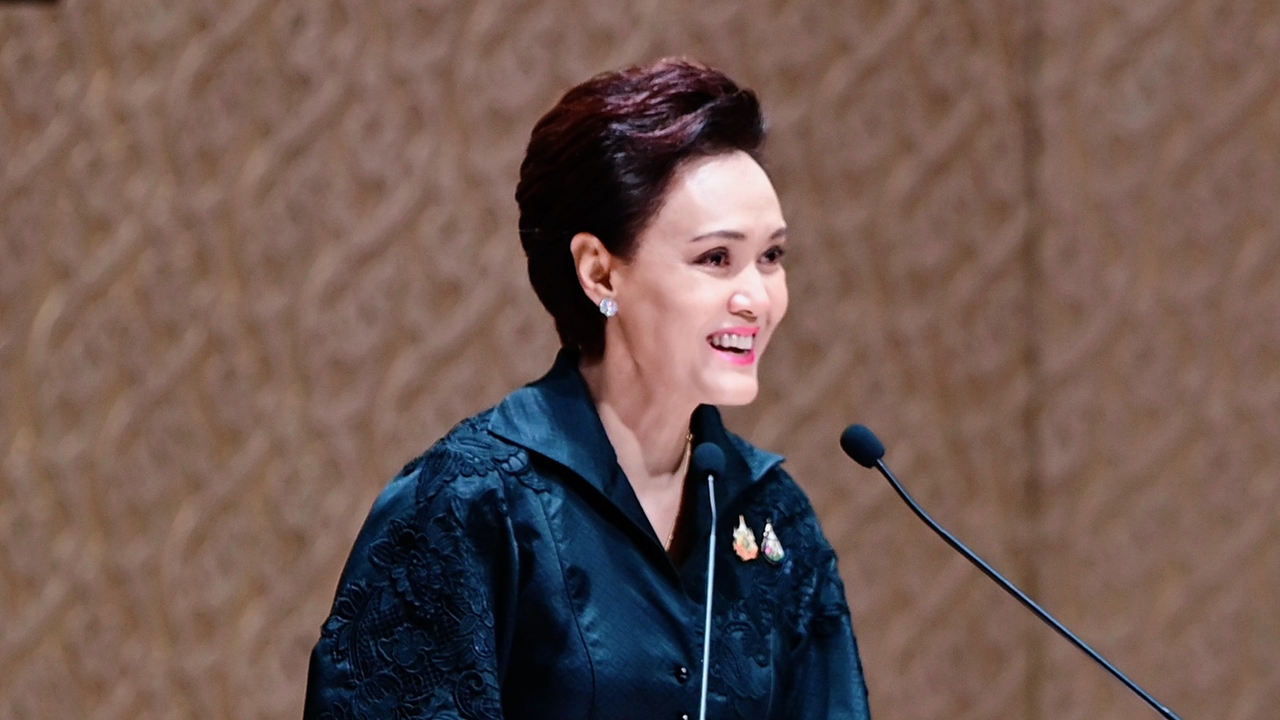
The Ministry of Commerce, through the Department of Foreign Trade, has joined forces with the Stock Exchange of Thailand and the Thai Capital Market Business Council to host a seminar titled “Thailand and RECIPROCAL TARIFF: Move Forward or Stop Here?” This event serves as a platform to connect private sector businesses listed on the Stock Exchange to increase their utilization of FTA benefits, aiming to make it a key strategic tool for trade balance adjustment.

Supachai Sutthumpun, Minister of Commerce, presided over the opening of the seminar under the project to enhance knowledge on trade benefit rights to develop the capabilities of Thai entrepreneurs, titled “Thailand and RECIPROCAL TARIFF: Move Forward or Stop Here?”

Supachai stated that amid the global economic context marked by conflicts and escalating "extreme power polarity," Thailand needs to adopt a proactive stance by positioning itself as an "ally" in the global supply chain and elevate its role as a vital part of the production system of trading partner countries. This involves understanding market demands, developing standards, and seeking mutual benefits to build "trust currency," which is considered the most important currency in trade. Although retaliatory tariffs and non-tariff trade barriers are increasing challenges, effective negotiation, efficient use of free trade agreements (FTAs), and ongoing policy management will protect the interests of entrepreneurs and the country while fostering confidence among domestic and foreign trading partners. The Ministry of Commerce stands ready to support Thai entrepreneurs in adapting and overcoming global economic volatility steadily.

Additionally, Arada Fuengthong, Director-General of the Department of Foreign Trade, revealed she participated in a panel discussion with Dr. Somkiat Tangkitvanich, President of the Thailand Development Research Institute (TDRI), and Dr. Sorapol Tulayasathien, Deputy Managing Director and Head of Corporate Strategy and Finance at the Stock Exchange of Thailand. During the discussion, they emphasized that preventing misuse of product origin is a priority for the Department of Foreign Trade. This includes stringent verification of product origins for exports to the U.S. and continuous education for the private sector on origin verification methods to ensure that exported goods genuinely originate from Thailand. In 2025, the Department issued 96,763 certificates of origin (C/O) for exports to the U.S., valued at 8.221 billion USD, an increase of 10.70% compared to 2024. Key products include solar panels, pet food, and air conditioners.

Arada further commented that due to the uncertainty of U.S. trade policies, relying solely on a single export market poses risks to Thailand’s international trade. Therefore, the private sector should focus on diversifying export markets to increase trade options by utilizing existing free trade agreements (FTAs) alongside expanding into new markets. This approach will reduce risk and enhance resilience for Thailand’s export sector.

In 2024, listed companies on the Stock Exchange exported goods using FTA benefits totaling 11.563 billion USD, with primary destinations in Asia, including China, Vietnam, South Korea, and Japan, respectively. However, some listed companies have yet to utilize FTA benefits, with exports valued at over 2.4 billion USD, including machinery, aircraft, electrical equipment, and other industrial products. The Department of Foreign Trade and the Stock Exchange of Thailand will jointly organize additional FTA knowledge promotion activities for listed companies in 2026. These will include a series of seminars focused on key destination markets such as China, ASEAN, and Japan, enabling entrepreneurs to use this information for precise business planning and targeted export market expansion.
/Read more news " Government Policy " Additional