

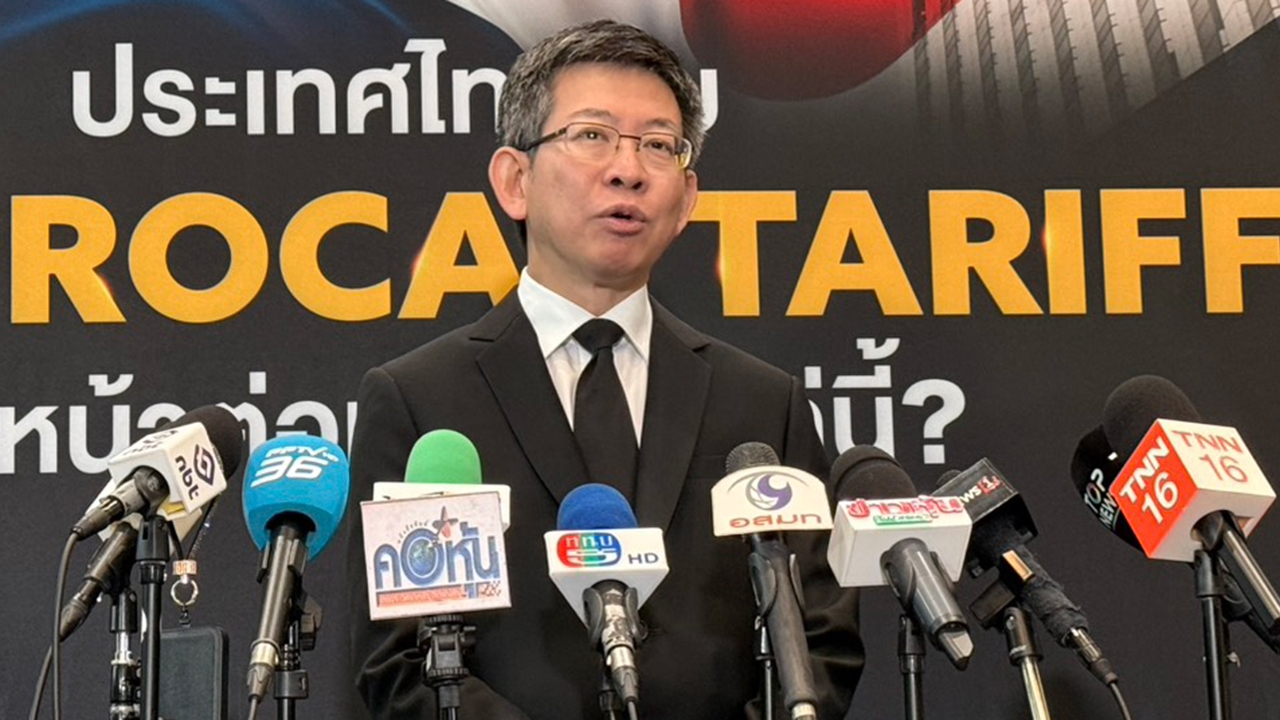
The chairman of FETCO recommends that the Social Security Office establish an independent board to help oversee and expedite restructuring before it is too late, noting that Thailand's social security system is like a "buffet that's running out of food." He warns that younger generations might pay money without receiving benefits in the future.
Mr. Kobsak Phutrakul, chairman of the Federation of Thai Capital Market Organizations (FETCO), addressed concerns about the management of the Social Security Office (SSO), stating that ongoing studies reveal troubling signs that the social security fund may be insufficient in the future. Although it currently holds trillions of baht in reserves, this increase is only temporary due to the relatively small elderly population.
Mr. Kobsak compared the situation of Thailand's social security system with the United States' Social Security system, which faces funding shortfalls, forcing it to increase contributions and reduce benefits. He noted that Thailand is heading toward the same point due to a demographic shift with fewer births and more retirees.
"It's like a buffet where the first people have taken all the food, and those remaining in line over the next 40 years will pay the same price but be left with only plain rice to eat. This is unfair to everyone. Therefore, reform is not optional but the only way forward that must begin today."
Regarding investments, Mr. Kobsak suggested that the SSO improve its investment policies for greater efficiency, as simply depositing money in banks earning 2% interest is insufficient for long-term expenses. He illustrated that if funds are bank-deposited only, the money would run out by age 70, whereas investing half in the stock market could sustain funds until age 80–82.
He also proposed adopting a model like the Bank of Thailand, which manages tens of trillions of baht in reserves by involving external experts to help manage funds, establishing operational benchmarks and comparing returns against internal management.
For restructuring, Mr. Kobsak proposed that the new government establish an independent committee composed of senior experts such as former Bank of Thailand governors or leading economists. This committee would serve as the public's watchdog by assessing the fund's status and reporting transparently every 1–3 years on how much money remains and its sustainability.
The committee would analyze benefits whenever new entitlements, like dental care or other welfare, are proposed, evaluating their impact on the fund’s longevity to prevent populist policies that threaten long-term stability. It would also reduce political pressure by speaking truths politicians cannot, such as the need to increase contribution rates.
Regarding whether the Social Security Office’s management should be removed from government supervision, Mr. Kobsak said this issue might be decided after elections. However, he emphasized that management processes are more important than structure. Whether inside or outside the government system, the Social Security Office’s management must lead to a new structure that reflects the fund’s financial realities and allows sufficient independent decision-making.
"Often, with the current structure, there is pressure to increase benefits even when it is clear funds are insufficient. Therefore, we need a new structure that can respond truthfully to the fund’s financial status. Whether inside or outside the government doesn’t matter, but it must have enough independence in decision-making and not be easily pressured."
Mr. Kobsak concluded that the broad questioning of the social security system is positive because it brings the agency into the spotlight, encouraging careful spending and more transparent decisions. He stressed that whatever the new structure, it must be independent and forward-looking across generations to preserve everyone’s money so it can grow and truly serve as a life guarantee.
Read more news on " government policy " additional