

The Department of Intellectual Property unveiled 11 valuable patented innovations to honor the genius of King Rama IX, known as the “Father of Thai Invention,” on Inventors' Day, 2 February 2026.
The Department of Intellectual Property, Ministry of Commerce, pays tribute to the inventive genius of His Majesty King Bhumibol Adulyadej the Great (King Rama IX), who is recognized as the father of Thai invention. With his expertise in science, technology, and engineering, he created 11 valuable patents that addressed fundamental national problems and sustainably improved the quality of life for the Thai people.

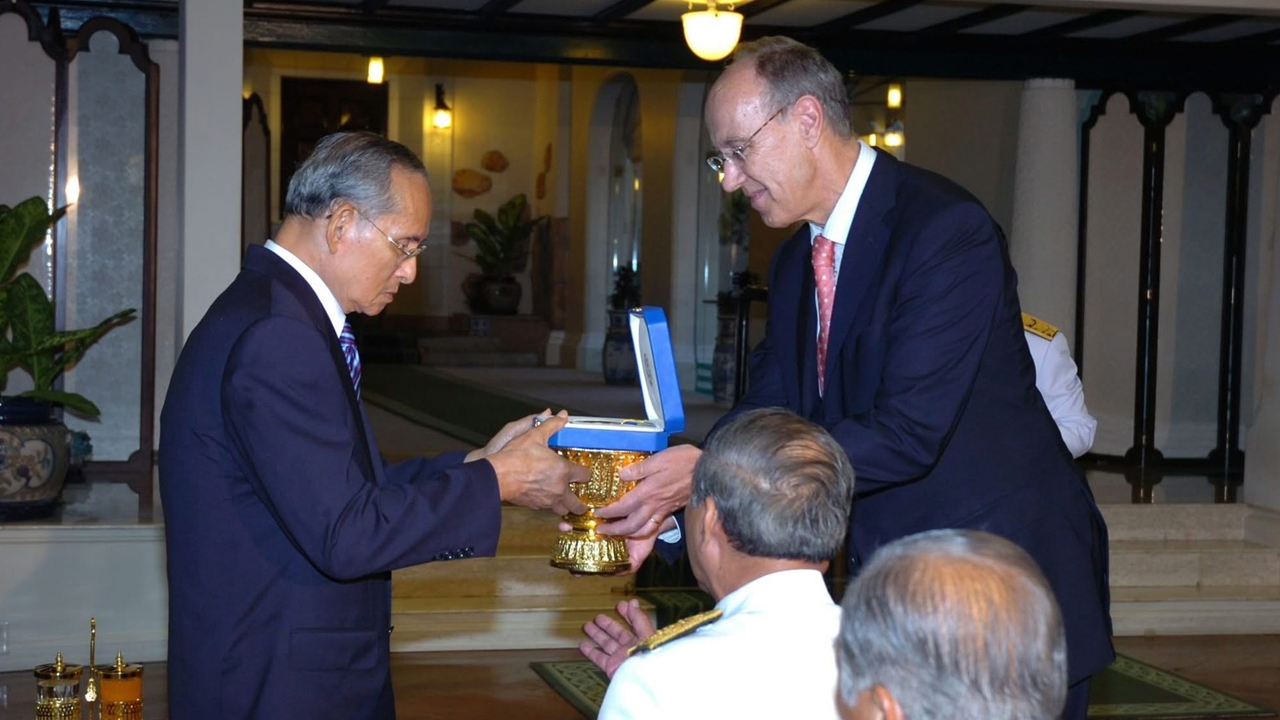
Mrs. Ornmon Sapthaweetham, Director-General of the Department of Intellectual Property, revealed that His Majesty King Bhumibol Adulyadej the Great placed great importance on intellectual property. He understood the value of protecting creative works and inventions by Thai people, which are essential foundations for stable and sustainable national development. This was reflected in his speech to the Minister of Commerce and delegation during a royal audience to present the patent for the “Aerator with Compressed Air and Water Suction” on Friday, 5 October 2001, at Phra Tamnak Piamsuk, Klai Kangwon Palace. Part of his statement said, “Intellectual property has existed for a long time. Patents and copyrights are very important. Back in 1957, people said we could benefit more by copying from abroad than by registering patents ourselves. We could use foreign inventions without paying royalties. Such thinking is incorrect.”
“It is an insult to Thai people.” This royal statement reflected His Majesty’s broad vision and inspired Thai thinkers, inventors, and creators to develop innovations and intellectual property.
With the potential of the Thai people, this vision has driven the country’s progress to this day.
Mrs. Ornmon added that the intellectual property works in His Majesty’s name, protected by invention patents, petty patents, and design patents, total 11 in number, cover innovations in water resource management, environmental quality restoration, and sustainable technology development. These serve as concrete evidence of using intellectual property as a true tool for national development. The patented inventions include:
1) Slow surface water aerator on a floating buoy, commonly known as the “Chai Pattana Water Turbine”. (Patent No. 3127) This aerator is installed on a floating buoy and can operate in open water bodies. It increases oxygen levels at the water surface to treat wastewater in ponds, swamps, canals, and natural water sources. It is the first royal patent granted to a Thai monarch and the first of its kind worldwide.

2) Aerator with compressed air and water suction. (Patent No. 10304) This aerator is used for wastewater treatment by injecting oxygen below the water surface to reduce sediment decay and restore water quality in deep water bodies.
3) Use of refined palm oil as fuel for diesel engines. (Patent No. 10764) This invention uses refined palm oil as fuel, differing from conventional biodiesel which requires a chemical esterification process. This patent allows the direct use of refined palm oil without chemical processing as fuel.
4) Use of refined palm oil as lubricant for two-stroke engines. (Petty Patent No. 841) This involves using refined palm oil as a lubricant for two-stroke engines, such as motorcycle engines and water pumps, replacing petroleum-based “auto lube” oils.
5) Weather modification to induce rain, known as the “Royal Rainmaking Project.” (Patent No. 13898) This method creates rain by simultaneously targeting warm and cold clouds using chemicals that absorb moisture efficiently at temperatures above and below freezing, a process called “super sandwich.” It enhances rainfall volume and distributes rain evenly over targeted areas. Several countries, including Australia, New Zealand, Jordan, and Oman, have received royal permission to apply this rainmaking technology for their national activities.
6) Waste collection container for bodily excretions. (Design Patent No. 14859) This container was specially designed to collect urine from patients, serving as a medical convenience tool.
7) Fluid propulsion control device. (Patent No. 16100) This device is installed at the stern of boats to aid propulsion. It includes a main housing with a propeller connected to the engine shaft inside. Water enters through an inlet, is drawn by the propeller, and expelled through an outlet. An air blower increases water pressure by pushing air through a pipe into the housing, boosting water propulsion and oxygenating the water.
8) Soil acidity adjustment process for cultivation, known as the “Soil Trick Project.” (Patent No. 22637) This method adjusts acidic soil to make it suitable for growing various crops by mimicking natural processes to temporarily increase soil acidity before leaching and conditioning the soil for planting.
9) Water quality improvement system using plant channels combined with aerators. (Patent No. 29091) This system uses aerators together with plant channels that absorb pollutants effectively, such as reeds, pandanus, and water hyacinth.
The aerators oxygenate the water and promote circulation, breaking down waste particles. The plant channels absorb minerals and nutrients from the water, competing with green algae for food. When algae cannot grow, the water gradually clears.
10) Kinetic energy power generator. (Patent No. 29162) This generator has blades that convert the speed of water currents into mechanical energy to rotate a shaft connected to a gear system and a generator. Both the gear system and generator are housed in a waterproof chamber installed underwater.
11) Structure of the kinetic energy power generator. (Patent No. 29163) This invention is installed under sluice gates or at their ends to generate electricity for water management. It has been installed at Khlong Lat Pho as part of the royal initiative, enabling systematic water release to the sea and preventing flooding in the area.

The Department of Intellectual Property recognizes King Rama IX’s royal intent in using “invention, innovation, and intellectual property” as fundamental tools for national development. The department is committed to continuing this royal vision by promoting creativity, protecting intellectual property, and facilitating the commercial use of Thai inventions. Inventors' Day is a significant opportunity for Thais to honor His Majesty’s genius and boundless benevolence, who inspired the Thai people to appreciate the value of intellectual property and jointly create innovations for stable, prosperous, and sustainable national development.
Read more news " Government Policy "