

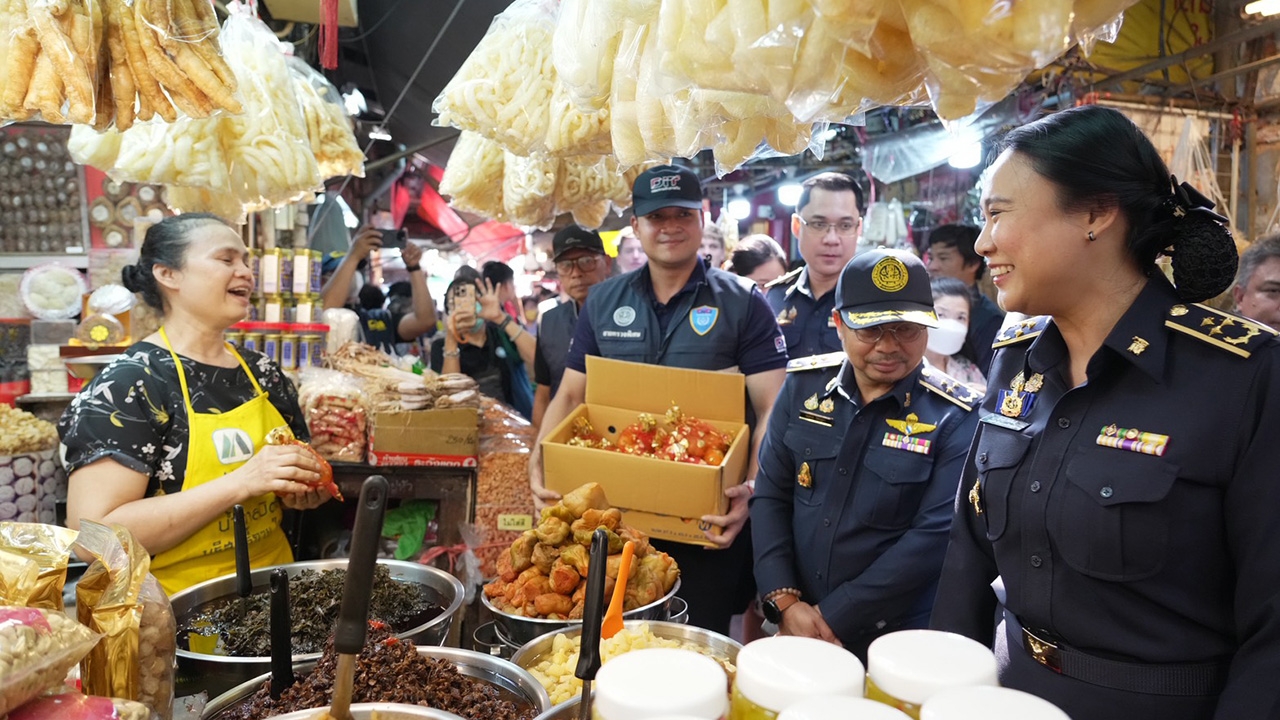
The Deputy Director-General of the Department of Internal Trade visited the Leng Buai Ia community in Yaowarat to inspect price tags and the accuracy of gold shop weighing scales during the Chinese New Year festival. She revealed that most product prices have decreased compared to last year, supply is sufficient, and emphasized that violators face severe penalties including imprisonment and fines.
Ms. Yanee Srimanee, Deputy Director-General of the Department of Internal Trade, stated that on 13 February 2026, she inspected trade fairness during the Chinese New Year festival at the Leng Buai Ia community (opposite the old Yaowarat market) in Samphanthawong district, Bangkok. The focus was on ensuring merchants clearly and correctly display price tags and that gold shop scales are certified by the Department of Internal Trade to protect consumer rights and prevent exploitation.

Ms. Yanee said that the Chinese New Year in 2026 falls on 17 February 2026. Ethnic Chinese people traditionally buy ingredients for ancestor worship ceremonies. The Department of Internal Trade instructed officials to monitor consumer goods in key commercial areas such as markets in Yaowarat, Ying Charoen Market, World Market, Bang Khun Si Market, Minburi Market, and Yod Phiman Market. This was to closely track price situations, check price tags, weighing scales, stockpiling, and excessive profiteering.

Monitoring prices during the 2026 Chinese New Year festival revealed that overall, most raw materials used in the festival have average prices that decreased compared to last year, especially many fresh foods. For example,

Regarding dried foods, average prices of several items dropped by 4–33%, such as
Fresh vegetables and fruits showed price fluctuations depending on season and quality, with many items averaging lower prices than last year, including

Ms. Yanee added that gold, a symbol of good luck in Chinese culture and popular during Chinese New Year, is closely monitored. The Department of Internal Trade has instructed gold shops to use certified weighing scales and clearly display buy and sell prices. Inspections in Yaowarat found that gold shops cooperated well, with scales in good condition and accurate.

Additionally, authorities conducted nationwide inspections of gold shops from 30 January to 12 February 2026. Out of 1,231 shops inspected and 1,403 digital scales examined, 1,365 scales were correct, but 38 had deviations beyond legal limits in Ang Thong, Saraburi, Udon Thani, Buriram, and Trang provinces. The department has taken legal action by tagging and immediately prohibiting the use of these scales.
The Deputy Director-General of the Department of Internal Trade stressed that merchants must strictly comply with the law.

The public is encouraged to report any failure to display prices or suspected inaccurate scales by calling the Department of Internal Trade hotline at 1569, so officials can promptly investigate and take action.
Read news " State Policy " for more