

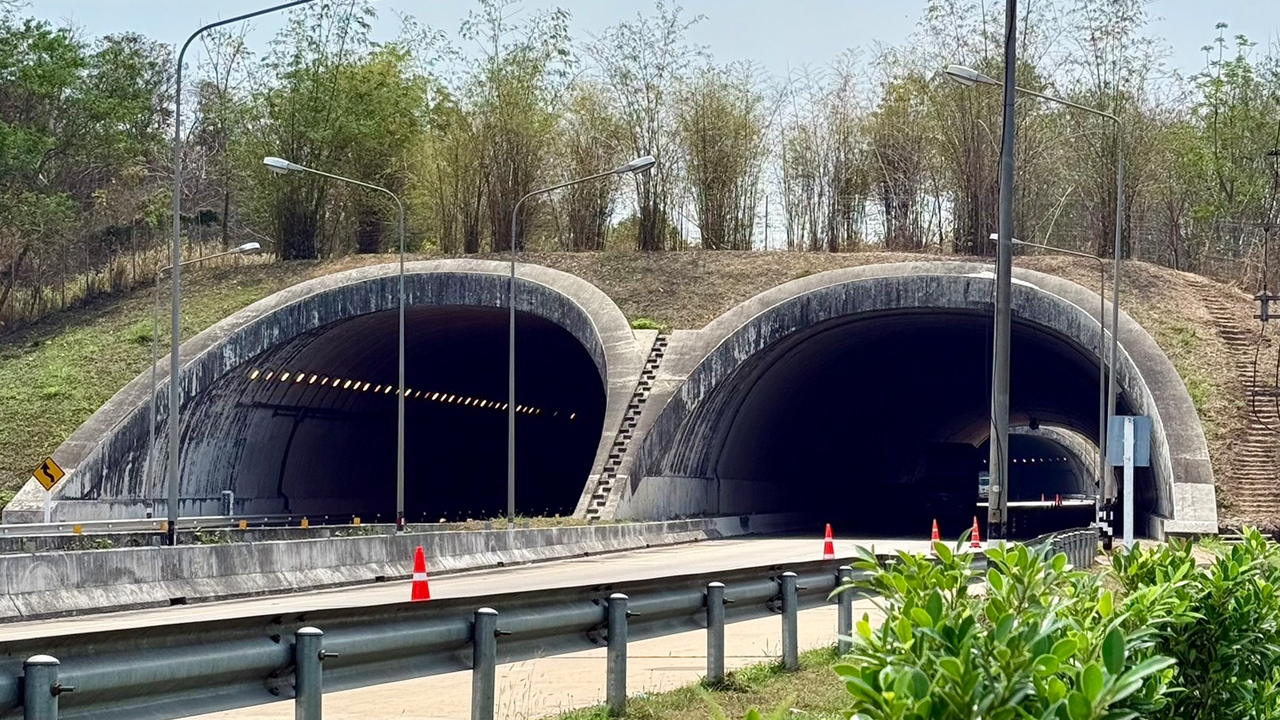
Wildlife species have increased by 16! The Department of Highways reveals that the “Wildlife Corridor Tunnel on Highway 304” is effectively operational, reflecting concrete infrastructure that takes ecosystems into account and supports long-term ecological balance.
A reporter reports fromthe Department of Highways (DOH).Mr. Piyapong Jiwattanakulpaisan, Director-General of the Department of Highways (DOH), assigned Mr. Pakorn Sripanwong, Director of Highway Office 10, along with Mr. Wirot Lomwong, Director of Prachinburi Highway District, and DOH officials to welcome Mr. Bannarak Sermthong, Secretary-General of the Office of Natural Resources and Environmental Policy and Planning, Ministry of Natural Resources and Environment, along with executive members, expert committee members reviewing the Environmental Impact Assessment (EIA) report for land and air infrastructure projects, and related officials on a field visit to follow up on the success of the Wildlife Corridor project on Highway 304 in Prachinburi Province.

The Department of Highways reported the concept behind constructing the wildlife corridor tunnel on Highway 304, a main route crossing Khao Yai and Thap Lan National Parks, which are part of a UNESCO World Heritage forest area. The tunnel is designed at road level with a green bridge on top to allow wildlife to cross safely, aligning with local terrain and animal behavior. This project is a joint integration among the Department of Highways, the Ministry of Natural Resources and Environment, and conservation agencies to develop infrastructure while balancing ecosystem protection.

Following monitoring since its opening in 2019, wildlife have continuously and effectively used the corridor tunnel, covering a wide range of species. Compared to the original EIA data, biodiversity in the area has increased from 156 to 172 species. This demonstrates the effectiveness of infrastructure designed with ecosystems in mind, including connecting animal habitats, reducing natural habitat fragmentation, and lowering vehicle-animal collision risks. This enhances road user safety while conserving natural resources and promoting long-term ecological balance, consistent with environmentally friendly infrastructure development and sustainable development principles.

Additionally, in Prachinburi and Nakhon Ratchasima provinces, other significant projects are underway following the Environmental Impact Assessment (EIA) process, including the survey and design of a four-lane highway on Route 3486 between Ban Kud Toei and Ban Mai Thai Thawon, Route 348 between Ta Pra Ya and Non Din Daeng districts, and the study, analysis, and planning for the Mittraphap Highway (MR2) expansion between Prachinburi and Nakhon Ratchasima, which is currently in the detailed study and design phase.

The Department of Highways continues to develop environmentally friendly infrastructure aiming for low-carbon highways and sustainability. It plans to build on the success of the wildlife corridor tunnel project to expand the concept of “roads coexisting with nature” nationwide, ensuring that national highway development maximizes benefits for the public while maintaining ecosystem richness in a balanced and sustainable manner over the long term.
Read more news " Government Policy " here.