

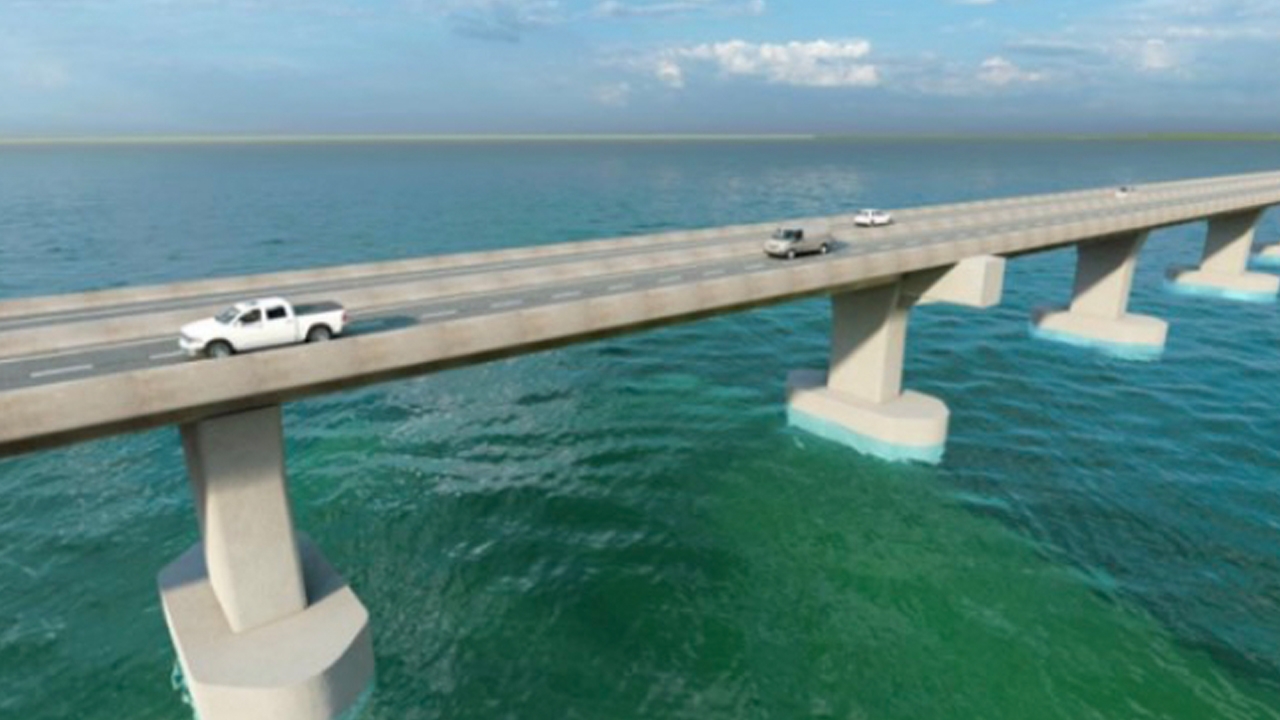
EXAT hosted a forum to hear private sector interest in investing in the "Expressway Connecting Koh Samui," a 37 km route valued at 74 billion baht. It was revealed that current hotel rates on Koh Samui have risen three to four times, reflecting sustained economic growth in the three provinces involved. The project is expected to generate over 400 billion baht for the country over 30 years. EXAT plans to finalize and seek board approval before submitting to the Ministry of Transport and Cabinet, targeting pile driving in 2028 and opening in 2033. Toll fees are expected between 1,000 and 3,000 baht per vehicle. Consultants noted that users indicated readiness to pay these tolls.
Mr. Surachet Laopulsuk, Governor of the Expressway Authority of Thailand (EXAT), said after chairing the seminar to gather private sector opinions on the feasibility study covering engineering, economic, financial, and environmental impacts of the Koh Samui expressway project today (19 Feb 2026) that the seminar's main purpose was to introduce and provide key project information to investors, assess their interest, and build confidence for private investment. It also served to gather feedback and suggestions from investors and stakeholders to incorporate into the study report and project analysis under the Public-Private Partnership Act of 2019.

Regarding project progress, EXAT is currently conducting the feasibility study and will seek approval for the Environmental Impact Assessment (EIA) report. Once the study concludes, EXAT will present the findings to its board for consideration before submitting to the Ministry of Transport and then the Cabinet for further approval. Construction is expected to begin in 2028 with a planned opening in 2033.
Mr. Surachet added that Koh Samui has become popular with tourists. Currently, hotel room rates have increased significantly—for example, from 3,000 baht per night to 10,000 baht, or from 5,000 baht to 20,000 baht per night. This reflects continuous economic growth in the three provinces of Songkhla, Nakhon Si Thammarat, and Surat Thani, which also enhances the quality of life for local residents.
Data shows Koh Samui generates the second-highest income for the country, valued at over 200 billion baht annually, second only to Phuket which generates 500 billion baht annually. It is believed that over the 30-year concession period, the project will generate more than 400 billion baht in revenue for the country. Initial investment models include Public-Private Partnership (PPP) or the Thailand Future Fund (TFFIF) infrastructure fund.
Mr. Surachet explained that currently, travel to and from Koh Samui is only possible by sea or air, which have limitations and are vulnerable to weather conditions, affecting residents, tourism, and emergency response. This project is not just a transportation bridge but is designed to support basic infrastructure systems such as electricity, water supply, and communications. Once completed, it will improve convenience and speed of travel between Koh Samui and the mainland, strengthen infrastructure stability, and reduce travel time.

The expressway project connecting Koh Samui has a total investment of 74,044 million baht, including 1,628 million baht for land expropriation affecting 277 land plots covering approximately 226,591 square wah and 45 buildings. Construction costs are estimated at 63,275 million baht, construction supervision at 1,582 million baht, and operations and maintenance at 7,559 million baht. The project’s economic internal rate of return (EIRR) is 15.58%, while the financial internal rate of return (FIRR) is -0.31%.
The expressway spans approximately 37.41 kilometers and is an elevated toll road crossing the sea connecting the mainland to Koh Samui. It will have four lanes (two lanes each direction). The project begins connecting with Highway 4142 in Don Sak Subdistrict, Don Sak District, Surat Thani Province, heading east crossing Highway 4142 in Khuan Thong Subdistrict, Khanom District, Nakhon Si Thammarat Province. The route continues northeast through palm plantations and Ao Pratub Bay, then eastward connecting to Koh Samui at Laem So Hill, ending by connecting with Highway 4170 in Taling Ngam Subdistrict, Koh Samui District, Surat Thani Province.
Reporters noted that seminar participants suggested the bridge design lacks charm or landmark appeal befitting a tourist destination to attract users as seen in other countries. Regarding the route selection, EXAT’s governor emphasized preserving nature and minimizing impact on marine life such as dolphins, dugongs, and coral reefs. Thus, the design minimizes construction over water and aligns with EIA requirements.
Additionally, the selected route must be feasible for construction, comply with the project’s physical constraints, offer investment value, connect with main roads, and reduce travel time. Emergency rescue plans are in place for accidents or falling objects into the sea, including risk assessments for rescue access and transport to local hospitals. The project also considers disaster resilience such as earthquakes and PM2.5 air pollution issues.
EXAT’s report projects traffic volume and toll revenue over 30 years. The project will collect tolls by vehicle type at a flat rate throughout the route, with toll adjustments every five years based on consumer price index increases. At opening (FY 2033), tolls are set at 1,000 baht per 4-wheeled vehicle, 2,000 baht for 6–10 wheels, and 3,000 baht for vehicles with more than 10 wheels. The 74.044 billion baht investment is expected to generate 80.108 billion baht in revenue over 30 years.
Consultants surveyed actual travelers and found users are willing to pay approximately 1,000–1,200 baht per vehicle. By comparison, ferry travel costs 720 baht per car including driver and one passenger, with additional passengers charged 170 baht each. It is projected that daily traffic at opening (FY 2033) will be 3,049 vehicles generating 3.25 million baht in toll revenue per day, increasing to 10,339 vehicles and 14.11 million baht per day by year 30 (FY 2061). Total toll revenue including VAT over 30 years is estimated at about 80.108 billion baht.
The roadside rest areas for both directions to and from Koh Samui, valued at 175 million baht, will include common areas, commercial activities, and facilities such as public restrooms, shops, food outlets, and drive-thru rental spaces. These aim to enhance service quality and generate additional income beyond toll revenue. Operating and maintenance costs for the rest areas over 30 years are estimated at 441 million baht. Commercial income from these areas is projected at 878 million baht, including 748 million from rentals and 130 million from advertising.
The rest areas are divided into two main sections: 1. Commercial area on both sides including food courts and shops totaling approximately 1,600 square meters, eight kiosks totaling about 80 square meters, and drive-thru spaces totaling around 800 square meters. 2. Common areas and facilities on both sides including public toilets, parking for 120 private cars, 4 spaces for disabled and elderly, 10 bus and large vehicle parking spots (over six wheels), and loading zones for vendors.
." Government Policy Additional news