

The Commerce Ministry is urgently addressing the sharp drop in onion prices, now at 5-6 baht per kilogram, following a surge in production and a wave of imports since December 2024. Imported onions have been declared at unrealistically low prices, allowing them to undercut domestic prices and causing local prices to plunge. The ministry is coordinating with Customs to block smuggling and is seeking private sector support to quickly purchase onions at leading market prices between 21–28 February 2025, targeting 1,000 tons, alongside five measures to stabilize prices.
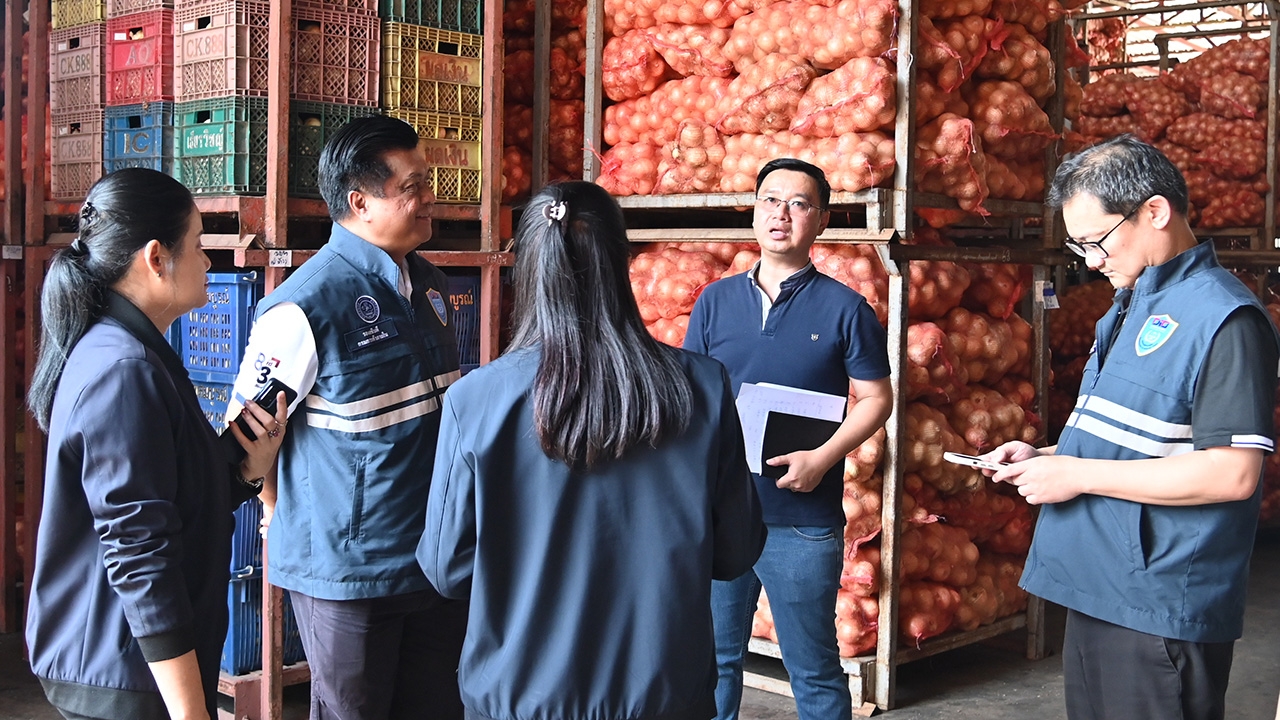
Mr. Jirawut Suwanart, Deputy Director-General of the Department of Internal Trade, revealed this after visiting Mae Wang District, Chiang Mai Province, with the Chiang Mai Commerce Office and the Northern Weights and Measures Center (Chiang Mai) on 18 February 2025 to monitor onion production and market conditions, and to hear concerns from farmers and traders. He said farmers are impacted by a large volume of onions entering the market from mid-February through March, alongside increased imports since December 2024. These imports have been declared at prices lower than reality, enabling importers—despite paying taxes—to compete on price with domestic produce, resulting in a significant price decline locally.

“Regarding import issues, the department has intensified oversight of onion imports and transport by coordinating with Customs and security agencies to prevent smuggling and false declarations. Importers must obtain permits and fully disclose details to allow tracking of product movement.”
To address falling prices, the department is working with the Chiang Mai Commerce Office and local traders to implement a purchase and distribution project, buying onions at leading market prices with a target of 1,000 tons during 21–28 February 2025. Additional appropriate measures are planned for early March, when production peaks.

Meanwhile, the Department of Internal Trade is advancing five additional onion management measures concurrently to maintain price stability. These include:
1. Conducting forward marketing through a Memorandum of Understanding (MOU) with traders to purchase 6,700 tons of onions valued at 80 million baht, to reassure farmers of market demand.
2. Directing Commerce Offices in non-producing provinces to take orders and help distribute onions nationwide, emphasizing packaging in 1, 2, and 5 kilogram bags for sales convenience.
3. Requesting cooperation from government agencies and 20 non-producing districts to promote purchasing onions from producing provinces.
4. Organizing direct sales points for farmer groups at provincial halls, government offices, and Thong Fah events. From 19–21 February, the department brought Chiang Mai onions to sell at the Thong Fah relief fair in Sa Kaeo Province at the Talat Rot Fai market in Aranyaprathet District.
5. Coordinating with the Commercial Attaché in Tokyo to promote exports to Japan.


Regarding current onion prices,

. . . Government policy . . .